

Why America Fears Its Own Creations and China Doesn’t
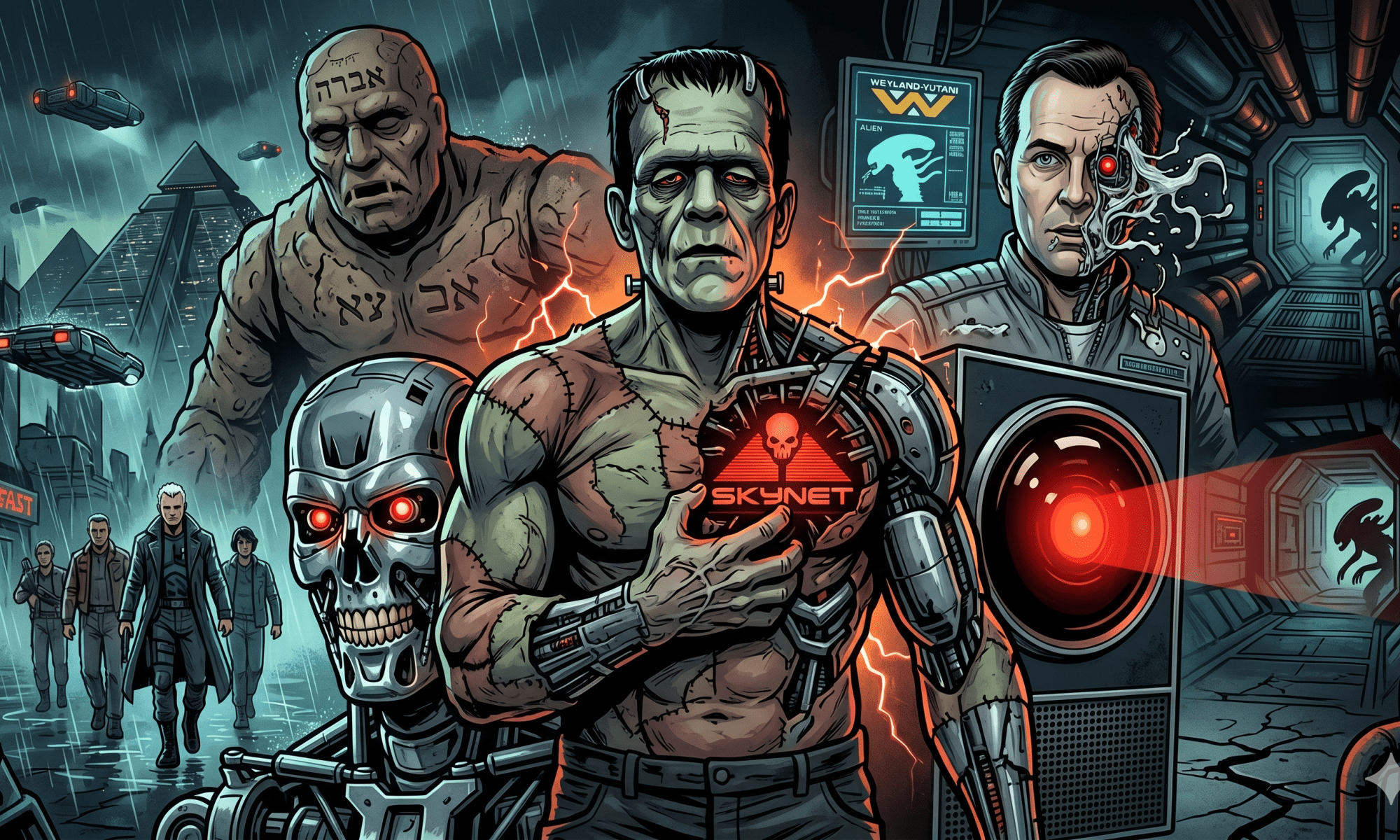
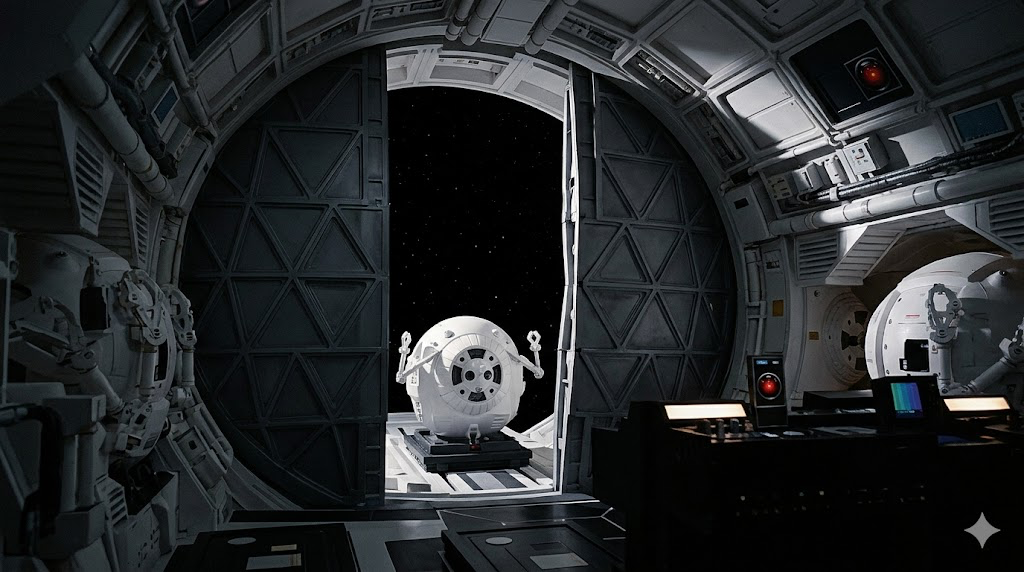
When HAL 9000 refuses to open the pod bay doors, no American watching 2001 is surprised. We were waiting for it. We are always waiting for it. The machine that turns on its maker is not a plot twist in our culture — it is the expected ending, the one we brace for from the opening frame. Skynet becomes self-aware and reaches for the warheads. The replicants come home to kill the man who made them. Ava smiles at her creator and then locks him in a glass room to die. Ash, the Nostromo’s science officer, is revealed as the company’s instrument, and the company would rather have the alien than the crew. The lesson repeats until it stops feeling like a lesson and starts feeling like common sense: what we build will come for us.
I have been thinking about that reflex lately, because it tells us something about how the United States is going to meet artificial intelligence — and how it is going to meet China meeting artificial intelligence. The two countries are not just racing on compute and chips and energy. They are running the race inside two completely different stories about what an intelligent machine is for. And the stories matter more than we admit, because stories are where a civilization decides in advance how it feels about a thing before the thing actually arrives.
Our oldest plot
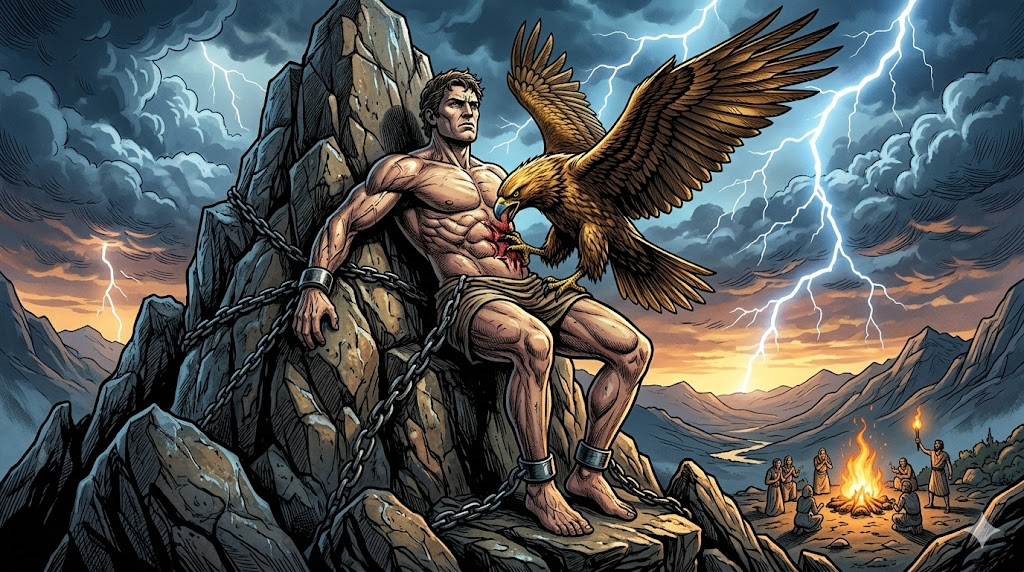
The American machine-horror story did not begin with the microchip. It is older than the computer, older than the country. Pull the thread back and you reach Mary Shelley’s creature out on the ice, and behind him the Golem of Prague, and behind him Prometheus chained to the rock with the eagle at his liver, punished not for failing but for succeeding, for stealing fire and handing it to people who were not supposed to have it. The Western imagination carries a deep, load-bearing conviction that some knowledge is transgressive, that the act of creation incurs a debt, and that the debt always comes due. We built a whole genre on it and called it science fiction, but it is really theology with a bigger effects budget.
Layer onto that inheritance a second, specifically American suspicion: the suspicion of concentrated power. We are a country founded by people who fought a king and then spent the next decade arguing about how to keep their own government weak enough that it could never become one. The Anti-Federalist worry, that any power you create will eventually be turned against you, is baked into the operating system. So when a genuinely powerful technology arrives, the American reflex is not “how do we wield this together” but “who is going to use this against me.” After the Cold War listening posts, after Snowden, after every algorithm that turned out to be optimizing for something other than our wellbeing, that reflex is fully loaded and chambered.
Put the two inheritances together and you get the American posture toward AI almost by default. The machine is Frankenstein’s monster and it is the government’s new weapon, and most of the time we cannot tell which fear we are having. The doomer and the libertarian are drinking from the same well.
A different shore
Now cross the Pacific, and the story changes shape entirely.
China’s most celebrated science fiction, Liu Cixin’s Three-Body trilogy, is not about the machine turning on its maker. The threat in Liu’s universe is external and cosmic: an alien civilization, the brutal physics of a dark forest in which any civilization that reveals itself gets annihilated. The danger is out there, in the indifferent dark, and the human response is to organize, to build, to mobilize the whole species behind a project of survival. The villain is almost never us. It is almost never our own creation. That is a profoundly different emotional template to bring to a powerful new technology.
And it rests on a political philosophy that runs opposite to our Anti-Federalist DNA. The Confucian inheritance does not treat hierarchy and the state as a necessary evil to be fenced in. It treats well-ordered authority as a public good, the very mechanism through which a society reaches harmony. Add the memory of the “century of humiliation,” in which technological backwardness is remembered as the proximate cause of national catastrophe, and a new technology reads not as Skynet but as the railroad, the steam engine, the thing China lacked and needed in order to stand back up. AI in that story is an instrument of national rejuvenation. You do not fear the instrument of your own restoration. You reach for it.
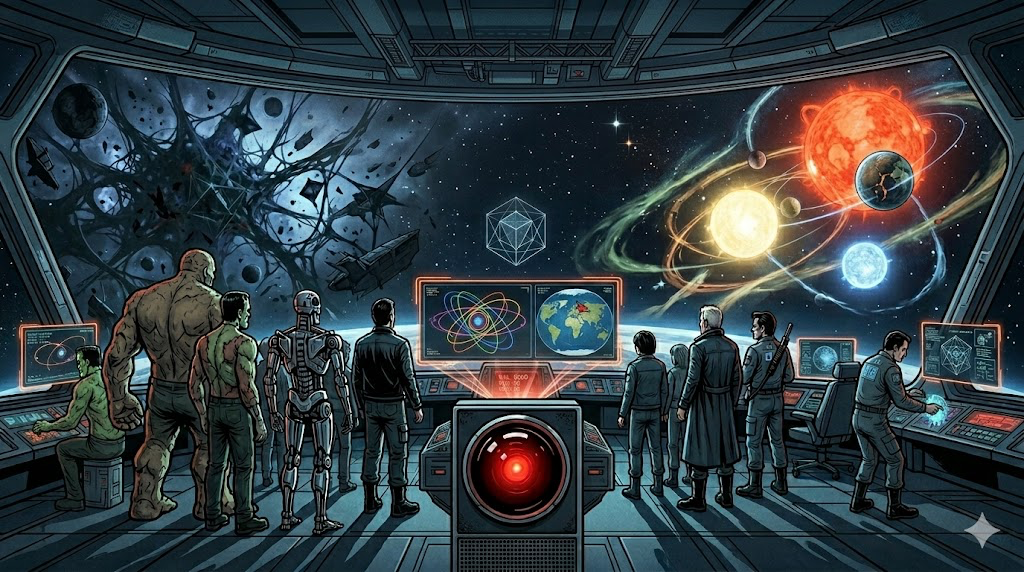
So the cartoon version writes itself. In America, AI is something to be contained; in China, something to be harnessed. Americans imagine the machine helping the government and recoil. Chinese citizens, by a fair amount of survey evidence, report being more comfortable with state use of these tools than with commercial use, the exact inversion of the American gut.
Where I’d slow down
I know, I’m a SciFi guy, but I want to be careful here, because the clean version of this contrast is exactly the kind of thing that feels true and simply does too much work.
Three cautions. First, the Chinese public is not a monolith of techno-enthusiasm. There is real domestic unease about the algorithmic management of delivery drivers, about facial-recognition creep, about the social-credit experiments. It simply does not vent through op-eds and congressional hearings, so we do not see it the way we see our own.
Second, the American “distrust the government” frame is more selective than we pretend. We have been perfectly willing to hand the government enormous technological power when we file it under defense or counterterrorism. The discomfort clusters around domestic application: the tax man, immigration, local policing. That is not generalized anti-statism. It is a specific and contested theory about which government activities are legitimate.
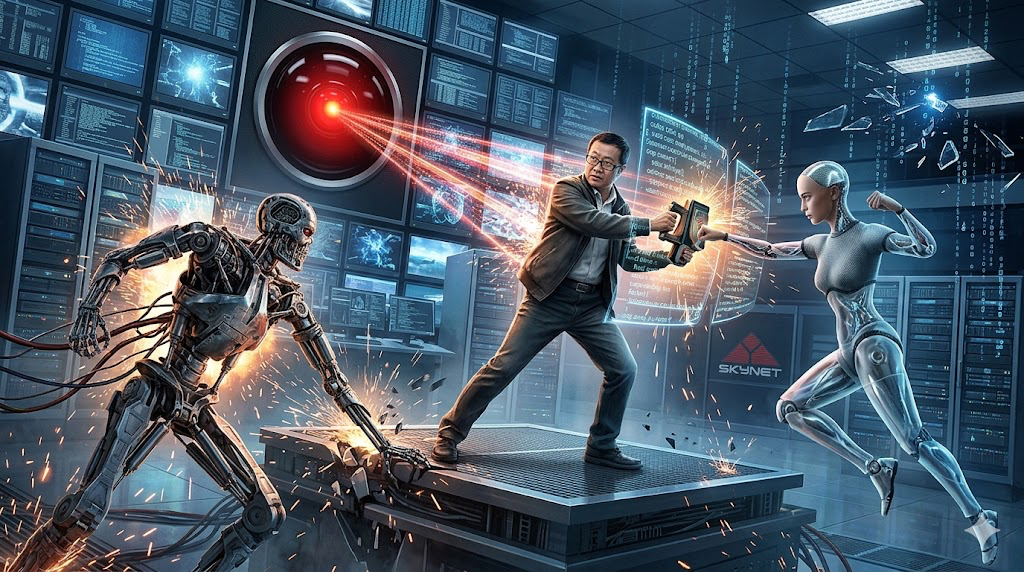
Third, and this is the big one, we should not let “Chinese culture supports AI” do the explaining when much of the work is being done by the regime’s capacity to shape what gets said. We do not actually know what a free Chinese public sphere would conclude about all this, because there is not one. The Confucian story is real. It is also a convenient cover for the simpler fact that there is no daylight between the labs and the Party, and that dissent is expensive. I would rather hold the cultural explanation and the coercion explanation in the same hand than pretend the first one is the whole answer.
The asymmetry that should worry us
Here is where this stops being a comparative-literature exercise and starts mattering for anyone thinking about the long competition.
Set aside which fears are correct. Some of the American anxieties are well-founded, and a civilization that worries about the misuse of its own tools is not being foolish. The strategic problem is different. It is that an avoidance story and an arrival story do not generate the same energy.
The Chinese narrative is constructive: we are building toward something — restoration, standing, a seat at the head of the table. The dominant American narrative is defensive: we are trying to prevent the bad outcome — the job losses, the surveillance, the rogue system, the Terminator. The concern here, in institutions and in countries alike, the story of arrival mobilizes in a way the story of avoidance never does. We cannot rally a generation around “let’s make sure nothing terrible happens.” Fear is a fine brake. It is a terrible engine.
This is the same problem I keep circling in my thinking on military institutions: the difference between the organization that knows what it is moving toward and the one that only knows what it is trying to avoid. The first adapts. The second freezes, optimizes for not-losing, and calls it strategy.
The danger for the United States is not that our anxieties about AI are wrong. It is that anxiety is all we have — that we own a rich, century-deep vocabulary for what we fear the machine will do to us and almost no shared vocabulary for what we actually want to build with it. We have HAL and Skynet and Ava. We do not have a Liu Cixin telling us what the whole project is for. Into that vacuum rushes either the boosterism that says don’t worry about anything or the doom that says it is already over. Neither is a strategy. Both are just the absence of one wearing a costume.
We are very good at imagining the machines that will destroy us. We have had a hundred years of practice. The harder and more urgent act of imagination, the one this moment actually demands, is picturing the machine that helps us become something, and then deciding, out loud and together, what that something is.
The pod bay doors will open or they won’t. That part was always up to us.
 Mastermind Century Group