

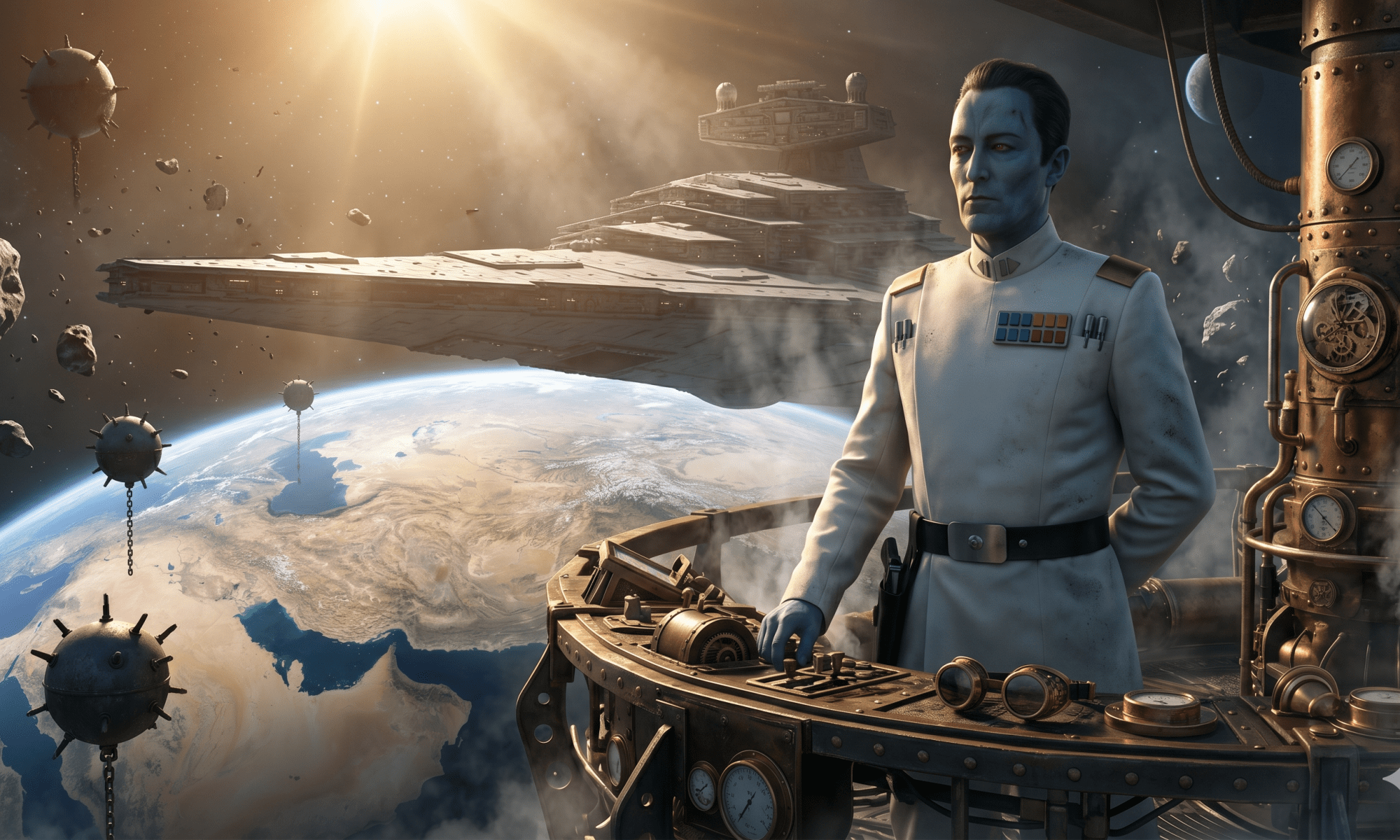
I have been an unapologetic Star Wars fan since 1977. My St Charles grammar school friends will confirm this, probably with more detail than I would prefer. What started as a kid mesmerized by an opening crawl has, over the decades, become something more useful: a recognition that science fiction is often where strategists rehearse futures we are not yet ready to name out loud. The best of the genre is reconnaissance, not escape — Asimov on imperial decline, Herbert on resource and religious warfare, and in 1993, Timothy Zahn on something we are only now learning to name.
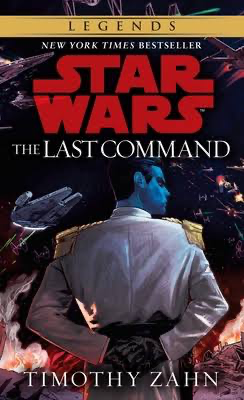
In Zahn’s The Last Command, Grand Admiral Thrawn does not conquer Coruscant with overwhelming firepower. He does something far more elegant. He places cloaked asteroids in orbit around the galactic capital. Invisible, silent, and potentially catastrophic, they render movement impossible. No ship can safely leave orbit. No relief can arrive. No decisive battle occurs. Coruscant is not destroyed — it is psychologically and strategically immobilized.
The brilliance of the maneuver lies in its economy. Thrawn does not need thousands of warships. He does not need orbital bombardment. He needs uncertainty. He needs leaders to believe that action carries unacceptable risk. The threat is not merely the asteroid itself, but the paralysis it induces.
This is not science fiction fantasy. It is a precise metaphor for modern strategic competition.
The Strait of Hormuz functions much the same way.
Iran does not need to permanently close the Strait through conventional naval dominance. It only needs to make passage sufficiently dangerous that insurers panic, shipping slows, markets react, and political leaders hesitate. Mines, anti-ship missiles, drone swarms, proxy attacks, cyber disruption, and ambiguity create the same effect as Thrawn’s cloaked asteroids: uncertainty weaponized into strategic leverage.
The objective is not annihilation. It is hesitation.
This distinction matters because too much of American strategic thought still defaults to industrial-age assumptions of victory. We think in terms of destruction: target sets, attrition, platform counts, and decisive engagements. We still ask how to defeat an enemy’s army, navy, or air force, when increasingly the more relevant question is how adversaries seek to defeat our decision-making.
Victory in the twenty-first century often belongs not to the side that destroys the most, but to the side that shapes perception, tempo, and confidence. Strategic paralysis is not a side effect of conflict; it is often the intended end state.
Russia’s campaign against European infrastructure reflects this logic. Chinese gray zone operations in the South China Sea reflect it. Houthi attacks in the Red Sea reflect it. The goal is rarely battlefield victory in the classical sense. It is friction. Delay. Insurance costs. Political exhaustion. Alliance doubt. Supply chain distortion. Decision fatigue.
Clausewitz taught that war is the continuation of politics by other means. In the modern environment, many actors have simply discovered that politics can be constrained without crossing the threshold of traditional war at all.
The strategic center of gravity has shifted from physical destruction to cognitive disruption.
This is where the old airpower debates become newly relevant.
The early theorists of the Air Corps Tactical School sought victory through what might be called the Industrial Web: the idea that modern states depended on vulnerable networks of electricity, transportation, steel, oil, and industrial production. Strike the critical nodes and the system would collapse. Precision bombing, at least in theory, would substitute for attritional slaughter.
They were not entirely wrong. They were simply operating within the architecture of their age.
Today, the Industrial Web has evolved into something larger. Call it the Strategic Web — a network of logistics, alliances, energy systems, undersea cables, semiconductor supply chains, financial systems, and information flows. And layered atop that is a domain even more decisive: the Digital-Cognitive Web, where legitimacy, trust, narrative, and decision confidence determine whether the rest of the system functions at all. The progression is not just additive. It is a shift in what targeting actually means. The Air Corps Tactical School targeted production. Modern adversaries target perception of viability.
A tanker fleet can be large and still fail if commanders no longer trust the logistics architecture behind it. A carrier strike group can be operationally superior and still strategically constrained if the political system fears escalation more than it values maneuver. A nation can possess overwhelming military power and still be deterred by uncertainty.
The cloaked asteroid is not a rock. It is doubt.
This is why the fixation on platform-centric superiority increasingly misses the strategic point. More ships, more aircraft, and more exquisite systems matter — but only if leaders retain the confidence to employ them. Adversaries understand this. They target not only capabilities, but the assumptions that make those capabilities usable.
The Red Sea offers a current example. Houthi attacks do not need to sink every merchant vessel. They simply need to make transit uncertain enough that rerouting becomes rational. The result is strategic effect disproportionate to tactical capability. Global commerce slows. Costs rise. Political pressure mounts. The system reacts.
This is not peripheral conflict. This is the architecture of modern coercion.
Taiwan illustrates the same logic, though it is often discussed as if the opening act must be amphibious invasion. That is a comforting fiction — comforting because it is the scenario our doctrine knows how to fight. The harder scenario is the one in which there is no landing at all. A blockade, cyber isolation, semiconductor disruption, and alliance hesitation may achieve what an invasion cannot: paralysis without provocation, coercion without a casus belli. The objective is not necessarily occupation. It is the slow conversion of an island into a problem no one is willing to solve.
Thrawn would understand this immediately.
His genius was not military superiority. It was systems understanding. He understood that the perception of danger can be more operationally powerful than destruction itself. A cloaked asteroid requires no battle if fear does the work.
This should force uncomfortable reflection inside the U.S. national security enterprise.
Our doctrine still prizes decisive battle language while our adversaries increasingly pursue decision paralysis. We train for force-on-force engagements while operating inside systems contests. We count platforms while underestimating narrative effects. We ask who owns airbase defense while missing the broader question of whether the system can still generate confidence under persistent disruption.
The future of deterrence may depend less on threatening destruction and more on preserving resilience against paralysis.
That means doctrine must evolve. Wargaming must evolve. Professional military education must evolve.
Students should be asking not merely how to win the fight, but how to prevent strategic immobilization before the fight begins. They should study not only Jutland and Midway, but insurance markets, undersea cables, legal authorities, logistics dependencies, and public trust. They should understand that a drone swarm over a shipping lane may matter as much strategically as a fighter squadron over contested airspace.
The true battle is often over orientation.
John Boyd understood this. He argued that conflict is fundamentally about disorienting the adversary’s capacity to decide and act. The OODA loop was never about speed alone; it was about shaping reality faster than the opponent could comprehend it. The cloaked asteroid is Boydian warfare in orbital form — a deliberate corruption of the adversary’s loop before a single shot is fired.
Observe uncertainty. Orient toward fear. Decide to hesitate. Act by doing nothing.
Defeat follows.
This is why strategic paralysis deserves recognition as a theory of victory in its own right. It is not cowardice. It is not accidental. It is a deliberate architecture of coercion.
And it may define this century more than decisive battle ever will.
Thrawn never needed to destroy Coruscant.
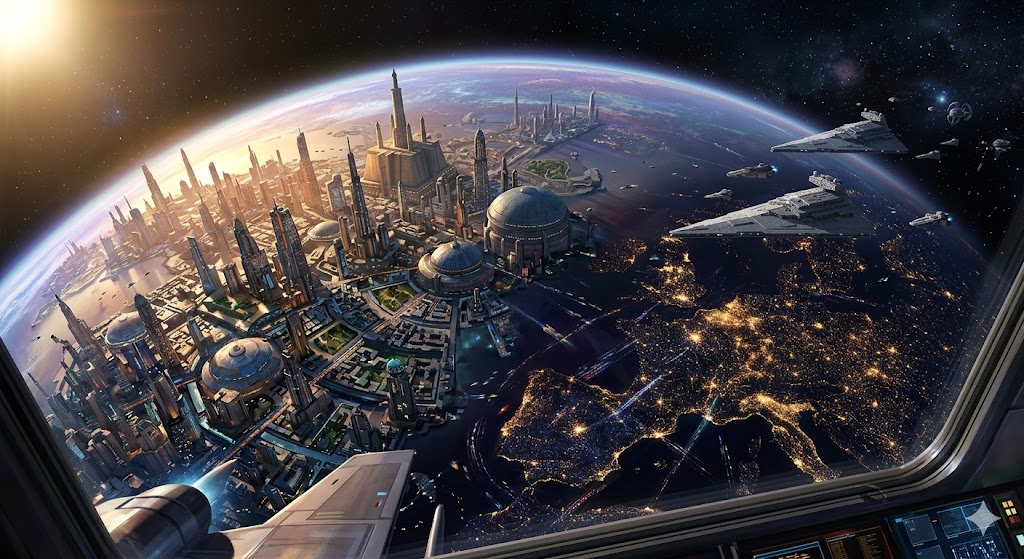
He only needed to make Coruscant believe it could no longer move.
That lesson belongs less to science fiction than to the Strait of Hormuz, the Red Sea, the Taiwan Strait, and every contested network where confidence itself has become the decisive terrain.
The invisible asteroid is already in orbit.

