

Two pieces crossed the desk this week that, on the surface, have nothing to do with each other. One was about drones and defense budgets. The other was about why the United States keeps losing the peace after it wins the war. Put them side by side and they’re arguing the same point from two different altitudes.
The hardware argument
The drone piece, by Phillips Payson O’Brien in The Atlantic, makes the cavalry-to-tank case: the U.S. is still sinking billions into exquisite, human-piloted platforms (a $300 million F-47, $700,000 pilot helmets) while cheap, mass-produced unmanned systems are doing an outsized share of the killing in Ukraine and, more recently, in the skies over the Gulf. It’s a good argument as far as it goes. It’s also a little too clean, because it treats “manned vs. unmanned” as the actual fight, when the real fight is institutional.
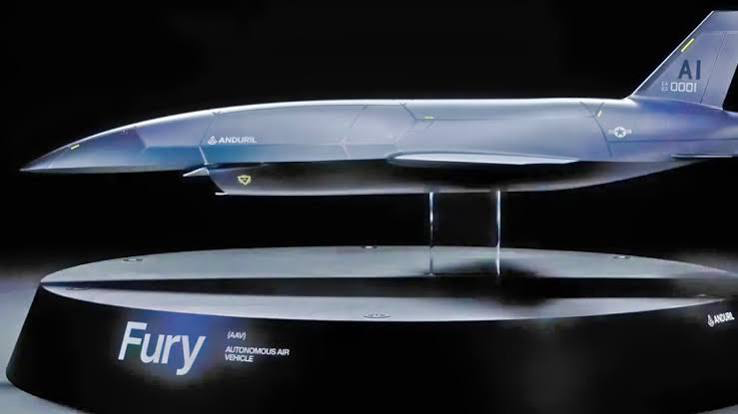
Take the Air Force’s Collaborative Combat Aircraft (CCA) program. It’s actually doing something genuinely novel: it decoupled the airframe and the autonomy software into separate competitions, so the “brains” of the system aren’t welded to one platform, and companies like Anduril and Shield AI, whose entire business is arguably software rather than sheet metal, are competing to own that layer. That’s a real structural shift, closer to how Silicon Valley builds things than how the Pentagon traditionally does.
But CCA still lives inside the NGAD family-of-systems, still gets described as “teaming” with manned fighters, and Congress has had to fight over whether its funding even gets its own line separate from the fighter program. The hardware is moving toward a PC model: modular, decoupled, iteratively upgradable. The institution around it is still organized like a mainframe shop: career paths that run through cockpit time, an acquisition culture built for thirty-year sustainment contracts, doctrine written by people who learned airpower as a game of small numbers of irreplaceable assets. IBM didn’t lose the PC era because it built bad hardware. It lost because Intel and Microsoft captured the value while IBM’s sales force, service contracts, and institutional habits stayed mainframe-shaped. That’s the trap the Air Force is walking into with its eyes half open.
Strip it to first principles and this is a strategy problem, not a hardware problem. Strategy is the discipline of connecting ends to ways to means. The Air Force has set an end (a decentralized, autonomous, attritable combat mass) and started building means to match it (decoupled software, new entrants, multi-service adoption). What it hasn’t done is build the ways: the career paths, the PEO structure, the doctrine that would actually convert that hardware into a different kind of force. An end without ways is just an aspiration bolted onto an org chart that wasn’t built for it.
The strategy argument
The second piece, Greg Myre’s NPR piece pulling from Peter Bergen’s new book, with Douglas Lute and Paul Salem weighing in, asks why the U.S. keeps winning wars fast and then losing them slow. Afghanistan, Iraq, now Iran: overwhelming force, swift tactical success, no durable political outcome. Lute’s phrase for it is exactly right: a “disconnect between ends, ways, and means.” Salem’s is sharper: an imperial appetite with a tourist’s approach to satisfying it.

Notice what’s not the variable here. It isn’t that the F-35 stopped being good at its job. John Boyd split conflict into physical, mental, and moral levels, and the pattern here is that speed and precision at the physical level, the breaking-things level, keep improving, while the moral and mental levels, legitimacy and meaning and what happens on day two, get treated as somebody else’s problem, usually State’s, usually ignored. Lute’s “disconnect between ends, ways, and means” is the same idea in strategy’s native vocabulary: the U.S. keeps setting maximalist ends (regime change, a transformed Afghanistan, a defanged Iran) and pairing them with means suited to a limited end (airpower, special operations, no occupation, no nation-building commitment), with no coherent ways connecting the two. The one clean counterexample in the piece, the 1991 Gulf War, didn’t succeed because America fought smarter. It succeeded because the end, evicting Iraq from Kuwait, was sized to match the ways and means actually on offer. Every conflict since has paired rapid tactical dominance with an end nobody sized to the means, and rapid tactical dominance has a nasty habit of manufacturing false confidence that the strategy problem is solved too.
Same disease, two altitudes
Here’s the connective tissue, and it isn’t just institutional culture, it’s strategy in the literal sense. At the tactical level, the Pentagon has means (CCA, autonomy, mass) racing ahead of ways (career paths, PEO structure, doctrine), aimed at an end (a genuinely different kind of force) the institution hasn’t fully committed to. At the strategic level, the national security enterprise keeps generating means (precision strikes, overwhelming firepower) that outrun any coherent way of converting tactical success into the maximalist ends politicians keep announcing. Different altitudes, same broken linkage. Both are strategy failures wearing an execution costume: ends, ways, and means treated as three separate conversations instead of one.
You can’t procure your way out of a strategy gap, and you can’t bomb your way out of one either. Buying better drones without redesigning the ways that would turn them into a real force gets you a faster mainframe. Winning the first three weeks, three months or three years of a war without sizing the end to the ways and means on hand gets you Kabul in 2001 and Kabul again in 2021. The pattern isn’t a hardware problem or a firepower problem. It’s a strategy problem, and the slow, ambiguous, unglamorous work of building ways, career pipelines, acquisition structures, theories of victory, is exactly the work that doesn’t show up on a flight-test milestone chart or a battle-damage assessment.
The services that treat strategy as something built into their promotion boards, their acquisition structures, and their professional military education, rather than something improvised once the shooting starts, are the ones that will actually own the next transition instead of just funding it.

