

In times of geopolitical uncertainty and rapid technological transformation, great ideas often emerge from bold attempts to distill complexity into actionable insight. The “18 Theses,” a collection of provocative assertions about the future of strategy, innovation, and global competition, serves as such a touchstone. Penned to spark debate and inspire creative responses to the challenges of our time, the theses reflect the urgency of preparing for a world defined by increasing strategic competition, environmental uncertainty, and the need for multidisciplinary solutions.
Their origins lie at the intersection of thought leadership and strategic foresight, where experts across defense, industry, and academia come together to anticipate the next wave of global challenges. They are not merely academic musings—they are crafted as provocations, calling leaders to action. By blending strategic clarity with open-ended questioning, the authors aim to stimulate new approaches to enduring dilemmas.

The theses themselves span a broad spectrum: the role of culture in soft power, the impact of emerging technologies on military and economic competition, the importance of adaptive leadership in crises, and the ethical dilemmas posed by new tools of influence and coercion. Each thesis challenges us to reimagine the assumptions underpinning our current systems and consider alternative paths to a more secure and sustainable future.
18 Theses
The “18 Theses” demand not only critique but also a response. They are a call to action for leaders who can think critically, innovate courageously, and act decisively. In this essay, I will engage with the theses through the lens of my work in leadership development, strategic innovation, and military education. My aim is to frame their relevance within today’s shifting geopolitical and technological landscapes and offer a roadmap for turning these theses into practical tools for leadership and strategy.
Ultimately, the 18 Theses are more than an intellectual exercise—they are a challenge to build the next generation of leaders who can navigate complexity, inspire resilience, and transform vision into action.
The “18 Theses” provide a compelling intellectual playground to discuss leadership, innovation, and strategic competition in an increasingly complex world. As we wrestle with the twin challenges of rising global competition and the accelerating pace of technological change, these theses are both a roadmap and a provocation—a call to rethink our paradigms for leadership and strategy.
Exploring these themes in light of my own work on leadership, innovation, and strategy development. My goal is not only to engage with these theses but also to challenge, refine, and reimagine their applications for military and national strategy.
1. A Framework for Navigating Complexity
At their core, the “18 Theses” emphasize navigating complexity. In my work with Air University’s Innovation Accelerator (AUiX), I’ve observed that complexity can overwhelm leaders unless it’s approached with a combination of clarity and adaptability . Here, I propose using a dual-lens approach:
- Strategic simplicity to identify core priorities (Occam’s Razor applied to leadership).
- Dynamic adaptability to remain resilient in unpredictable environments.
This approach aligns with the Competing Values Framework and transdisciplinary problem-solving, which I’ve found essential in fostering effective leadership .
2. From Containment to Collaboration: Revisiting Kennan
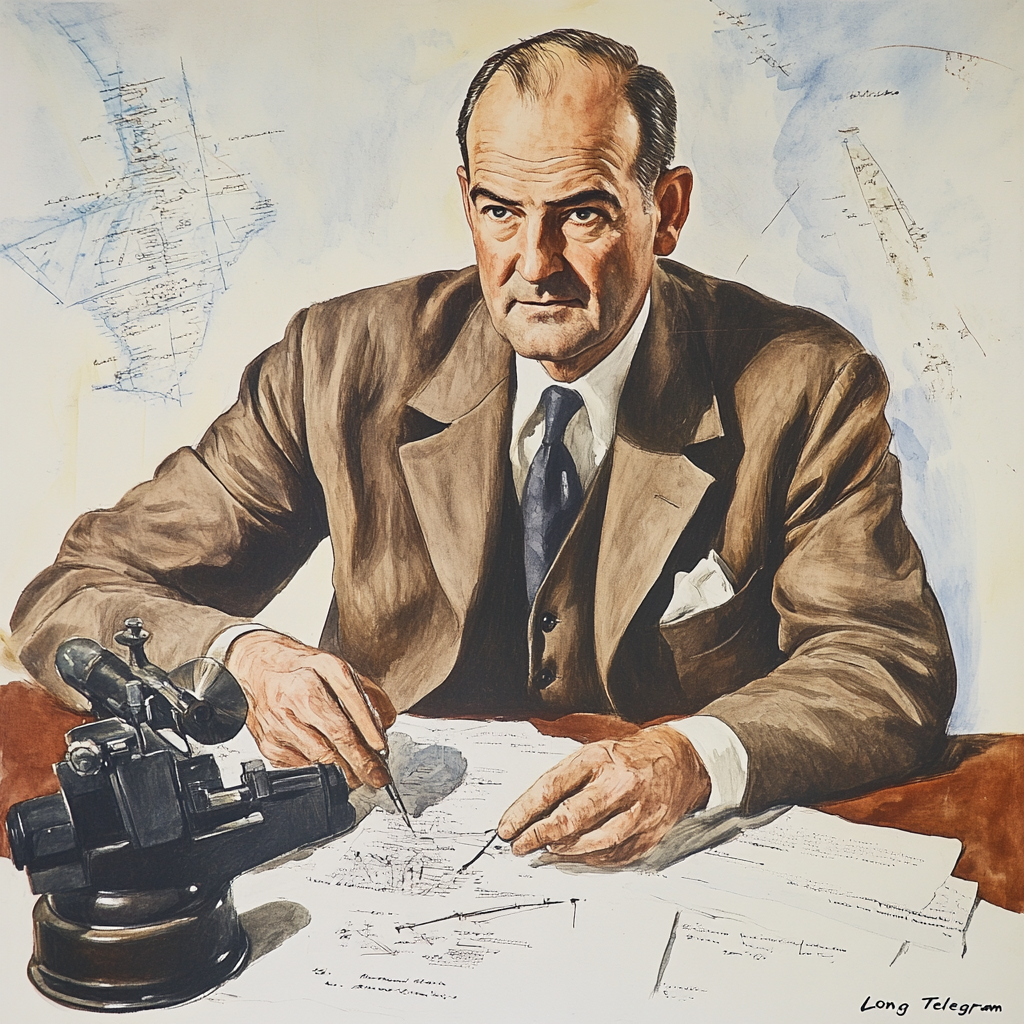
George Kennan’s “Long Telegram” guided American foreign policy during the Cold War with its focus on containment. Today, we face a similar strategic imperative with China. However, the 21st-century Kennan must think beyond containment toward mutually beneficial competition. Innovation ecosystems—linking government, industry, and academia—can create the strategic depth we need .
3. Leadership as a Creative Force
Leadership today requires more than decision-making; it requires design-thinking. Borrowing from Stanford’s d.school methodology, military leaders must embrace futures literacy and creative thinking to prepare for scenarios beyond conventional warfare .
For example, the AUiX initiative, by blending traditional military education with forward-thinking methodologies, exemplifies how creative problem-solving can transform institutions .
4. Cultural Influence: The Soft Power Arsenal
As Joseph Nye articulated, soft power remains a cornerstone of strategic influence. America’s cultural exports—media, technology, and education—continue to shape global perceptions. However, as noted in my reflections on cultural wars with the CCP, China’s calculated use of cultural influence demands an equally strategic response from the U.S. .
We must also ensure that our cultural exports reflect not just entertainment but enduring values of democracy, freedom, and innovation.
5. Innovation as a Strategic Imperative
In both the public and private sectors, innovation defines winners. Whether through the conceptual design of “Chimaera: Wargaming and Strategy Suite” or our work with the iRTF , we’ve seen how innovation fuels strategic advantage.
Leaders must learn to innovate across three horizons:

- Incremental improvements to maintain competitiveness.
- Breakthrough technologies to leapfrog adversaries.
- Transformative systems that redefine the rules of engagement.
6. Resilience: The Mark of a Fighter
Drawing inspiration from the Modelo campaign, resilience isn’t just an individual trait—it’s an institutional necessity . Leaders must cultivate a culture of grit and perseverance. This means embracing failure as part of the innovation process, a lesson I often emphasize in leadership development programs .
7. Ethics in Strategy: Navigating the Razor’s Edge
In strategic competition, ethics cannot be an afterthought. Whether employing AI systems like CHUCK 2.0 or engaging in economic warfare , we must weigh the moral implications of our actions. Leadership on the razor’s edge demands balancing effectiveness with accountability—a principle I discuss extensively in my work on leadership and innovation .
Conclusion: Building the Next Generation of Leaders
The “18 Theses” underscore the need for a new generation of leaders who are not just thinkers but doers. They must bridge the gap between strategy and execution, embody resilience, and navigate complexity with clarity. As I often say in my courses, “Leadership is baked into everything we do, but only those who taste it know it’s there” .
Through initiatives like AUiX, iRTF, and Chimaera, we are not only equipping leaders for today’s challenges but also preparing them to shape the future. The “18 Theses” are a timely reminder that the next era of leadership will belong to those who can think creatively, act decisively, and adapt endlessly.
As we reflect on these ideas, the real question becomes: Who among us will rise to embody the ethos of the fighter, the innovator, and the strategist?
The future of leadership begins now.
 Mastermind Century Group
Love your “stuff”! Thank you for sharing. I retired in 2016 from AF and now help grow great leaders at a large NC construction company. I share a lot of your writings—Thank You and Merry Christmas! Greg Otey—AF 1989 to 2016
Thanks Greg: appreciate your kind words—looks like our time in service overlapped nicely. Would love to hear more about your work. All the best and Merry Christmas -BILL