
Regime Change Is an Event. Instability Is a Process: DeMarco Banter

I, along with so many of my peers, have been professionally involved in, adjacent to, or forced to reckon with American regime-change efforts since Panama. I was a young officer when Noriega was removed quickly, decisively, and—by historical standards—cleanly, an experience that would later prove to be the exception rather than the rule. From Panama …

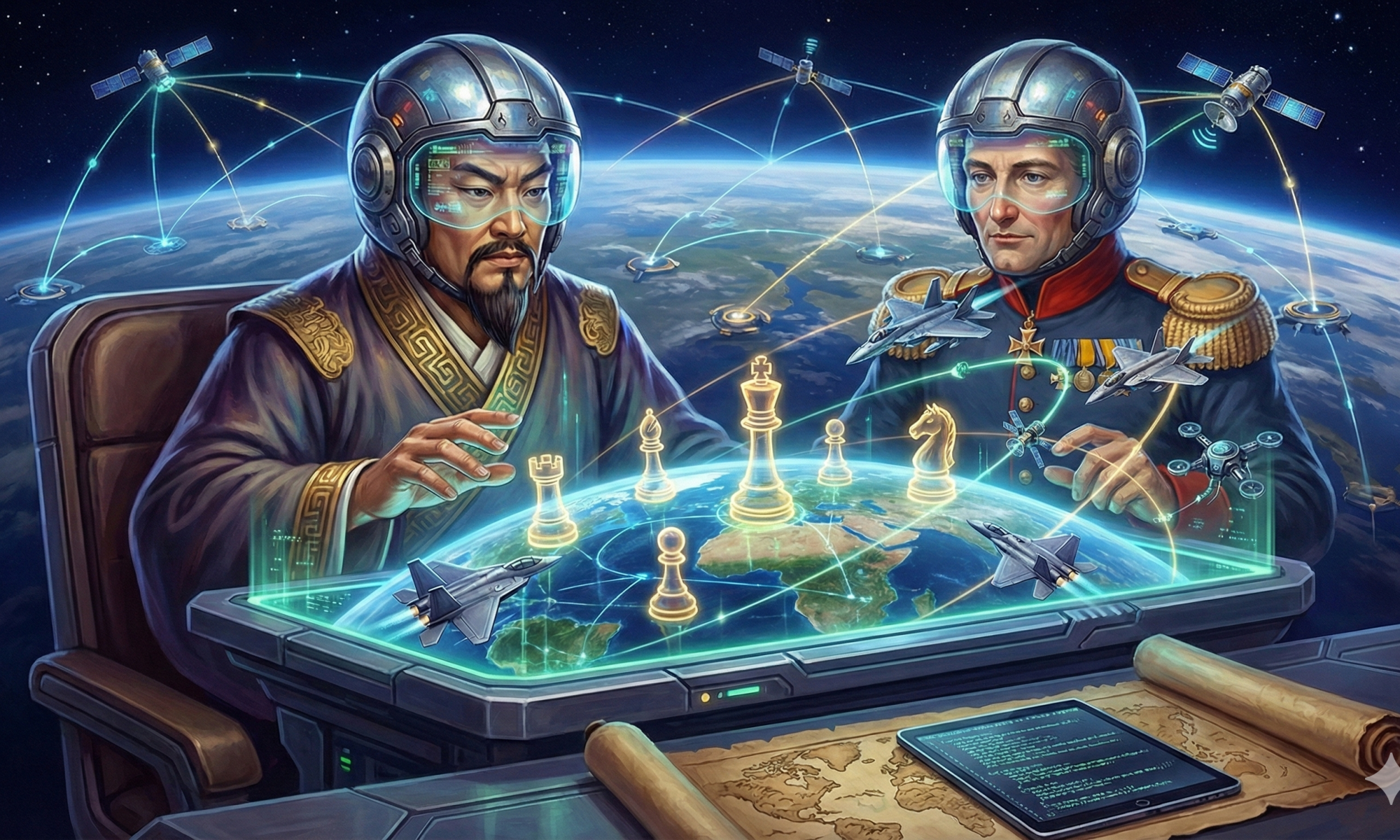
 A Comparative Assessment of National Power: The U.S., China, and the DIME Framework in an Age of Strategic Compression: DeMarco Banter 

Understanding the current geopolitical landscape begins with examining the strategic chessboard defined by Washington and Beijing. Their rivalry now shapes the structure of global economics, the tempo of military modernization, the direction of technological innovation, and the alignment of diplomatic blocs. Few bilateral relationships in modern history have exerted such sweeping influence. The international system …

Entropy in the Department of War: Boyd, Bureaucracy, and the Drift of American Power: DeMarco Banter

John Boyd’s Destruction and Creation is one of those slim essays that, once read, refuses to leave the bloodstream. Written in 1976, in the shadow of Vietnam and the twilight of American confidence, it is at once a meditation on cognition and a blueprint for strategy. Boyd insists that orientation—our ability to interpret and act in a …

Tom Sawyer on the Cognitive Frontier: Awakening in the Age of the Eminence Front: DeMarco Banter

The opening snare roll of Tom Sawyer is a call to consciousness. It’s more than a song—it’s a declaration of mental independence, a drumbeat against conformity. When Rush released it in 1981, Neil Peart’s lyrics described a “modern-day warrior” whose “mind is not for rent to any god or government.” It was a line of defiance in …

Survival of the Fittest: Strength, Cunning, Brains, and Ethics at the Edge of National Security and Personal Life: DeMarco Banter

We often hear Darwin’s phrase “survival of the fittest” invoked as if it were a hymn to brute strength. In boardrooms and briefing rooms alike, people nod gravely as if the secret to endurance lies in the sharpest claws, the biggest armies, or the loudest voices. Yet Darwin himself meant nothing of the sort. “Fitness” …

Paralysis as Victory: The Architecture of 21st Century Conflict: DeMarco Banter

The Obsolescence of Overmatch A tectonic shift is underway in the character of war....and maybe I am just spitballing here...but, the traditional Clausewitzian conception—war as the destruction of an enemy’s military forces to compel political will—is collapsing under the weight of modern complexity. In its place emerges a new model of victory: one achieved not …

Chessboards and Sandcastles: The Quiet Power of Long-Term Strategy–DeMarco Banter

“We’re playing 2-D chess while Beijing is playing 4-D chess.” — Former National Security Council China Director I’ve been thinking about strategy for most of my life — as a student of history, a practitioner of leadership, and a citizen watching the world shift around us. What makes strategy truly strategic? What separates deliberate, long-range action …

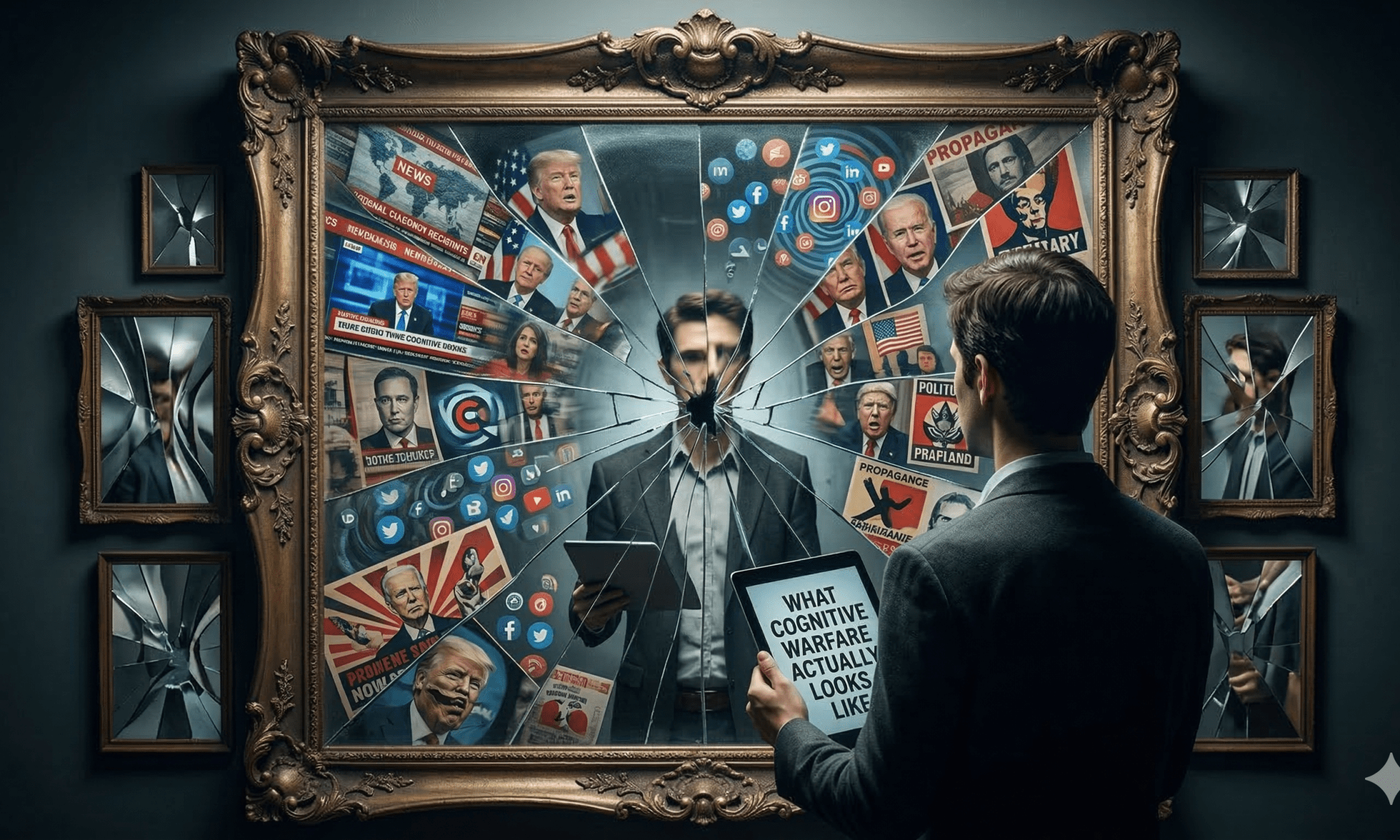
The Year the Lights Dimmed: A Strategic Fable of the Cognitive Cold War: A Neo-DeMarcoian Story?

In the winter of 2028, the lights in the western hemisphere didn't go out all at once. They flickered—on screens, in minds, in institutions—until the world quietly realized it had entered a new kind of darkness. A darkness not of power, but of perception. Not of silence, but of signal. It was the year the …

Navigating the AI Singularity’s Shadow: Why Futures Literacy Is the Leadership Meta-Skill of Our Time: DeMarco Banter

Artificial Intelligence is no longer a speculative concept but a defining condition of our era. Leaders across sectors have grown comfortable describing AI as a “tool,” yet this framing is already outdated. A tool waits passively to be used; a condition saturates the environment whether we engage it or not. Just as weather, markets, and …

The Hammer and the Horizon: Nietzsche’s Challenge to Leadership in an Age of Revaluation: DeMarco Banter

1. Nietzsche’s Enduring Challenge to Conventional Leadership Paradigms Few thinkers unsettle as profoundly as Friedrich Nietzsche. His writings on morality, truth, and meaning strike at the roots of Western culture, exposing what he saw as its life-denying foundations. He argued that conventional values—humility, obedience, piety—emerged not from vitality or strength but from what he called slave morality: the …