


Elizabeth Economy’s warning in How China Wins the Future is not fundamentally about military inferiority. It is about strategic displacement—the slow erosion of American influence in the arenas where the rules of future power are being written. When she argues that the United States must “rebuild its capabilities and reclaim its reputation as a responsible global leader,” she is pointing to a deeper problem: competition is increasingly decided before traditional instruments of force are applied. Governance, standards, infrastructure, and legitimacy now shape the battlespace long in advance of conflict. The United States, and particularly the Department of Defense (DoD), remains structured for a world in which competition culminates in force-on-force confrontation. China is organizing for a world in which victory is achieved by shaping the environment so thoroughly that confrontation becomes unnecessary, prohibitively costly, or politically incoherent.
Economy’s focus on strategic frontier domains—undersea resources, internet protocols, space, financial systems, and emerging technologies—reveals a shift in how power operates. These are not peripheral arenas. They are the connective tissue of modern civilization, and increasingly, of military effectiveness. Whoever governs access to seabed minerals controls supply chains critical to advanced manufacturing and defense industries. Whoever shapes internet protocols embeds assumptions about sovereignty, surveillance, and control directly into the digital bloodstream of societies. Whoever establishes norms and infrastructure in space defines who can see, communicate, navigate, and coordinate at global scale. And whoever influences financial plumbing gains coercive leverage without firing a shot.
The uncomfortable truth of Economy’s argument is that hard power alone is insufficient. Aircraft, ships, and missiles remain necessary, but they are no longer decisive by themselves. Strategic advantage now emerges from the alignment of governance, infrastructure, technology, and legitimacy. This is where the Department of Defense’s role becomes ambiguous—and where Air University’s role becomes unusually important.
The Department of Defense: Present, but Misaligned
The DoD is not absent from frontier domains. It is, however, structurally misaligned with the nature of competition occurring there.
In the undersea domain, the U.S. Navy maintains world-class capabilities in submarine warfare, undersea sensing, and oceanographic intelligence. These are essential for deterrence and conflict. Yet China’s advance in deep-seabed mining and undersea infrastructure is not primarily about military access; it is about legal presence, industrial dominance, and governance leverage. China embeds itself in international bodies, sponsors exploratory missions, and frames seabed activity as peaceful development. The United States, constrained by domestic politics and institutional fragmentation, approaches the seabed largely through a security lens. As a result, it protects access but does not shape ownership or norms. This asymmetry matters. Protecting sea lanes is not the same as controlling the industrial substrate that future military power depends upon.
The digital domain reveals an even sharper divergence. U.S. Cyber Command and the intelligence community focus on network defense, offense, and resilience. These are indeed necessary functions, but they occur downstream of protocol design. Internet standards bodies, telecommunications forums, and technical committees—spaces China actively targets—determine how data flows, who controls it, and what forms of state authority are technically enabled. DoD’s influence here is indirect at best. China, by contrast, treats protocol architecture as a strategic battlefield. It seeks to encode governance preferences directly into technical systems, ensuring that future digital ecosystems align with authoritarian control models. This is not hacking; it is institutional capture.
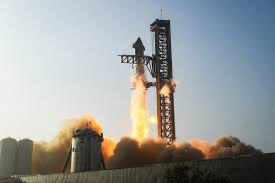
Space is the domain where DoD alignment is strongest, yet even here the framing gap persists. The U.S. Space Force conceptualizes space primarily as a warfighting domain—contested, congested, and competitive. China conceptualizes space as infrastructure first, military domain second. Lunar exploration, satellite services, commercial partnerships, and international cooperation are woven into a coherent narrative of stewardship and inevitability. Military advantage emerges as a byproduct of civilizational presence. The risk for the United States is not that it will lose a space battle tomorrow, but that it will wake up in a world where the architecture of space activity privileges Chinese access, norms, and legitimacy.
Financial systems expose the limits of DoD involvement most starkly. While sanctions, intelligence, and enforcement intersect with defense equities, the core mechanisms of payment systems, digital currencies, and financial clearing lie outside military control. Yet these systems increasingly shape crisis dynamics, alliance cohesion, and escalation control. China’s push to internationalize its digital currency and create alternatives to Western financial plumbing is not about replacing the dollar overnight. It is about optionality—reducing vulnerability to coercion and increasing leverage over others. The DoD benefits from these systems, but does not shape them.
Taken together, these domains reveal a pattern. The DoD is optimized for operating within an environment; China is investing in designing the environment. That distinction matters more with each passing year.
The Airpower Insight: This Is Not New
From an airpower perspective, none of this should be surprising. Airpower has never been solely about platforms in the sky. Historically, its strategic value has always emerged from its relationship to systems—industrial, economic, informational, and psychological.

Interwar air theorists understood this intuitively. The concept of the industrial web recognized that modern societies depend on interconnected nodes whose disruption could generate cascading effects far beyond immediate physical damage. Airpower’s promise lay in its ability to bypass fielded forces and strike at the connective tissue of national power. What has changed is not the logic, but the location of the nodes.
Today’s industrial web is no longer dominated by factories and refineries. It is composed of data centers, undersea cables, satellite constellations, protocol layers, rare-earth supply chains, and financial clearing mechanisms. These nodes are often invisible, transnational, and governed by technical or legal regimes rather than military commands. Yet they remain decisive.
Airpower’s relevance in this environment lies less in destruction and more in access, acceleration, and integration. Air and space forces connect domains, compress time, and enable decision-making across vast distances. They provide the scaffolding upon which digital, financial, and informational systems operate. In this sense, airpower is not being eclipsed by frontier domains—it is being recontextualized within them.
This creates a problem and an opportunity. The problem is that airpower institutions, like much of the DoD, remain culturally anchored to a force-employment paradigm. The opportunity is that air-mindedness—properly understood—offers exactly the kind of systemic perspective that frontier competition demands.
Air University’s Strategic Opening
Air University occupies a unique position within the Department of the Air Force and the broader defense ecosystem. It does not build platforms. It does not command forces. It shapes how leaders think. In an era where competition is increasingly cognitive, institutional, and anticipatory, that role is not ancillary—it is central.
The first contribution Air University can make is conceptual reframing. Frontier domains should not be treated as technical curiosities or niche electives. They should be integrated into the core logic of airpower education. Undersea resources, digital standards, space governance, and financial infrastructure are not “other people’s problems.” They are the modern equivalents of the industrial systems airpower has always sought to understand and influence. PME must teach future leaders to see these domains as interconnected layers of the battlespace, not as stovepiped specialties.
Second, Air University can restore a systems-level approach to strategy. This requires moving beyond platform-centric discussions toward questions of architecture, dependency, and leverage. How does space-based ISR enable not just targeting, but legitimacy in coalition operations? How do undersea cables intersect with air and space communications resilience? How do financial sanctions alter escalation dynamics in a crisis involving aerospace forces? These are not abstract questions. They shape real-world decision-making, and they demand intellectual preparation.
Third, Air University can cultivate governance literacy. China’s advantage in frontier domains is not simply technological; it is institutional. It understands how standards bodies, treaties, and technical committees work, and it staffs them deliberately. The United States often treats these venues as apolitical or secondary, ceding ground by default. PME should expose officers to the mechanics of governance warfare—how rules are written, how norms emerge, and how legitimacy is constructed. This is not mission creep; it is strategic education.
Fourth, Air University can reconnect airpower education to its own intellectual heritage. The Air Corps Tactical School succeeded not because it predicted every future war correctly, but because it fostered disciplined imagination and systemic thinking. It encouraged officers to question assumptions, explore emerging technologies, and link operational concepts to national strategy. Today’s frontier domains demand the same spirit. Air University can become a modern ACTS—not by replicating old theories, but by applying their method to new terrain.
Reclaiming Legitimacy: The Missing Dimension
Economy emphasizes that the United States must reclaim its reputation as a responsible global leader. This is often dismissed as a diplomatic or moral concern, separate from military effectiveness. That is a mistake. Legitimacy is a force multiplier in frontier domains. Governance regimes, standards adoption, and infrastructure partnerships depend on trust. Allies and partners choose systems not only because they work, but because they align with values, transparency, and long-term reliability.
The DoD benefits from legitimacy but rarely cultivates it directly. Air University, however, sits at the intersection of military professionalism, education, and international engagement. Its classrooms include international officers. Its curricula shape how future leaders understand civil-military relations, alliance management, and ethical responsibility. By integrating frontier domain competition into this educational space, Air University can help ensure that American airpower is associated not just with strength, but with stewardship.
This matters because China’s strategy often trades legitimacy for control. It offers infrastructure and access, but on terms that concentrate power and limit sovereignty. The United States can offer an alternative—but only if it understands the terrain and acts coherently across military, economic, and institutional lines. Education is where that coherence begins.
Conclusion: Air-Mindedness for the Frontier Age
Elizabeth Economy’s argument should not be read as a call for the Department of Defense to suddenly dominate seabed mining or financial innovation. It should be read as a warning that power is migrating upstream, into the design of systems that shape behavior long before conflict. The DoD, as currently structured, will always be partially reactive in these spaces. That is not a failure; it is a function of its mandate. But it does mean that other institutions must shoulder the burden of anticipation.
Air University is one of those institutions. Its task is not to compete with China directly, but to ensure that American airpower remains intellectually adaptive, systemically aware, and strategically literate in the domains that matter most. From an air-minded perspective, frontier domains are not distractions from warfighting; they are the conditions that determine whether warfighting is necessary, effective, or even possible.
If China is winning the future by shaping the environment, then the United States must respond by educating leaders who understand that environment in full. Airpower, properly understood, is not about altitude or speed alone. It is about perspective—seeing the whole system, identifying decisive nodes, and acting with judgment rather than reflex. That is the contribution Air University can make, and it may be one of the most strategically consequential roles it plays in the decades ahead.
 Mastermind Century Group