
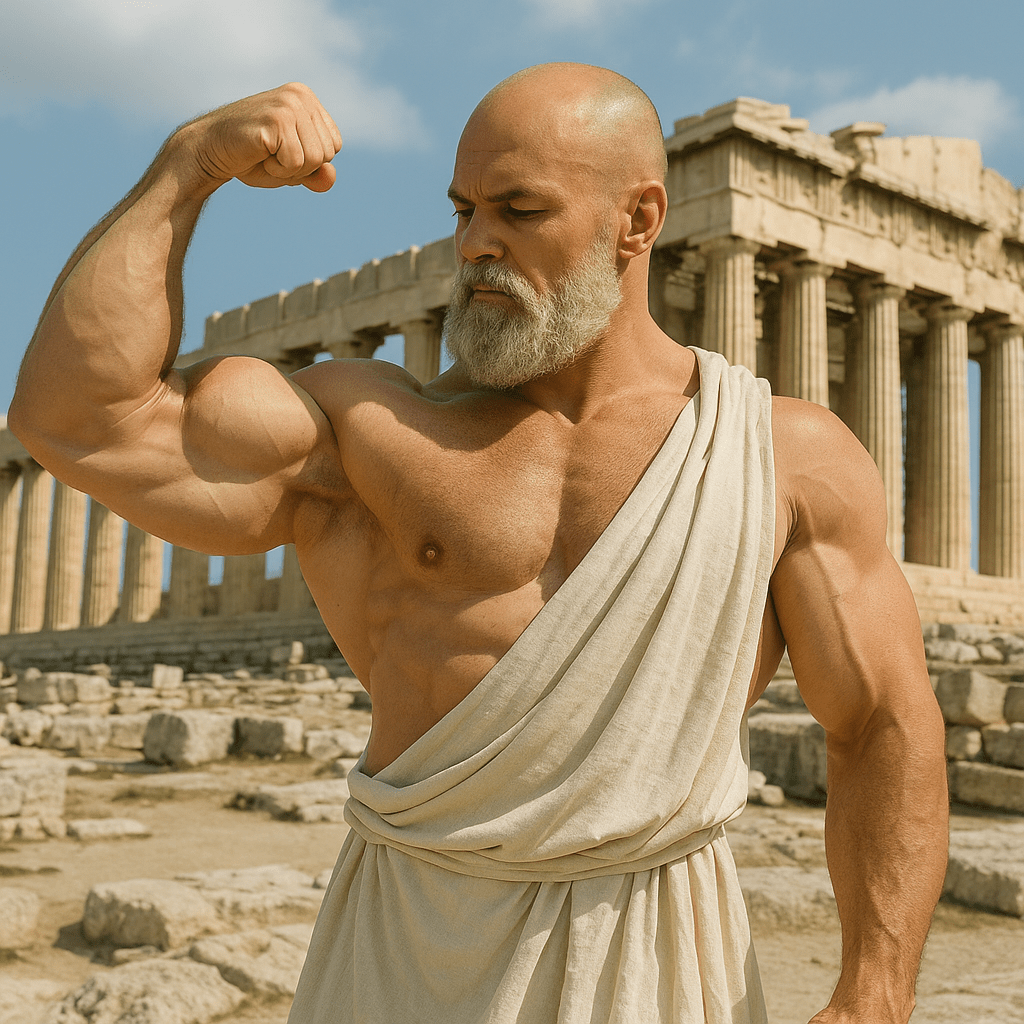
We often hear Darwin’s phrase “survival of the fittest” invoked as if it were a hymn to brute strength. In boardrooms and briefing rooms alike, people nod gravely as if the secret to endurance lies in the sharpest claws, the biggest armies, or the loudest voices. Yet Darwin himself meant nothing of the sort. “Fitness” was not about dominance but adaptability — the ability to bend without breaking, to adjust to shifting terrain, to survive long enough to pass on what matters.
That misunderstanding is not harmless. It has shaped how nations think about their power, how institutions justify their rigidity, and even how individuals measure their worth. Too many leaders mistake fitness for force, cunning for corruption, or brains for detachment. Too many nations pile weapons in their arsenals yet neglect legitimacy, resilience, and the quiet strength of alliances. And too many of us, in our personal lives, confuse success with survival while ignoring the slow erosion of the very traits that make survival possible.
The real question is not whether we are strong, smart, or ruthless enough. The deeper question is: what does it mean to be fit? For Darwin, and for us, fitness lies at the intersection of several qualities — strength, brains, cunning, and ethics — woven together into something greater than the sum of its parts. Strength without ethics breeds tyranny. Brains without cunning stagnate in ivory towers. Cunning without strength collapses at the first blow. Ethics without adaptability risks martyrdom instead of transformation.
If we apply this framework to national security, the lesson is clear: the nations that endure are those that can balance force with wisdom, deception with legitimacy, intellect with resilience. The Soviet Union had strength but lacked adaptability. Ukraine has proven that cunning, brains, and ethics can outmaneuver sheer mass. The United States, for all its power, risks entropy when bureaucracy dulls adaptability. The real contest in our century may not be about who builds the biggest arsenal but who integrates the most dimensions of fitness in an age of turbulence.
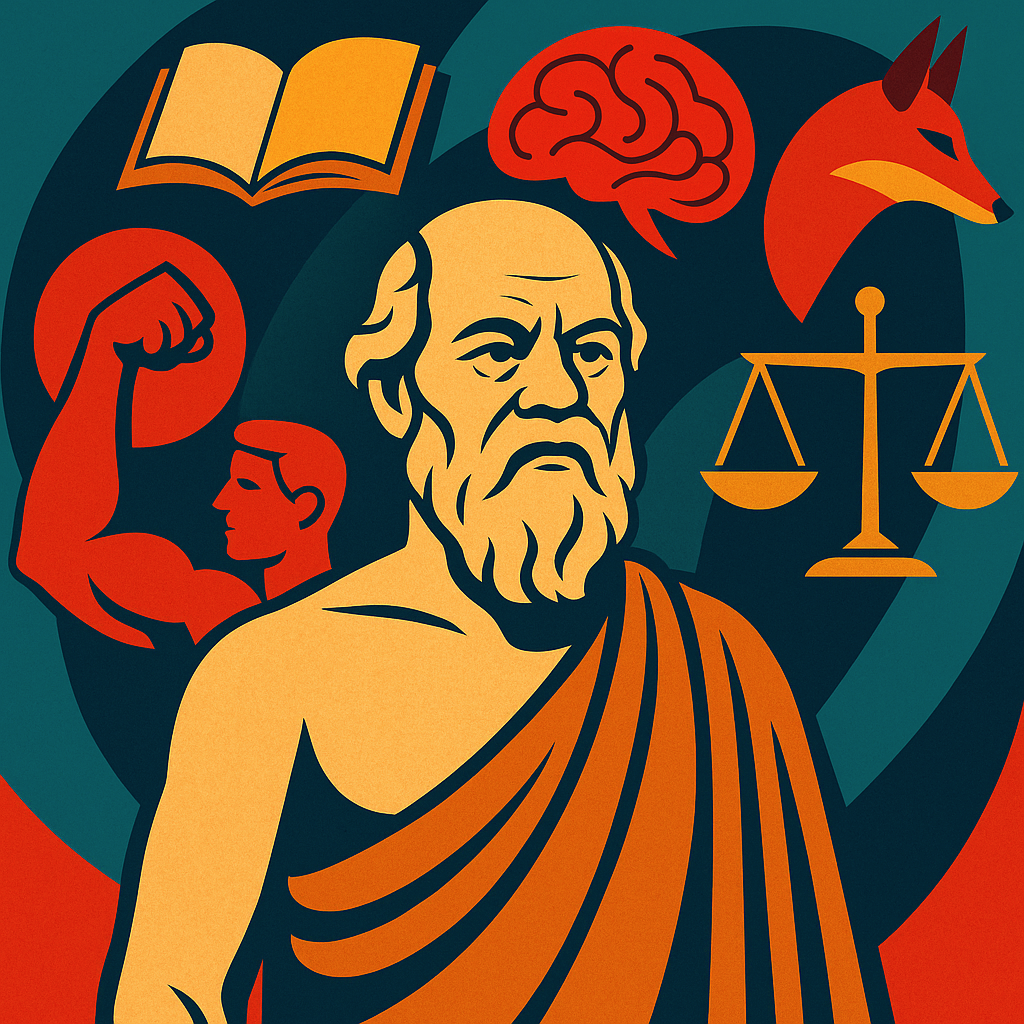
And if we apply it to our own lives, the mirror is no less stark. The strongest body will falter without wisdom. The sharpest mind will corrode without ethics. The most cunning strategist will burn bridges without trust. Survival in the personal realm is not just about outlasting others but becoming resilient, relevant, and adaptive — able to navigate change without losing oneself in the process.
Darwin’s phrase, misused as it has been, calls us back to a deeper truth: survival is not for the strongest, but for the most fit. And fitness, in both national power and personal leadership, demands we learn how to weave strength, brains, cunning, and ethics into a living tapestry. That is where survival becomes more than endurance. It becomes purpose.
Nature’s Lesson: Adaptability Over Power
Darwin’s insight was simple yet profound: environments change, and species that cannot adapt to those changes vanish. Dinosaurs, once masters of the earth, succumbed to shifts they could not weather. Tiny mammals, adaptable and unassuming, inherited the future. Wolves, thriving through cooperation and cunning, succeeded where solitary predators perished.
Fitness in this sense is not absolute. It is contextual. A cheetah is fit in the savanna, a polar bear in the Arctic, a cockroach in the shadows of human civilization. None is universally strong, yet each thrives in its niche.
This ecological truth translates seamlessly into the realm of nations. Power is not static; it is relational, bound to context. The Roman Empire, at its peak, appeared unassailable. Yet its strength without ethical reform, its cunning turned inward toward corruption, and its brains trapped in bureaucracy left it unable to adapt. Its collapse was not sudden; it was entropy played out over centuries.
The same story plays out today. Nations mistake strength for fitness, building weapons without adaptability, chasing dominance without legitimacy. The strongest tank battalion is useless in a world dominated by drones and cyber war. The largest economy falters if brittle supply chains choke under pressure. The most cunning information campaign collapses when its lies are revealed and trust evaporates.
In the natural world, survival belongs to the adaptive. In the strategic world, survival belongs to those who balance and integrate — those who see the ecosystem, not just the battlefield.
National Security: The Ecology of Power
When we map Darwin’s framework onto national security, four dimensions emerge — strength, brains, cunning, and ethics. None alone defines fitness. Together, they sketch the ecology of power.
- Strength: This is the obvious dimension — military might, industrial capacity, economic weight. Strength matters because it deters aggression and buys time. Yet strength alone is brittle. The Soviet Union’s vast arsenal masked hollow foundations. The U.S. military, unmatched in size, still finds itself mired in wars it cannot decisively win.
- Brains: Nations that innovate, that anticipate, that invest in the intellectual edge thrive. Britain’s scientists during WWII gave radar and codebreaking to the fight. The United States built the arsenal of democracy not by brute force alone, but by mobilizing an entire society’s ingenuity. Today, AI, quantum science, and biotech play the role of radar and the Manhattan Project — and the nations that harness brains without suffocating them in bureaucracy will outlast those that merely flex steel.
- Cunning: Strategy is not just intellect; it is the art of deception, misdirection, and creative asymmetry. China’s “Three Warfares” doctrine (psychological, legal, and media warfare) is a reminder that cunning is not an accessory but a pillar of statecraft. Ukraine, outgunned, has used cunning and narrative to rally allies, outthink a more powerful adversary, and hold the line. Nations that ignore cunning — that fight only with blunt force — find themselves predictable and vulnerable.
- Ethics: This is the least appreciated yet perhaps most decisive. Power without legitimacy rots from within. Allies align not only with the strong but with the trusted. Ethics generates soft power, moral credibility, and the cohesion that strength and cunning cannot buy. The U.S. retains global influence not just because of aircraft carriers, but because of the narrative — however imperfect — of freedom, democracy, and justice. When that narrative falters, power erodes faster than weapons can be built.
The nations that endure, then, are not the strongest alone. They are those that balance all four dimensions, weaving them into resilience. Fitness at the national level is adaptability: the capacity to adjust strategy, regenerate strength, innovate through brains, maneuver with cunning, and sustain legitimacy through ethics.
Personal Survival: The Ecology of Leadership
The same framework applies at the individual level. To speak of “survival of the fittest” in life is not to glorify the ruthless or the dominant. It is to ask whether we are adaptive, resilient, and relevant in the environments we inhabit.
- Strength: Our bodies matter. Health, endurance, physical resilience are foundations. A leader who collapses under stress or neglects health cannot sustain service. Yet strength alone — muscles, stamina, toughness — is insufficient.
- Brains: The intellectual life, curiosity, the discipline of continuous learning, and the humility to unlearn and relearn. Brains allow us to see patterns, anticipate shifts, and adapt before others realize change is upon them.
- Cunning: In personal life, cunning is not sinister but strategic — the ability to navigate institutions, see around corners, build networks, and make choices with foresight. Leaders without cunning are eaten by the machine. Leaders with too much cunning and no ethics destroy trust. The art lies in balance.
- Ethics: The anchor. A life without ethics may achieve short-term success but collapses in reputation, trust, and meaning. Ethics gives coherence to choices, attracts allies, and sustains leadership when strength fails and cunning misfires.
Personal fitness lies in the integration. The strongest among us are not those who dominate, but those who can flex across dimensions — resilient, adaptive, grounded, and creative.
This is why we resonate with the archetype of the warrior-scholar. It is not the strongest warrior alone, nor the brightest scholar alone, but the one who integrates strength, brains, cunning, and ethics in service of something larger. That archetype is as old as Marcus Aurelius and as modern as a pilot who reads philosophy, or a tech entrepreneur who studies history.
The Center of the Diagram
Imagine these four qualities as circles in a Venn diagram. Where they overlap lies true fitness: adaptability, resilience, and relevance. That center space is where both nations and individuals thrive.
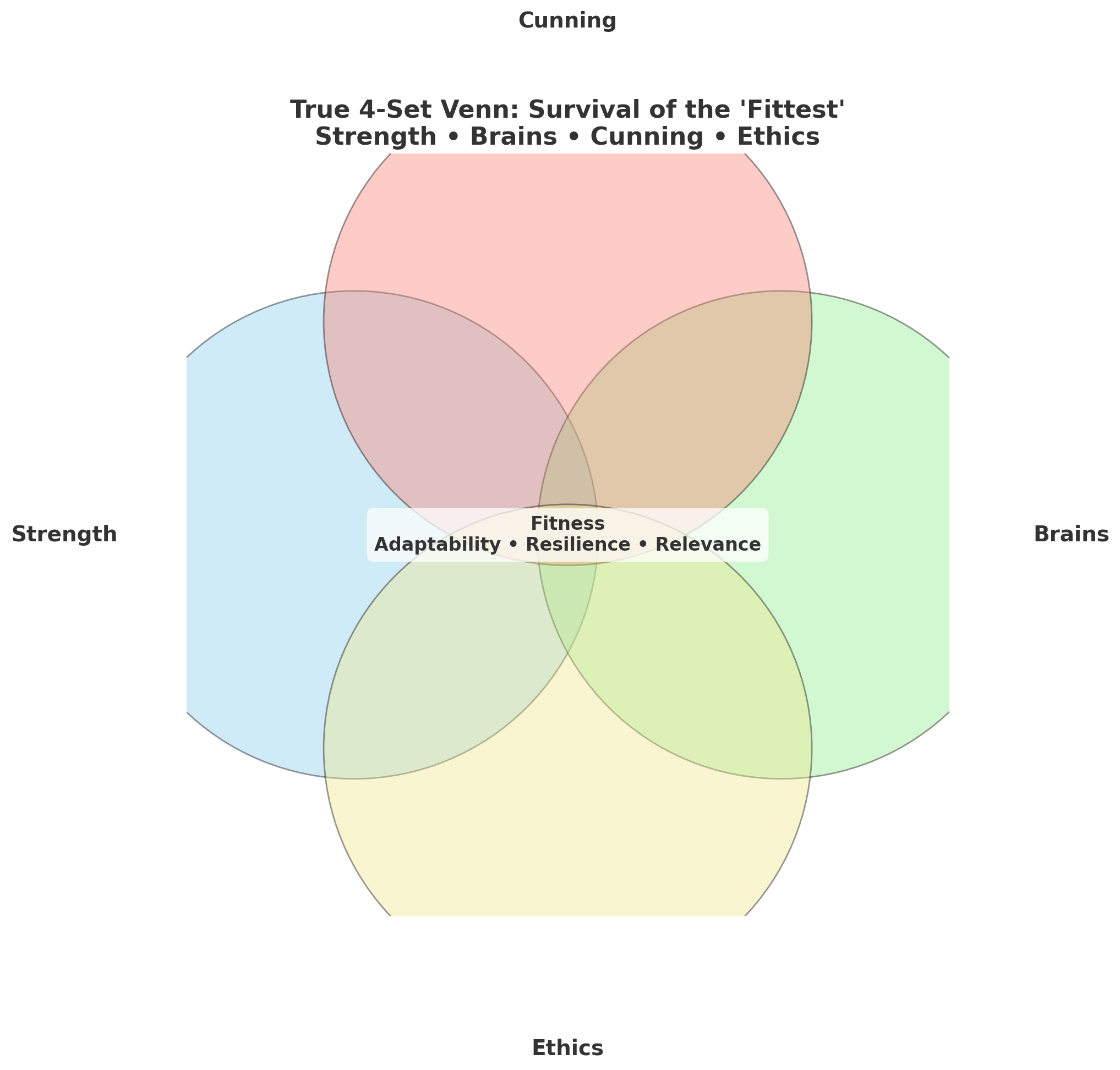
Too much reliance on one dimension leaves vulnerability:
- Strength without brains is brute force that stagnates.
- Brains without cunning are paralyzed in theory.
- Cunning without ethics corrodes trust.
- Ethics without adaptability risks irrelevance in a brutal world.
The lesson is not to perfect each trait in isolation, but to weave them together. Fitness is integration. Survival is synthesis.
 Mastermind Century Group
Bill,
This is EXCELLENTâthank you for sharing.
It fits well with what we espouse at BarnhillâValues Based Organization growing Values Based Leaders!
Very Respectfully,
Greg
Greg Otey, Vice President of Leadership and Development
Barnhill Contracting Company
direct 252-824-8281 | mobile 540-676-3055
mail PO Box 7948 Rocky Mount, NC 27804
map 800 Tiffany Blvd, Suite 200, Rocky Mount, NC 27804
Barnhill Contracting Company General Contractors No. 3194
[A black background with a black square Description automatically generated with medium confidence]http://barnhillbuilt.com/
Thanks for reading and thanks for the input Greg