

“We’re playing 2-D chess while Beijing is playing 4-D chess.”
— Former National Security Council China Director
I’ve been thinking about strategy for most of my life — as a student of history, a practitioner of leadership, and a citizen watching the world shift around us.
What makes strategy truly strategic? What separates deliberate, long-range action from the reactive and episodic? And more importantly: how do nations position themselves to play the long game not simply to just win the next round?
Lately, I’ve found China’s recent moves in the rare earth sector oddly fascinating.
At first glance, rare earths seem technical and obscure, a footnote in the machinery of global trade. But look again, and they become something more: a window into how long-term power is shaped, and how one nation — in this case, China — is moving with quiet precision to control not just materials, but momentum.
China’s rare earth gambit isn’t merely about economics. It is strategy by another name — a slow, deliberate choreography across time, across sectors, and across silence. It reminds us that power is not always loud, and that the most decisive moves are often invisible until they are irreversible.
So the question emerges:
If China is playing a patient, layered game… how can the United States play on that same board?
Not by mimicking authoritarian models, but by rediscovering the strength of foresight, the value of institutional memory, and the discipline of coherence.
Because this is not about rare earths alone.
It is about the future — and whether the United States intends to shape it, or merely react to it.
The Long Game
In recent weeks, China has tightened its grip on rare earth exports. Not with sweeping embargoes or headline-grabbing bans, but with a series of deliberate, layered controls: licensing requirements, embedded use restrictions, and export reviews targeting specific sectors like semiconductors and defense. These moves are not reactive. They are incremental, calculated, and strategically coherent.
China controls nearly 90% of global rare earth processing — a fact not born of accident, but the product of decades of state-backed investment, industrial policy, and infrastructure development. The result is a system where upstream and downstream supply chains are not just economic tools, but instruments of geopolitical leverage.
When Beijing acts on rare earths, it is not merely trading resources. It is signaling resolve, shaping expectations, and testing the systemic resilience of its rivals. This is strategy in its classic sense: not a checklist of actions, but the orchestration of long-term advantages to shape the environment in which future choices will be made.
Strategy vs. Transaction
In contrast, responses from Washington and its allies often appear episodic. Measures are announced, tariffs imposed, retaliations threatened. But the deeper infrastructure of national power — rare earth capacity, technological redundancy, coordinated policy — takes years to build and has often lagged behind.
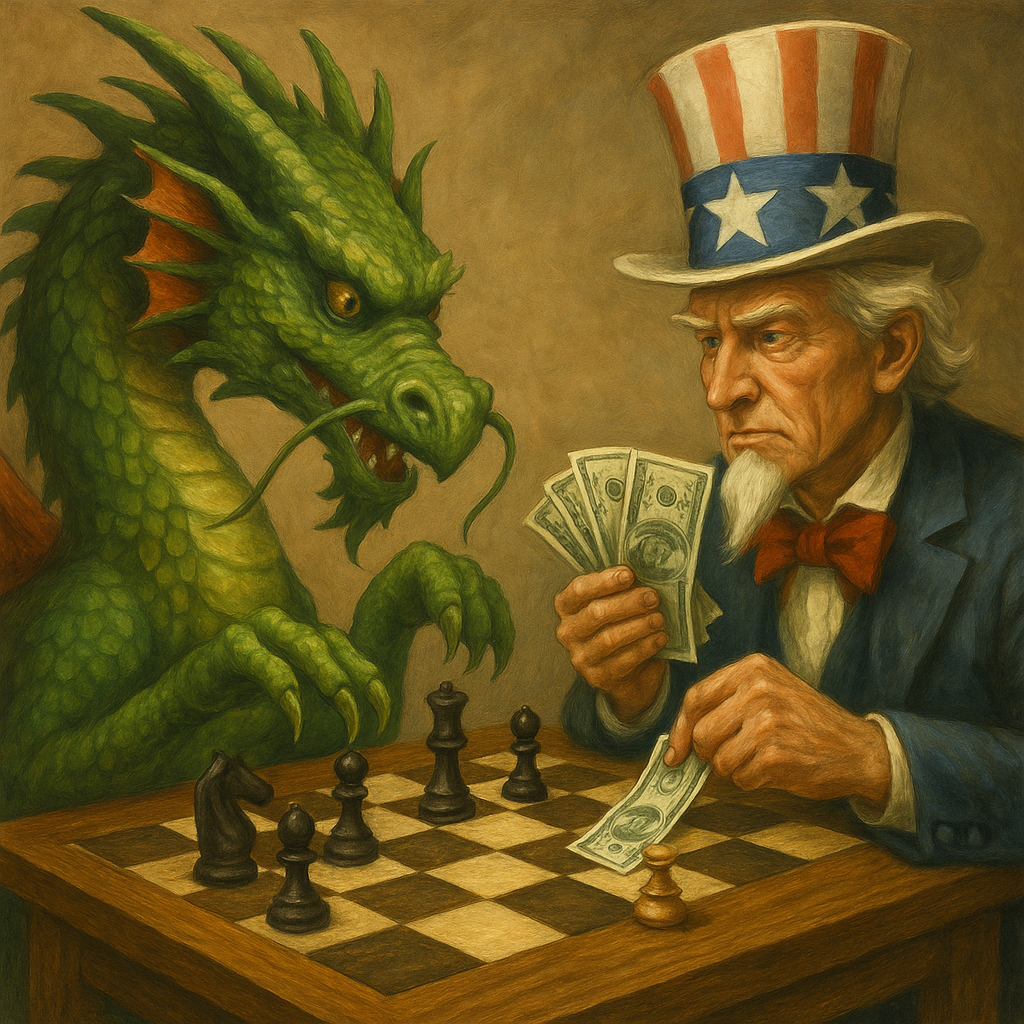
This is not a partisan critique. It is a structural reflection. Democratic systems, by design, prize responsiveness, competition, and turnover. But these strengths come with trade-offs. The urgent can displace the important. The tactical can eclipse the strategic. Leadership changes can reset priorities. Bureaucracies may adapt slowly. And the political incentive structures rarely reward investments that bear fruit two decades hence.
It’s here that the power of strategic patience becomes evident. China’s rare earth strategy reveals more than resource leverage; it reveals a mode of thinking — one that plays out not in reaction to headlines, but in service of a long arc of national objectives.
Philosophy Beneath Strategy
Beneath every grand strategy lies a philosophy — a worldview about time, power, and purpose.
In the Chinese tradition, strategy draws on Sun Tzu, Daoist harmony, and Confucian order. It prizes patience, ambiguity, and the shaping of conditions over direct confrontation. Time is a force to be mastered. Victory is subtle, cumulative, and often invisible.
By contrast, the Western tradition — especially in its American expression — has long favored the decisive: the Clausewitzian battle, the Marshall Plan, the moonshot. It is infused with pragmatism, short feedback loops, and a belief in decisive action over gradual shaping.
These are not merely cultural quirks. They shape how leaders interpret crises, build coalitions, and allocate resources. They affect how nations define “winning” — as a moment of dominance, or as a slow accumulation of advantage.
Strategy, then, is not just about means and ends. It is about meaning. And without understanding the philosophies that underlie strategic instincts, nations risk fighting with tools they do not fully comprehend.
Strategic Architecture vs. Tactical Muscle
To understand the implications, we might borrow from architecture.
Some nations construct scaffolding — agile, temporary, quickly built for short-term utility. Others lay foundations — slower, less visible, but capable of bearing great weight over time. The contest, then, is not over who has more materials, but who understands what they’re building.
This is what makes the rare earth example so compelling. China’s moves are not simply about minerals; they are about leverage. About control not just of supply, but of future pathways. In contrast, tactical actions — tariffs, statements, summit suspensions — may signal intent but lack compounding effects if they’re not nested within a broader design.
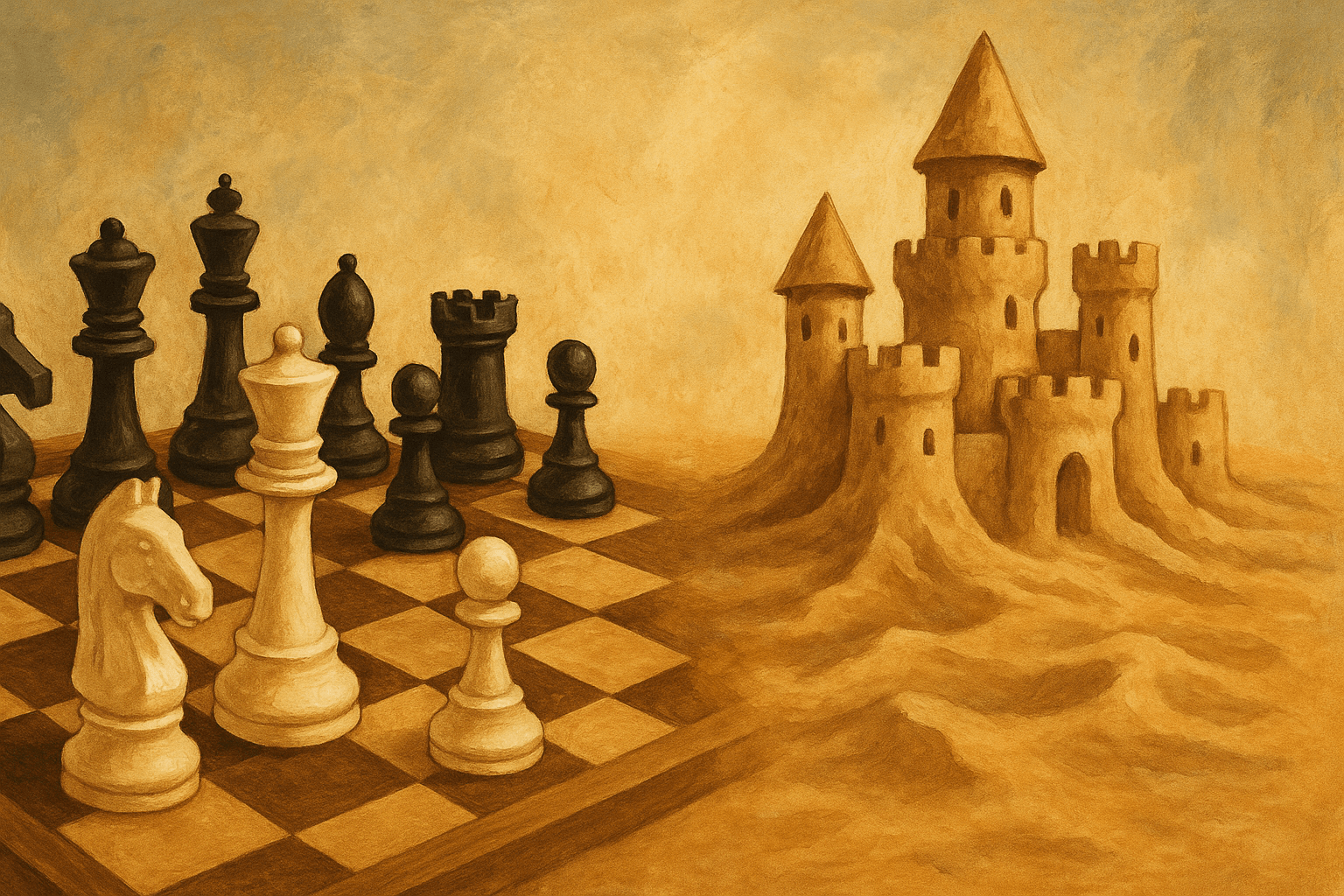
It’s the difference between a chessboard and a sandcastle. One is cumulative, systemic, and shaped by strategy. The other is vulnerable to the next tide.
Strategic Silence
What’s striking is not just what China does — but how quietly it does it. There are no bombastic proclamations. Just regulatory shifts. Licensing tweaks. Trade guidance. All couched in technical language. And yet, the signal is clear: the game board is changing. The opponent moves with patience.

This “strategic silence” is itself a form of power. It reflects confidence in the durability of one’s position. It allows reversibility — the possibility of easing restrictions if circumstances change. And it creates ambiguity that compels others to prepare for worst-case outcomes.
By contrast, nations that rely on loud declarations or volatile shifts may inadvertently reveal the lack of a stable strategic core — or at least the absence of an orchestrated tempo across instruments of power.
Lessons for the Future
None of this is to suggest that transactional tools — sanctions, deals, targeted disruptions — are useless. On the contrary, they can be powerful, especially when layered atop a coherent strategy. But when they become the strategy, the architecture crumbles.
The real challenge is not to mimic China’s system — authoritarian control is not a prerequisite for strategic thinking. The challenge is to build durable mechanisms within open systems that cultivate foresight, continuity, and patient investment.
This means:
- Resilience over retaliation: Prioritizing domestic capacity and allied redundancy before crises emerge.
- Narrative coherence: Ensuring that trade, tech, diplomacy, and defense share a unified strategic vision.
- Institutional memory: Protecting long-range planning functions from political churn or administrative amnesia.
- Strategic signaling: Understanding that moves in one domain ripple across others — and anticipating how.
In short, it means embracing what Edward Luttwak once called the “grammar of strategy”: that logic and force are not enough unless nested within time, context, and design.
The Quiet Chessboard
We may not always see the next move. That is, after all, the point of a well-crafted strategy. But we can know if we’re playing a game that’s winnable — or merely reacting to moves already made.
A cohesive long-term strategy does not guarantee success. But its absence nearly guarantees strategic fatigue, reactive flailing, and erosion of credibility.
As the rare earth episode reminds us, the future is not owned by those who shout the loudest — but by those who place their pieces with patience, purpose, and perspective.
 Mastermind Century Group
Can the West break China’s grip on rare earths?: https://www.dw.com/en/can-the-west-break-chinas-grip-on-rare-earths/a-74474562#:~:text=To%20counter%20China's%20dominance%2C%20the,up%20refining%20and%20processing%20capacity.