

Part I: The Metaphysics of the Force: A Syncretic Foundation
The enduring cultural resonance of the Star Wars saga is inextricably linked to its central metaphysical concept: the Force. More than a mere plot device, the Force serves as the philosophical and spiritual bedrock of its universe, a complex tapestry woven from the threads of numerous world religions and philosophical traditions. George Lucas, the creator of the franchise, has stated his intention was not to invent a new religion but to reawaken a sense of spirituality in younger audiences by distilling the common essences of existing faiths into a new, accessible mythology.1 This foundational syncretism is the key to the Force’s power, allowing it to function as a universal framework for exploring timeless questions of morality, destiny, and the nature of reality.
In its earliest and most iconic description, the Force is defined by the Jedi Master Obi-Wan Kenobi as “an energy field created by all living things. It surrounds us and penetrates us; it binds the galaxy together”.2 This definition, echoed by the official Star Wars databank which describes it as “a mysterious energy field created by life,” establishes the Force as a ubiquitous, pantheistic presence.3 It is not a distant, transcendent deity but an immanent power that interconnects all existence. Later explorations of the lore elaborate on this concept, bifurcating it into two distinct but related aspects: the Living Force and the Cosmic Force. The Living Force is the spiritual energy generated by all life forms, which in turn feeds into the Cosmic Force, the overarching consciousness or will that binds the universe and guides destiny.2 This dynamic suggests a universe that is not merely a collection of matter but a single, interconnected organism with a collective consciousness, often described as having a “will of its own”.3
The introduction of “midi-chlorians” in the prequel trilogy—microscopic, intelligent lifeforms residing within the cells of all living things that act as an interface with the Force—marks a significant evolution in this metaphysical framework.2 This addition, which posits a biological prerequisite for Force sensitivity, was met with controversy, as it appeared to shift the concept from pure mysticism toward a form of scientific materialism or bio-theology. This development can be understood as a reflection of a modern cultural impulse to ground spiritual concepts in empirical, quantifiable terms. However, the narrative arc of the franchise does not remain fixed on this biological determinism. Subsequent films and media, such as Rogue One, feature characters like the blind monk Chirrut Îmwe, who, despite not being a Jedi, demonstrates a profound connection to the Force through sheer faith and discipline. His mantra, “I am one with the Force, and the Force is with me,” signals a re-democratization of the concept, returning it to the realm of personal belief and spiritual intuition.2 This evolution reveals that the Force is not a static doctrine but a dynamic concept that adapts across the saga, mirroring real-world dialogues between faith, science, and innate human spirituality. As theologian John C. McDowell notes, the Force functions as a kind of “safe religion,” offering a spiritual framework devoid of the dogmatic complexities of established faiths, thereby appealing to a broad, secularized audience.1
Part II: Parallels in Eastern Philosophy and Religion
The philosophical architecture of the Force draws most heavily and explicitly from Eastern traditions, particularly Taoism, Buddhism, and Hinduism. These influences shape not only the metaphysical nature of the Force but also the ethical code and spiritual practices of its most devoted adherents, the Jedi.
The Way of the Force: Echoes of Taoism
The most fundamental parallel to the Force in Eastern thought is the Chinese concept of the Tao, or “the Way.” The Tao is the natural, ordering principle of the universe, an ineffable flow that is the source of all existence. The Jedi ideal of acting in harmony with the Force, of “letting go” and allowing it to guide one’s actions, is a direct reflection of the Taoist principle of wu wei, or effortless action. This connection is not coincidental; Lucas’s earliest drafts for Star Wars conceptualized the Force in terms of “Ashla” (the light) and “Bogan” (the dark), a framework that directly mirrors the Taoist concept of yin and yang.4
This dualism is visually codified in Star Wars: The Last Jedi with the depiction of the Prime Jedi, the founder of the Order, in a mosaic that is a clear homage to the yin-yang symbol.5 The Prime Jedi is shown as a figure of balance, embodying both the light and the dark, representing “the darkness in the light, and the light in the darkness”.5 This suggests that the original Jedi philosophy may have embraced a more integrated, complementary view of the Force’s two sides, much like the amoral, interdependent nature of yin and yang in Taoism.
However, a crucial distinction emerges in the saga’s moral framework. While Taoist dualism is fundamentally amoral—yin and yang are complementary forces, neither inherently good nor evil—Star Wars imposes a stark moral dualism upon its cosmology.4 The light side is associated with peace, knowledge, and compassion, while the dark side is defined by fear, anger, and aggression. This represents a significant “Westernization” of the Eastern concept, infusing it with a Zoroastrian-like struggle between absolute good and absolute evil. This internal contradiction within the lore—between the original ideal of balance and the later, more rigid dogma of rejecting the dark side—becomes a central philosophical tension. The Jedi Code of the prequel era, with its absolutist creed “There is no emotion, there is peace,” represents a departure from the balanced ideal of the Prime Jedi and a move toward a philosophy of suppression.7 Consequently, the prophecy of the Chosen One who will “bring balance to the Force” becomes deeply ambiguous: does it mean the annihilation of the dark side, or the restoration of the original, more holistic understanding of the Force as a unified whole? The entire Skywalker saga can be interpreted as a dramatic struggle over this very definition of balance.
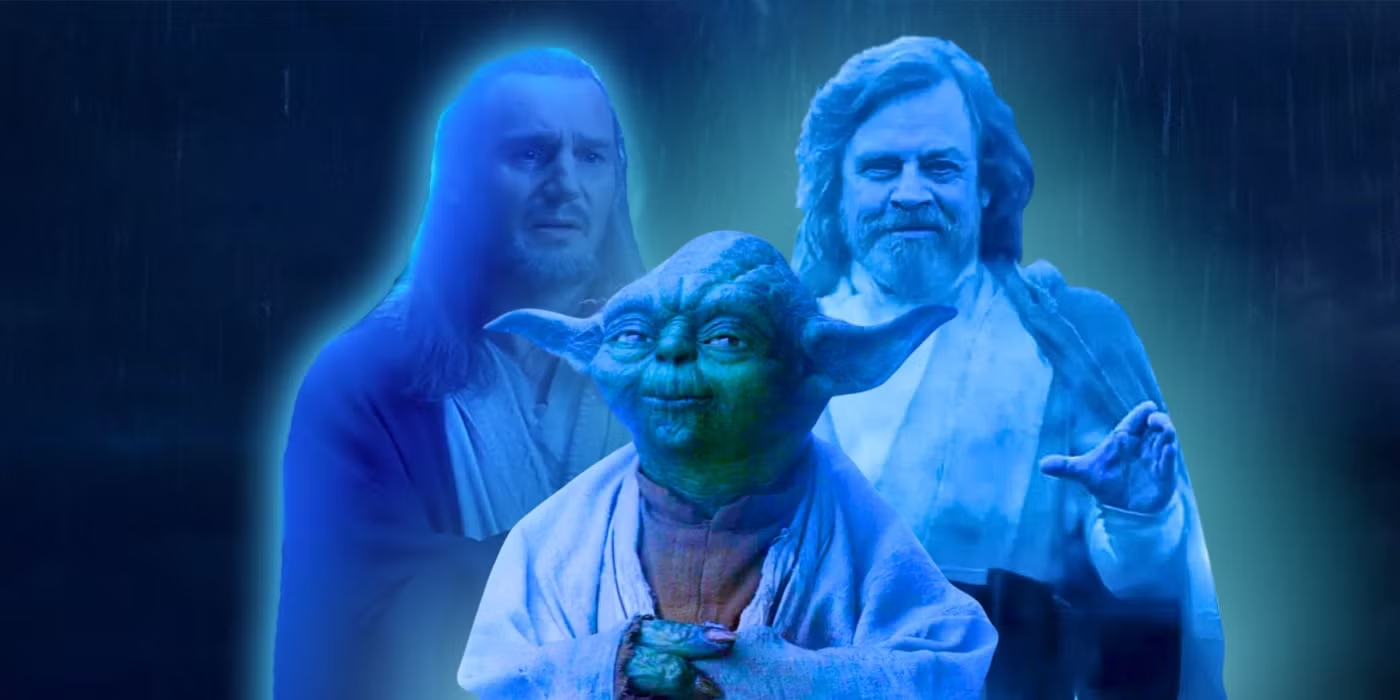
Further reinforcing the Taoist connection is the concept of qi (or chi), the vital life force that animates all things. The Force functions in a nearly identical manner, as an energy that can be cultivated and channeled. This is subtly referenced in the name of Jedi Master Qui-Gon Jinn, a character who deeply trusts in the “will of the Force,” with his name echoing the practice of Qigong, the cultivation of life energy.8
Mindfulness and Liberation: The Buddhist Path of the Jedi
The influence of Buddhism on Jedi philosophy is profound and explicit. George Lucas, who has described himself as a “Buddhist Methodist,” instructed that the Jedi be modeled on warrior-monks, and their philosophy is deeply imbued with Buddhist principles.9 The Jedi practice of meditation to calm the mind and commune with the Force is analogous to Buddhist dhyāna (meditation), and their emphasis on being aware of the present moment mirrors the concept of sati (mindfulness).9
The most significant parallel lies in the core doctrine of non-attachment. In Buddhism, the Second Noble Truth states that suffering (dukkha) arises from craving and attachment (taṇhā). The Jedi Order adopts this principle almost verbatim. Yoda’s warning to a young Anakin Skywalker—”The fear of loss is a path to the dark side… Train yourself to let go of everything you fear to lose”—is a direct articulation of this Buddhist tenet.9 Anakin’s tragic fall to the dark side serves as a textbook illustration of this principle. His inability to let go of his attachment to his mother and later to his wife, Padmé, leads him down a path of fear, anger, and ultimately, immense suffering, validating the Jedi’s (and the Buddha’s) diagnosis of the human condition.
This adherence to non-attachment creates one of the saga’s most compelling philosophical paradoxes: the concept of the “warrior-monk.” While Buddhism is fundamentally a pacifist tradition, the Jedi are guardians of peace and justice who are often required to use force.7 The Jedi Code attempts to resolve this inherent contradiction with the maxim, “A Jedi uses the Force for knowledge and defense, never for attack”.10 This represents a unique ethical synthesis, an attempt to reconcile the ideal of non-harm (ahiṃsā) with the compassionate duty to protect the innocent. The successes and failures of the Jedi Order can be viewed through the lens of this paradox. Luke Skywalker’s triumph in Return of the Jedi, where he casts aside his weapon and refuses to kill his father, represents the successful embodiment of this ideal. Conversely, the Jedi’s role as generals in the Clone Wars, a conflict that immerses them in the very aggression and violence their code forbids, can be seen as a catastrophic failure of this principle, ultimately leading to their destruction.11
Cosmic Energy and Divine Order: Resonances with Hinduism
The Force also resonates deeply with concepts from Hinduism. Analyst Nithin Sridhar provides a compelling framework for this comparison, equating the Force with the Hindu concept of Prakriti or Shakti—the primordial cosmic energy from which all matter and energy in the universe arise.12 In this model, the Force is the dynamic, creative power of the cosmos. The Jedi, in turn, can be seen as analogous to Hindu yogis, who through intense self-discipline, meditation, and detachment, seek to understand and master their inner energies to achieve a state of oneness with the ultimate reality, or Brahman.12

The Jedi’s role as protectors of the galactic order also aligns with the duties of the Kshatriya (warrior) caste in traditional Hindu society, who are bound by dharma (righteous duty) to uphold justice and protect the innocent. This connection is further strengthened by the concept of the Chosen One. Anakin Skywalker’s destiny to bring balance to the Force is highly reminiscent of the Hindu concept of an avatar—a deity who descends to the mortal world in a time of great crisis to vanquish evil and restore dharma.12 The visual language of the films also hints at this influence; concept art for the first Jedi temple on Ahch-To, for instance, was reportedly inspired by early Hindu architectural patterns, providing tangible evidence of this cross-cultural borrowing.
Part III: Parallels in Western Philosophy and Religion
While the metaphysics of the Force are predominantly Eastern, its moral drama and the ethical discipline of the Jedi find powerful analogues in Western philosophical and religious traditions, most notably Stoicism and Christianity.
Virtue and Emotional Mastery: The Stoic Jedi
The ethical framework of the Jedi Order, particularly as depicted in the prequel era, aligns so closely with ancient Greco-Roman Stoicism that the Jedi Code can be read as a direct fictional expression of Stoic doctrine. Philosopher William O. Stephens, in his essay “Stoicism in the Stars: Yoda, the Emperor, and the Force,” provides a comprehensive analysis of this parallel.13 The Force itself, as an ordering principle of the cosmos, is comparable to the Stoic concept of the Logos, the universal divine reason that pervades all of nature.14
The core of the parallel lies in the Jedi approach to emotion. The Jedi Code’s mantra—”There is no emotion, there is peace. There is no ignorance, there is knowledge. There is no passion, there is serenity”—is a near-perfect translation of the Stoic ideal of apatheia, a state of mind free from disturbing passions (pathos).7 For the Stoics, destructive emotions like fear, anger, and grief are not natural feelings to be managed but are the products of false judgments about what is good and evil. The only true good is virtue, and the only true evil is vice; all else (health, wealth, reputation, even life and death) is indifferent. The Jedi adopt this radical distinction, viewing fear and anger not as mere feelings but as the very “path to the Dark Side”.15
Jedi Master Yoda serves as the archetypal Stoic sage (sophos). His teachings to Luke Skywalker emphasize classic Stoic virtues. He counsels patience, timeliness in action, and a focus on the present moment (“Never his mind on where he was, what he was doing”).14 His most famous lesson, “Fear leads to anger. Anger leads to hate. Hate leads to suffering,” is a direct articulation of the Stoic understanding of the chain reaction caused by irrational judgments.15 Like a Stoic, Yoda is characterized by his tranquility, his freedom from emotional disturbance, and his unwavering commitment to reason and duty.15

This deep structural parallel allows for a powerful critique of the Jedi Order. If the prequel-era Jedi are Stoics, then their downfall can be interpreted as a failure of a purely Stoic approach to life. Their rigid suppression of all attachment and emotion leaves them unable to understand the very human passions that Palpatine so expertly manipulates in Anakin. Luke Skywalker’s ultimate victory, by contrast, represents a departure from this strict Stoicism. He succeeds not by detaching himself from his father but by embracing his love and compassion for him—an act of attachment that redeems Anakin and defeats the Emperor. This suggests a philosophical evolution within the saga itself, from a rigid Stoic ethic to one that incorporates the redemptive power of love, more akin to a Christian or Aristotelian worldview.
Good, Evil, and Redemption: A Christian Moral Framework
While the metaphysics of the Force are impersonal and Eastern, the moral drama of Star Wars is profoundly Western and structured around Judeo-Christian themes. The Force, unlike the personal, loving God of Christianity, is an impartial energy field.16 However, the narrative it powers is a classic story of temptation, fall, and redemption.
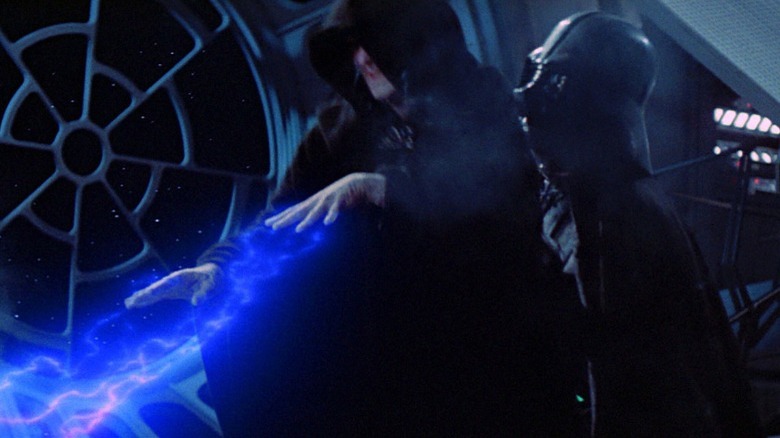
The struggle between the light and dark sides is framed not as a complementary balance but as an absolute moral conflict between good and evil. The Emperor, Palpatine, functions as a clear Satanic figure—a tempter who promises power and the ability to overcome death, preying on Anakin’s fears to lure him into damnation.17 Anakin’s transformation into Darth Vader is a classic fall from grace, a story of a chosen hero who succumbs to evil.

Most significantly, the climax of the original trilogy is a story of redemption through sacrificial love, a central tenet of Christian theology. Vader is not defeated in battle but is redeemed when Luke’s unconditional love for him reawakens the good that was dormant within. In a final act of self-sacrifice, Vader kills the Emperor to save his son, fulfilling his destiny not by destroying evil through power, but by embracing love.16 This narrative arc resonates deeply with the Christian emphasis on grace, forgiveness, and the idea that no one is beyond redemption. Even the saga’s most famous blessing, “May the Force be with you,” functions as a secular benediction that echoes religious phrases like “The Lord be with you” or “God be with you,” grounding the fantastical story in a familiar spiritual cadence.18
Part IV: A Tapestry of Myth and Modern Spirituality
The syncretic nature of the Force extends beyond these major traditions, incorporating elements from a wide array of mythologies and spiritual beliefs to create a truly global myth. The stark, moralistic dualism of the light and dark sides, while given a Western narrative framing, has ancient roots in Zoroastrianism, one of the world’s oldest monotheistic religions, which posits a cosmic struggle between a benevolent creator, Ahura Mazda, and a destructive spirit, Angra Mainyu.
This vast tapestry of influences is organized around the narrative framework of Joseph Campbell’s “monomyth,” or the Hero’s Journey, which Lucas has openly cited as a primary structural influence. Within this framework, the Force functions as the “supernatural aid” that the hero receives to complete his quest. It is the magic that allows a farm boy to become a galactic savior, tapping into the archetypal power of myth to tell a story that feels both new and ancient.
Furthermore, there are clear animistic or shamanistic undertones in the way some characters relate to the Force, treating it as a “Great Spirit” that pervades nature and communicates through intuition. This is particularly evident in the beliefs of more “primitive” cultures within the Star Wars galaxy, such as the Ewoks. In the modern context, the Force has been widely interpreted through the lens of the New Age movement, seen as a metaphor for human potential, inner power, and the interconnectedness of consciousness—ideas that resonate with contemporary, non-institutional forms of spirituality.
This deliberate blending of disparate traditions is not a flaw or an inconsistency but is the very source of the Force’s appeal. It is a quintessential example of postmodern myth-making. By consciously assembling resonant elements from a multitude of global faiths and philosophies, Star Wars creates a “meta-spirituality” that can speak to a pluralistic, globalized audience. The following table provides a systematic comparison of these elements, illustrating the depth and breadth of this syncretic process.
Table 1: Comparative Analysis of the Force and Real-World Traditions
| Philosophical/Religious Concept | Star Wars Manifestation | Taoism | Buddhism | Hinduism | Stoicism | Christianity |
| Ultimate Reality / Cosmic Principle | The Force (The Cosmic Force) | The Tao (The Way) | Pratītyasamutpāda (Dependent Origination) | Brahman (Ultimate Reality) | The Logos (Universal Reason) | God’s Omnipresence / Divine Providence |
| Life Energy | The Living Force / Qi | Qi (Chi) | (Implicit in interconnectedness) | Shakti / Prana | Pneuma (Vital Breath) | The Holy Spirit (as life-giver) |
| Duality | Light Side vs. Dark Side | Yin and Yang (Complementary) | Enlightenment vs. Ignorance (Mental States) | Devas vs. Asuras (Gods vs. Demons) | Virtue vs. Vice (Rational vs. Irrational) | God vs. Satan / Good vs. Evil (Moral Absolutes) |
| Ethical Code | The Jedi Code | Wu Wei (Effortless Action) | The Eightfold Path | Dharma (Righteous Duty) | Living According to Nature/Virtue | The Ten Commandments / The Beatitudes |
| Spiritual Practice | Meditation, Training, Mindfulness | Meditation, Tai Chi | Dhyāna (Meditation), Sati (Mindfulness) | Yoga, Meditation | Mindfulness of the Present, Self-Examination | Prayer, Contemplation, Service |
| Core Vice / Obstacle | Fear, Anger, Hate, Attachment | Imbalance, Forcing Action | Dukkha (Suffering) caused by Taṇhā (Craving/Attachment) | Adharma (Unrighteousness), Ego | Passion (Pathos), False Judgments | Sin (Pride, Greed, etc.) |
| Ultimate Goal | Oneness with the Force / Balance | Harmony with the Tao | Nirvana / Enlightenment | Moksha (Liberation) / Union with Brahman | Apatheia (Freedom from Passion), Virtue | Salvation / Union with God |
Part V: Conclusion: The Force as a Modern Mythology
The Force is far more than a fictional energy source; it is a masterful act of cultural and spiritual synthesis. George Lucas set out to create a modern myth, and by weaving together the most resonant elements of Taoism, Buddhism, Hinduism, Stoicism, and Judeo-Christianity, he succeeded in crafting a spiritual framework that is both profoundly familiar and uniquely its own. The power of the Force lies not in its doctrinal purity or theological coherence, but in its very lack thereof. Its internal tensions—between Eastern balance and Western dualism, between Buddhist non-attachment and Christian redemptive love—are not narrative flaws but are the engines of its philosophical drama.
This deliberate bricolage makes the Force a reflective surface rather than a monolithic doctrine. It allows viewers from diverse cultural and spiritual backgrounds to see their own beliefs and values mirrored in a galaxy far, far away. A Buddhist can recognize the principles of mindfulness and non-attachment; a Christian can see a story of fall and redemption; a Stoic can admire the discipline of the Jedi; and a secular humanist can interpret the Force as a metaphor for inner potential and the interconnectedness of humanity.
In this way, the Force functions as what Franciscan friar Richard Rohr might call a story that is “truer than true”—a myth that, while not literally factual, communicates profound truths about the human condition.17 It taps into archetypal spiritual longings for meaning, connection, and morality in a way that transcends cultural boundaries. In doing so, Star Wars has completed a full circle of cultural influence. It began by borrowing from ancient traditions to create its mythology, and it has now become a primary cultural text through which modern audiences engage with, discuss, and rediscover those same ancient ideas. The Force, therefore, stands as one of the most successful and influential examples of postmodern myth-making, a syncretic faith for a globalized world.
Notes
- “The Force,” Wikipedia, last modified December 19, 2023, https://en.wikipedia.org/wiki/The_Force.
- John C. McDowell, “Feeling The Force – Star Wars and Spiritual Truth,” bethinking.org, 2007, https://www.bethinking.org/culture/feeling-the-force-star-wars-and-spiritual-truth.
- “The Force,” StarWars.com, accessed December 5, 2024, https://www.starwars.com/databank/the-force.
- Chris Sunami, “Jedi Philosophy,” The Pop Culture Philosopher, October 15, 2015, last modified October 16, 2015, https://popculturephilosopher.com/jedi-philosophy/.
- Thomas D. Screen, “Star Wars: The Last Jedi’s ‘Prime Jedi’ Was A Servant Of Balance, Not The Light Side,” Screen Rant, September 22, 2020, https://screenrant.com/star-wars-prime-jedi-first-skywalker-theory/.
- “Jedi Prime – A Star Wars Story,” Reddit, posted by user “Jedi_Hedwig,” April 28, 2020, https://www.reddit.com/r/StarWars/comments/g94rrk/jedi_prime_a_star_wars_story/.
- Alexander Emmerich, “Qigong in Popular Culture: Star Wars’ the Force and Qi,” Ren Xue of the Americas, April 16, 2025, https://renxueamericas.org/star-wars-and-qigong/.
- “The Jedi Code,” Wikipedia, last modified December 19, 2023, https://en.wikipedia.org/wiki/Jedi#The_Jedi_Code.
- James Clark Ross, “Buddhism in Star Wars,” The Human Front, December 3, 2021, https://www.thehumanfront.com/buddhism-in-star-wars/.
- “The Jedi Code,” Scribd, accessed December 5, 2024, https://www.scribd.com/document/200784862/The-Jedi-Code.
- “Force Lore: The Jedi Code,” Star Wars: Knights of the Old Republic, posted by user “Valiens,” August 2, 2019, https://forums.starwarsnwn.com/t/force-lore-the-jedi-code/977.
- Lewis Glazebrook, “Star Wars: What Is The Jedi Code, Explained,” Game Rant, May 4, 2023, https://gamerant.com/star-wars-what-is-jedi-code-explained/.
- Nithin Sridhar, “Star Wars and Hinduism: 5 Hindu tenets that define Star Wars saga,” NewsGram, December 26, 2015, https://www.newsgram.com/general/2015/12/26/star-wars-and-hinduism-5-hindu-tenets-that-define-star-wars-saga.
- William O. Stephens, “Stoicism in the Stars: Yoda, the Emperor, and the Force,” in Star Wars and Philosophy: More Powerful Than You Can Possibly Imagine, ed. Kevin S. Decker and Jason T. Eberl (Chicago: Open Court Publishing, 2005), 16–28.
- William O. Stephens, “Stoicism and the Philosophies of the Jedi and the Sith,” College of Stoic Philosophers, n.d., accessed December 5, 2024, https://library.collegeofstoicphilosophers.org/StoicsStarWars.pdf.
- L. Christopher Bird, “Star Wars and Philosophy: Stoicism,” JediPath.org, August 1, 2018, https://jedipath.org/site/index.php/essays/7-star-wars-and-philosophy-stoicism.
- William O. Stephens, “Stoicism in the Stars: Yoda, the Emperor, and the Force,” PhilPapers, 2005, https://philpapers.org/archive/STESWA.pdf.
- Drake Burrows, “The Force, the Spirit, and Romans 8,” For the Church, August 10, 2021, https://ftc.co/resource-library/blog-entries/the-force-the-spirit-and-romans-8/.
- Stephen Copeland, “Star Wars and Christian Mysticism,” Franciscan Media, November 6, 2020, https://www.franciscanmedia.org/franciscan-spirit-blog/star-wars-and-christian-mysticism/.
- Ori Hoffer, “May the Force Be With Jew: Uncovering the Jewish Roots of ‘Star Wars’,” Washington Hebrew Congregation, May 4, 2023, https://www.whctemple.org/2023/05/may-the-force-be-with-jew-uncovering-the-jewish-roots-of-star-wars/.
Bibliography
Bird, L. Christopher. “Star Wars and Philosophy: Stoicism.” JediPath.org. August 1, 2018. https://jedipath.org/site/index.php/essays/7-star-wars-and-philosophy-stoicism.
Burrows, Drake. “The Force, the Spirit, and Romans 8.” For the Church. August 10, 2021. https://ftc.co/resource-library/blog-entries/the-force-the-spirit-and-romans-8/.
Copeland, Stephen. “Star Wars and Christian Mysticism.” Franciscan Media. November 6, 2020. https://www.franciscanmedia.org/franciscan-spirit-blog/star-wars-and-christian-mysticism/.
Emmerich, Alexander. “Qigong in Popular Culture: Star Wars’ the Force and Qi.” Ren Xue of the Americas. April 16, 2025. https://renxueamericas.org/star-wars-and-qigong/.
“The Force.” StarWars.com. Accessed December 5, 2024. https://www.starwars.com/databank/the-force.
“Force Lore: The Jedi Code.” Star Wars: Knights of the Old Republic. Posted by user “Valiens.” August 2, 2019. https://forums.starwarsnwn.com/t/force-lore-the-jedi-code/977.
Glazebrook, Lewis. “Star Wars: What Is The Jedi Code, Explained.” Game Rant. May 4, 2023. https://gamerant.com/star-wars-what-is-jedi-code-explained/.
Hoffer, Ori. “May the Force Be With Jew: Uncovering the Jewish Roots of ‘Star Wars’.” Washington Hebrew Congregation. May 4, 2023. https://www.whctemple.org/2023/05/may-the-force-be-with-jew-uncovering-the-jewish-roots-of-star-wars/.
“Jedi Prime – A Star Wars Story.” Reddit. Posted by user “Jedi_Hedwig.” April 28, 2020. https://www.reddit.com/r/StarWars/comments/g94rrk/jedi_prime_a_star_wars_story/.
McDowell, John C. “Feeling The Force – Star Wars and Spiritual Truth.” bethinking.org. 2007. https://www.bethinking.org/culture/feeling-the-force-star-wars-and-spiritual-truth.
Ross, James Clark. “Buddhism in Star Wars.” The Human Front. December 3, 2021. https://www.thehumanfront.com/buddhism-in-star-wars/.
Screen, Thomas D. “Star Wars: The Last Jedi’s ‘Prime Jedi’ Was A Servant Of Balance, Not The Light Side.” Screen Rant. September 22, 2020. https://screenrant.com/star-wars-prime-jedi-first-skywalker-theory/.
Sridhar, Nithin. “Star Wars and Hinduism: 5 Hindu tenets that define Star Wars saga.” NewsGram. December 26, 2015. https://www.newsgram.com/general/2015/12/26/star-wars-and-hinduism-5-hindu-tenets-that-define-star-wars-saga.
Stephens, William O. “Stoicism and the Philosophies of the Jedi and the Sith.” College of Stoic Philosophers. N.d. Accessed December 5, 2024. https://library.collegeofstoicphilosophers.org/StoicsStarWars.pdf.
Stephens, William O. “Stoicism in the Stars: Yoda, the Emperor, and the Force.” In Star Wars and Philosophy: More Powerful Than You Can Possibly Imagine, edited by Kevin S. Decker and Jason T. Eberl, 16–28. Chicago: Open Court Publishing, 2005.
Stephens, William O. “Stoicism in the Stars: Yoda, the Emperor, and the Force.” PhilPapers. 2005. https://philpapers.org/archive/STESWA.pdf.
Sunami, Chris. “Jedi Philosophy.” The Pop Culture Philosopher. October 15, 2015. Last modified October 16, 2015. https://popculturephilosopher.com/jedi-philosophy/.
“The Jedi Code.” Scribd. Accessed December 5, 2024. https://www.scribd.com/document/200784862/The-Jedi-Code.
Wikipedia. “The Force.” Last modified December 19, 2023. https://en.wikipedia.org/wiki/The_Force.
Wikipedia. “Jedi.” Last modified December 19, 2023. https://en.wikipedia.org/wiki/Jedi.
Works cited
- ‘Feeling The Force’ – Star Wars and Spiritual Truth – bethinking.org, accessed on June 30, 2025, https://www.bethinking.org/culture/feeling-the-force-star-wars-and-spiritual-truth
- The Force – Wikipedia, accessed on June 30, 2025, https://en.wikipedia.org/wiki/The_Force
- The Force | Star Wars Databank | StarWars.com, accessed on June 30, 2025, https://www.starwars.com/databank/the-force
- Jedi Philosophy – The Pop Culture Philosopher, accessed on June 30, 2025, https://popculturephilosopher.com/jedi-philosophy/
- Star Wars Theory: The First Jedi Was A Skywalker – Screen Rant, accessed on June 30, 2025, https://screenrant.com/star-wars-prime-jedi-first-skywalker-theory/
- Jedi Prime: A Star Wars Story : r/StarWars – Reddit, accessed on June 30, 2025, https://www.reddit.com/r/StarWars/comments/g94rrk/jedi_prime_a_star_wars_story/
- Jedi – Wikipedia, accessed on June 30, 2025, https://en.wikipedia.org/wiki/Jedi
- Qigong in Popular Culture: Star Wars’ the Force and Qi, accessed on June 30, 2025, https://renxueamericas.org/star-wars-and-qigong/
- Buddhism in Star Wars | The Human Front, accessed on June 30, 2025, https://www.thehumanfront.com/buddhism-in-star-wars/
- Force Lore: The Jedi Code – Star Wars: Legends of the Old Republic, accessed on June 30, 2025, https://forums.starwarsnwn.com/t/force-lore-the-jedi-code/977
- Star Wars: What Is The Jedi Code? – Game Rant, accessed on June 30, 2025, https://gamerant.com/star-wars-what-is-jedi-code-explained/
- Star Wars and Hinduism: 5 Hindu tenets that define Star Wars saga, accessed on June 30, 2025, https://www.newsgram.com/general/2015/12/26/star-wars-and-hinduism-5-hindu-tenets-that-define-star-wars-saga
- William Stephens, Stoicism in the Stars: Yoda, the Emperor, and the Force – PhilArchive, accessed on June 30, 2025, https://philarchive.org/rec/STESWA
- Star Wars and Philosophy – PhilPapers, accessed on June 30, 2025, https://philpapers.org/archive/STESWA.pdf
- Stoicism and the Philosophies of the Jedi and the Sith – The College of Stoic Philosophers, accessed on June 30, 2025, https://library.collegeofstoicphilosophers.org/StoicsStarWars.pdf
- The Force, the Spirit, and Romans 8 – For the Church, accessed on June 30, 2025, https://ftc.co/resource-library/blog-entries/the-force-the-spirit-and-romans-8/
- Star Wars and Christian Mysticism | Franciscan Media, accessed on June 30, 2025, https://www.franciscanmedia.org/franciscan-spirit-blog/star-wars-and-christian-mysticism/
- May the Force Be With Jew: Uncovering the Jewish Roots of “Star …, accessed on June 30, 2025, https://www.whctemple.org/2023/05/may-the-force-be-with-jew-uncovering-the-jewish-roots-of-star-wars/
 Mastermind Century Group