
I’m always looking for patterns—connections across time, domains, and disciplines. If you’ve read this blog before, that won’t surprise you. What can Star Wars teach us about leadership? How does Jim Morrison reveal something essential about self-authorizing behavior? Can The Talking Heads actually teach us something about innovation?
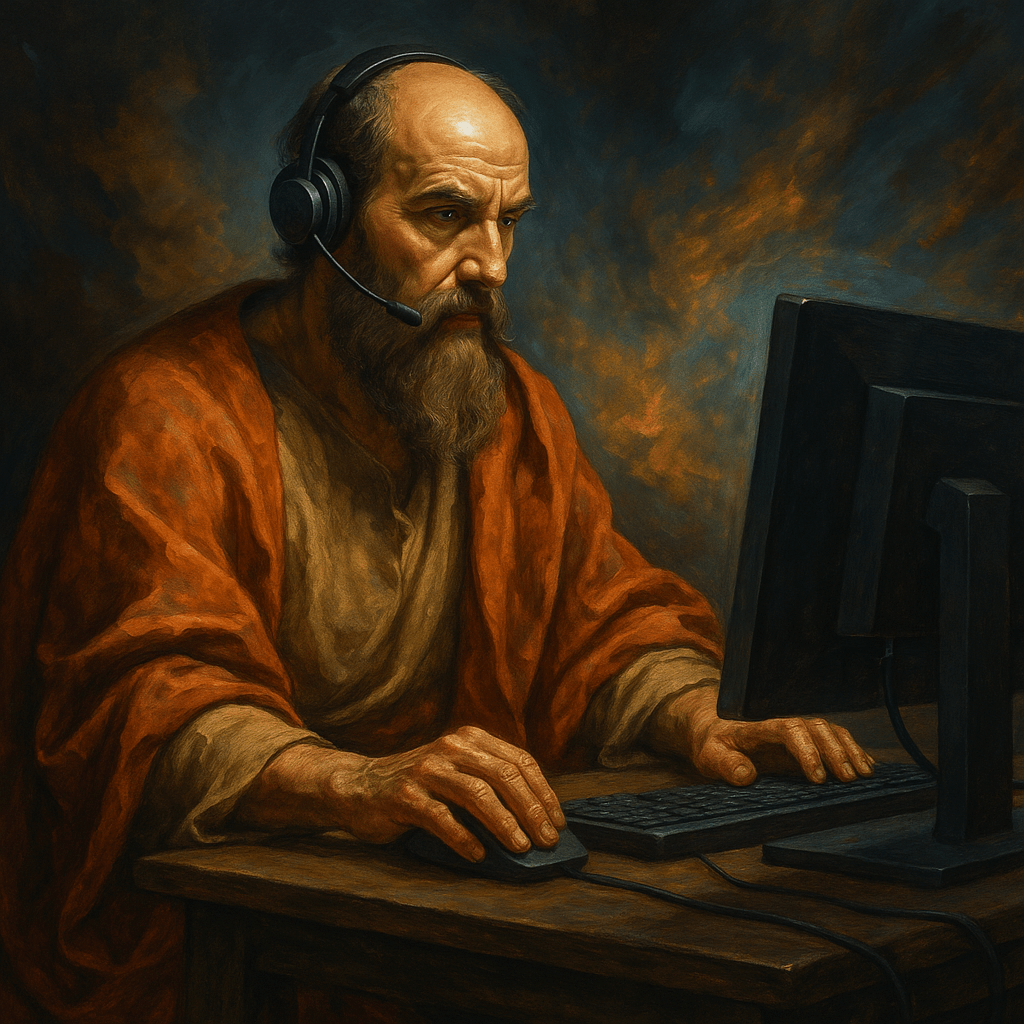
Lately, I’ve been turning back to one of the most well-read and enduring texts in history: the Bible. And while I’ve spent years reflecting on its teachings and characters, I found myself asking a new kind of question—not theological, but strategic. What if we viewed the Apostle Paul not just as a saint or theologian, but as the Chief Marketing Officer of early Christianity?
Think about it: Paul had no internet, no phone, no printing press, no satellite communication—not even the telegraph. And yet, he helped catalyze the most enduring and expansive religious movement in human history. His message traveled across continents, cultures, and centuries. So how did he do it?
This isn’t about religion—it’s about strategic communication, influence, and movement-building. Paul was a first-century visionary who, with clarity and conviction, built networks, empowered leaders, adapted messaging to diverse audiences, and created a platform that would outlast empires.
Let’s break down his strategy.
1. Focus on Strategic Hubs (Urban Focus)

Paul didn’t scatter his efforts randomly. He deliberately went to urban centers—Corinth, Ephesus, Athens, Rome—each a nexus of commerce, politics, and culture. These weren’t just large populations; they were influential transmission hubs. Messages that took root in these cities could ripple outward through trade routes, travelers, and social networks.
Rather than attempt to convert everyone everywhere, Paul understood the principle of leveraged influence. Influence a few key places, and you can influence many people. That’s not just ancient wisdom—it’s Marketing 101.
2. Engage Existing Communities First (Synagogue-to-Gentile Strategy)
Paul didn’t start from scratch. Upon arriving in a new city, his first stop was almost always the local synagogue (Acts 17:1–2). Why? Because that’s where he could find people who already believed in the Hebrew Scriptures—the very texts Paul used to argue that Jesus was the Messiah.
This gave him a cultural and intellectual bridge to walk across. But when that door closed, he didn’t force it—he pivoted. “From now on I will go to the Gentiles” (Acts 18:6). That wasn’t failure; it was strategic redirection. Paul knew that when the message wasn’t resonating in one audience, it might be time to find another—one more open, more curious, or more ready.
3. Adapt the Message to the Culture (Cultural Adaptation)
Paul was a cultural chameleon—but in the best possible way. He didn’t change the core message, but he changed how he communicated it.
- To Jews, he spoke of covenant and prophecy.
- To Greeks, he quoted philosophers and poets (Acts 17:28).
- To Romans, he emphasized law, order, and authority.
- To slaves and the marginalized, he spoke of liberation, equality, and belonging.
This is messaging mastery. Paul understood that context shapes comprehension. In 1 Corinthians 9:22, he wrote, “I have become all things to all people so that by all possible means I might save some.” That’s not inauthenticity—it’s empathy. It’s effective communication rooted in deep cultural intelligence.
4. Build Local Leadership (Church Planting and Empowerment)
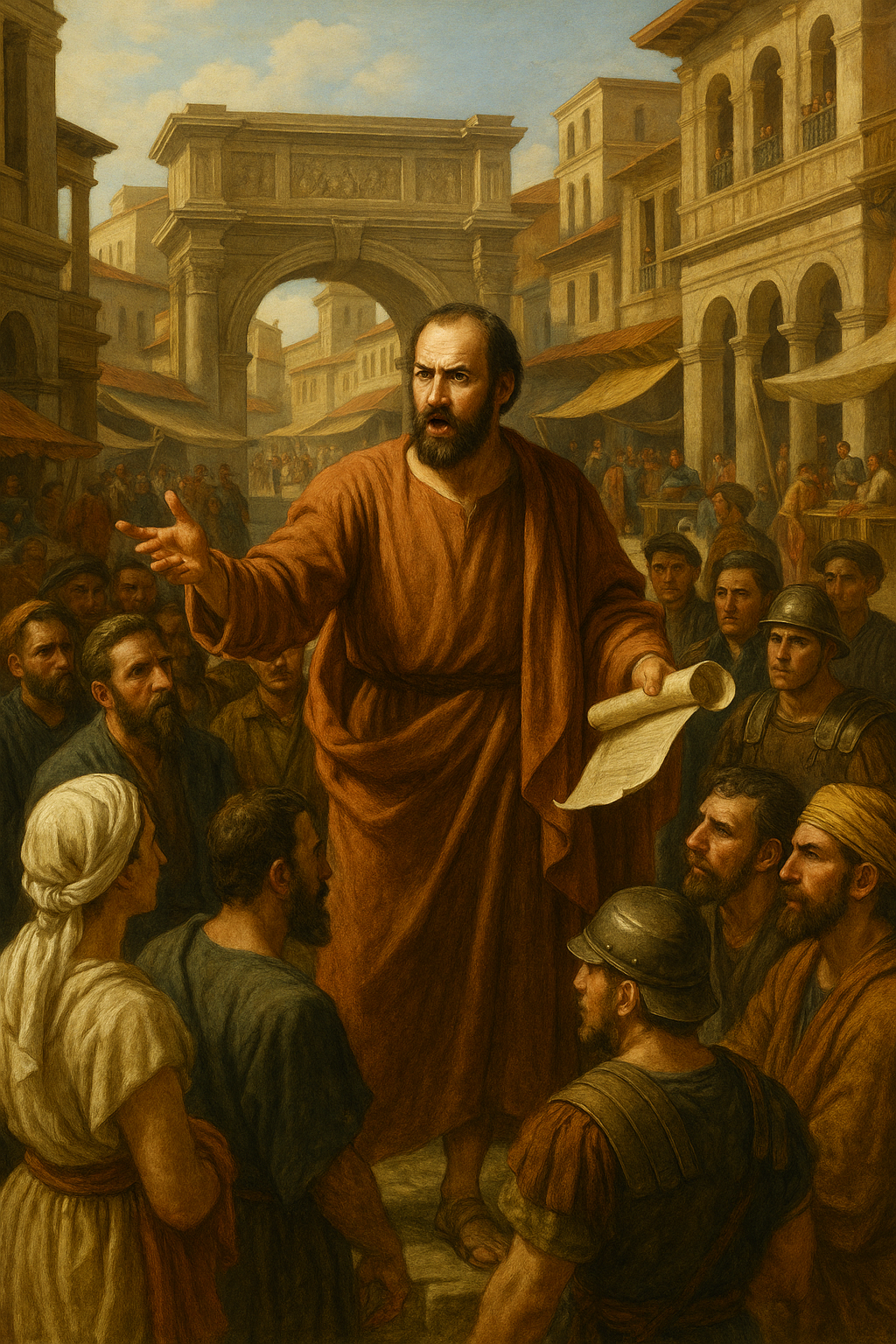
Paul wasn’t just collecting followers; he was building communities of practice. In each city, he raised up leaders—Timothy, Titus, Lydia, Priscilla—and then trusted them to lead. He didn’t centralize control; he decentralized influence.
This is what today we’d call network-based leadership. Rather than maintain control, Paul built a resilient and adaptive system, held together by shared values, ongoing communication (his letters), and empowered local actors. He created a movement, not a monument.
5. Offer an Inclusive, Scalable Message
Paul’s emphasis on grace through faith, rather than adherence to Jewish law, was the masterstroke that opened the doors wide. Gentiles didn’t need to undergo circumcision, observe strict dietary codes, or become cultural Jews to join the movement.
This wasn’t theological compromise—it was market expansion. Paul realized that a universal message had to remove unnecessary barriers. “There is neither Jew nor Greek, slave nor free, male nor female, for you are all one in Christ Jesus” (Galatians 3:28). That’s not just inclusion—it’s scalability.
6. Use Infrastructure for Rapid Dissemination (Roman Roads and Letters)
Paul made full use of the Roman Empire’s infrastructure. Roads, shipping lanes, postal systems, and the relative peace of the Pax Romana allowed him to travel farther and faster than any previous generation. He was also a Roman citizen, which gave him legal protections and access others didn’t have.
But Paul didn’t just rely on personal travel—he wrote letters. These weren’t casual notes; they were masterfully crafted communications, designed to be read aloud, copied, and shared. His epistles are an ancient form of content strategy, each balancing theology, encouragement, correction, and strategic guidance.
Think of Paul as running a 1st-century newsletter campaign—with a stunningly high open rate.
7. Model the Message with Integrity (Sacrificial Commitment)
Paul lived his message. He endured beatings, shipwrecks, prison, and exile. He gave up status, safety, and wealth. His credibility didn’t come from a position of power—it came from lived consistency.
This kind of sacrificial leadership gave his words weight. When people heard Paul speak or read his letters, they knew he believed every word—because he had suffered for every word.
In a world of shallow branding and performative messaging, Paul’s life was his greatest advertisement.
8. Infuse the Work with Urgency (Eschatological Motivation)

Paul believed time was short. He expected Christ to return soon and saw his mission as a race against the clock. This eschatological urgency gave everything he did a heightened intensity.
He wasn’t building an organization for its own sake. He was preparing people for what he believed was the ultimate, cosmic endgame. This conviction added meaning, purpose, and momentum to his work. He was selling not just transformation—but salvation.
In modern strategic communication, we call this narrative urgency—the sense that action must be taken now because the stakes are high.
Final Thoughts: What We Can Learn from Paul Today
Paul wasn’t selling a product. He was sharing a message that upended empires, redefined identity, and continues to shape the world. But from a strategic communication standpoint, he also offers a blueprint:
- Start where the people are.
- Speak their language.
- Leverage infrastructure.
- Decentralize leadership.
- Live your message.
- Act with urgency.
Whether you’re leading a movement, launching a brand, writing a book, or simply trying to spark change, Paul’s strategy remains as relevant today as it was in the first century.
He didn’t have a logo, a website, or a media team. But he had clarity, conviction, and a scalable strategy—and that was more than enough.
 Mastermind Century Group