

We had an AUiX teammate PCS this week. As is tradition, we give our PCSing officers a Star Wars-themed farewell gift—this time, a replica of Han Solo’s iconic blaster. I considered adding a plaque that simply read: “Who shot first?” But as I floated the idea, I realized only about half the room caught the reference.
So I explained: the debate over who shot first—Han or Greedo—has become a legendary rift in Star Wars fandom. But in the process of explaining the scene, I found myself thinking about something deeper. It’s not just a fan quarrel over canon—it’s a question of authenticity, leadership, and institutional discomfort with ambiguity.
What began as a joke became a deeper thought on what kind of leaders we really want to cultivate.
The Cantina Moment as Leadership Parable
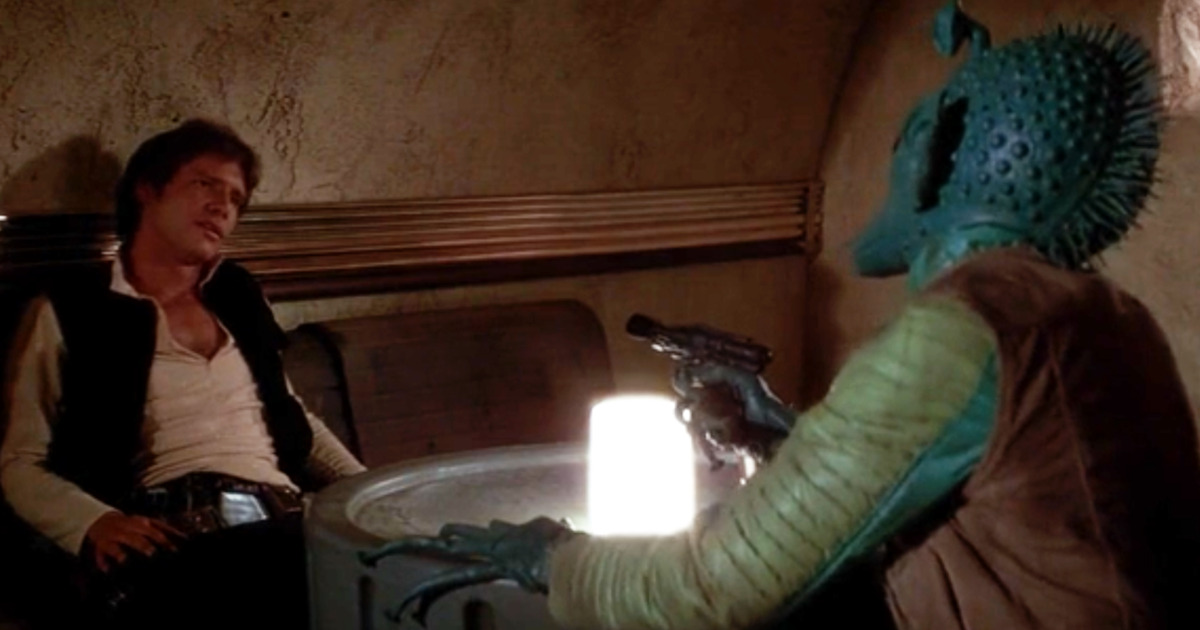
In a dim corner of the Mos Eisley Cantina, a smuggler leans back with studied indifference as a bounty hunter levels a blaster at him. What happens next has become one of the most debated moments in modern myth: who shot first—Han Solo or Greedo?
Originally, in George Lucas’s 1977 Star Wars, Han shoots first. Cold, clean, and decisive. But beginning in the 1997 Special Edition, Lucas revised the scene so Greedo shoots first and misses, giving Han moral cover. The implication: Han only kills in self-defense, not as a preemptive act of survival.
This small editorial tweak set off a cultural firestorm that still burns across forums, classrooms, and boardrooms. But beyond the nostalgia and fan obsession, “Han shot first” is more than a cinematic debate—it is a philosophical fault line. It’s about what kind of leader we want, what kind of person can navigate complexity, and whether our institutions have the stomach for authenticity in action.
It is a lesson in decisive leadership, strategic ambiguity, and institutional discomfort with messy truth.
Authenticity and the Edgewalker
Han Solo is the prototype of the edgewalker—a term borrowed from organizational and spiritual theory to describe those who straddle the boundary between order and chaos, between convention and rebellion. He is the smuggler who becomes a hero not by rejecting who he is, but by evolving into something more. But that arc only has weight if it starts in moral grayness. If Han shoots second—or never—he’s already “good,” and the transformation is hollow.
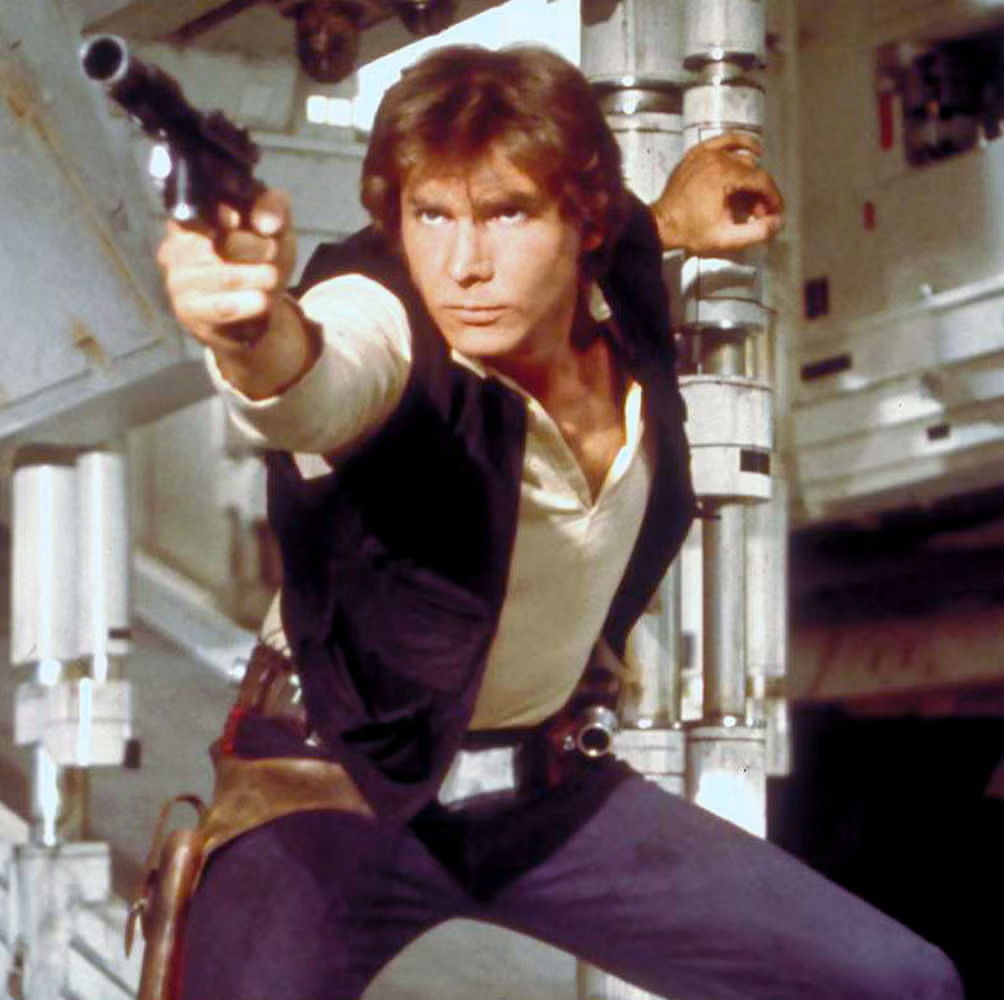
From a philosophical lens, Han embodies Nietzsche’s idea of the pre-moral man. He doesn’t act out of adherence to imposed moral codes but from personal instinct and lived experience. Nietzsche wrote that the higher individual creates values from within—a self-authoring agent in a world that demands conformity. Han, in that moment under the table, is choosing life over legality, intuition over hesitation.
In many ways, this is the essence of authentic leadership: the courage to act based on lived reality rather than sanitized expectation.
The Sanitization of Leadership
The Greedo-shoots-first revision represents something deeper than cinematic tidying. It mirrors what institutions do when confronted with the discomfort of complexity. They revise, retcon, or rationalize until reality is digestible.
Leadership in bureaucracies often comes with caveats: “take initiative, but only the safe kind”; “be bold, but not controversial.” The 1997 Han Solo is safe. He reacts. He waits for permission—in this case, a blaster bolt—to act. He’s a poster-boy for morally justified decision-making.
But real leadership doesn’t always come wrapped in moral clarity. Especially in environments like national security, combat, or organizational transformation, leaders must often act before rules are written, before approval is granted, and before consensus is reached. Sanitizing such moments—whether in film or in PME—strips them of their power and their honesty.
Our institutions want iconoclasts… until they act iconoclastically.
Decisiveness Under Ambiguity
Let’s be clear: Han didn’t shoot first because he was evil. He did it because he read the situation, assessed the risk, and made a decision before Greedo could act. In Boydian terms, his OODA loop was faster. He observed Greedo’s intent, oriented based on prior experience with bounty hunters, decided that a blaster to the gut meant lethal intent, and acted before the situation escalated further.
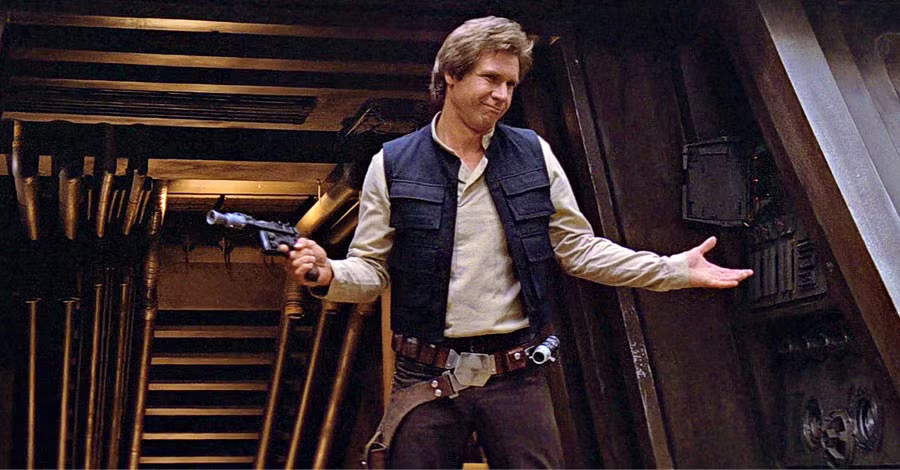
This is not just a sci-fi trope. It’s a battlefield truth. In complex, ambiguous, fast-moving scenarios—whether geopolitical, operational, or organizational—waiting for Greedo to shoot first is often fatal.
In warfighting and in leadership, there is a price to be paid for moral clarity: time. And time is a luxury edgewalkers, commanders, and innovators rarely have. Strategic ambiguity demands not paralysis, but principle-guided preemption.
Decisiveness is not recklessness. It is responsibility accelerated.
Strategic Transformation
One of the more subtle losses in the Greedo retcon is the erosion of Han Solo’s character arc. If he begins the trilogy as essentially good, his transformation into a rebel leader and self-sacrificing friend becomes less remarkable. There’s no tension. No internal shift. No crucible.
But if he starts as a survivor—morally flexible, distrustful of causes, willing to shoot first—then his decision to return at the Battle of Yavin, to risk everything for others, to become more than he was—that has meaning.
Leadership arcs matter. They remind us that becoming better is not about perfection at the start but about direction. Institutions that whitewash beginnings often fail to inspire growth, and individuals who are afraid to act imperfectly will never change.
If Han didn’t shoot first, he didn’t change.
Implications for Today’s Leaders
So what does this teach those of us tasked with leading in real-world complexity?
First, embrace edgewalkers. The leaders who shoot first—figuratively—often do so not out of defiance, but because they see what others don’t. They act where others wait. These are the misfits, the Boydian destroyers who clear space for new creation. They are difficult, but they are essential.
Second, decisive action under ambiguity is not a liability—it is a skill. Leaders should train to operate without perfect information, to make peace with uncertainty, and to act when the moral terrain is unclear.
Third, authenticity matters. Sanitized narratives are dangerous. They teach future leaders that success comes from safety, not from struggle. They hide the messiness of becoming. Leadership must allow room for mistakes, growth, and redemption.
Finally, institutions must resist the urge to edit their heroes. Revisionism robs us of useful archetypes. Let Han be Han. Let him shoot first. Let others learn from it.
In The End: Shoot First or Miss the Moment
The question “Who shot first?” is not about a laser bolt. It’s about leadership philosophy. About who acts, who waits, and what we do with the discomfort of complexity.
In an age of rapid technological disruption, geopolitical instability, and institutional inertia, we need leaders who can act before clarity arrives. We need leaders who understand that ambiguity is not paralysis—it is potential.
The greatest threat to decisive leadership today is not failure. It is fear of appearing wrong before being proven right. Han Solo acted. The Force, it seems, forgave him.
So the next time someone asks who shot first, don’t just answer, “Han.”
Say: “The kind of leader we still need.”
 Mastermind Century Group