

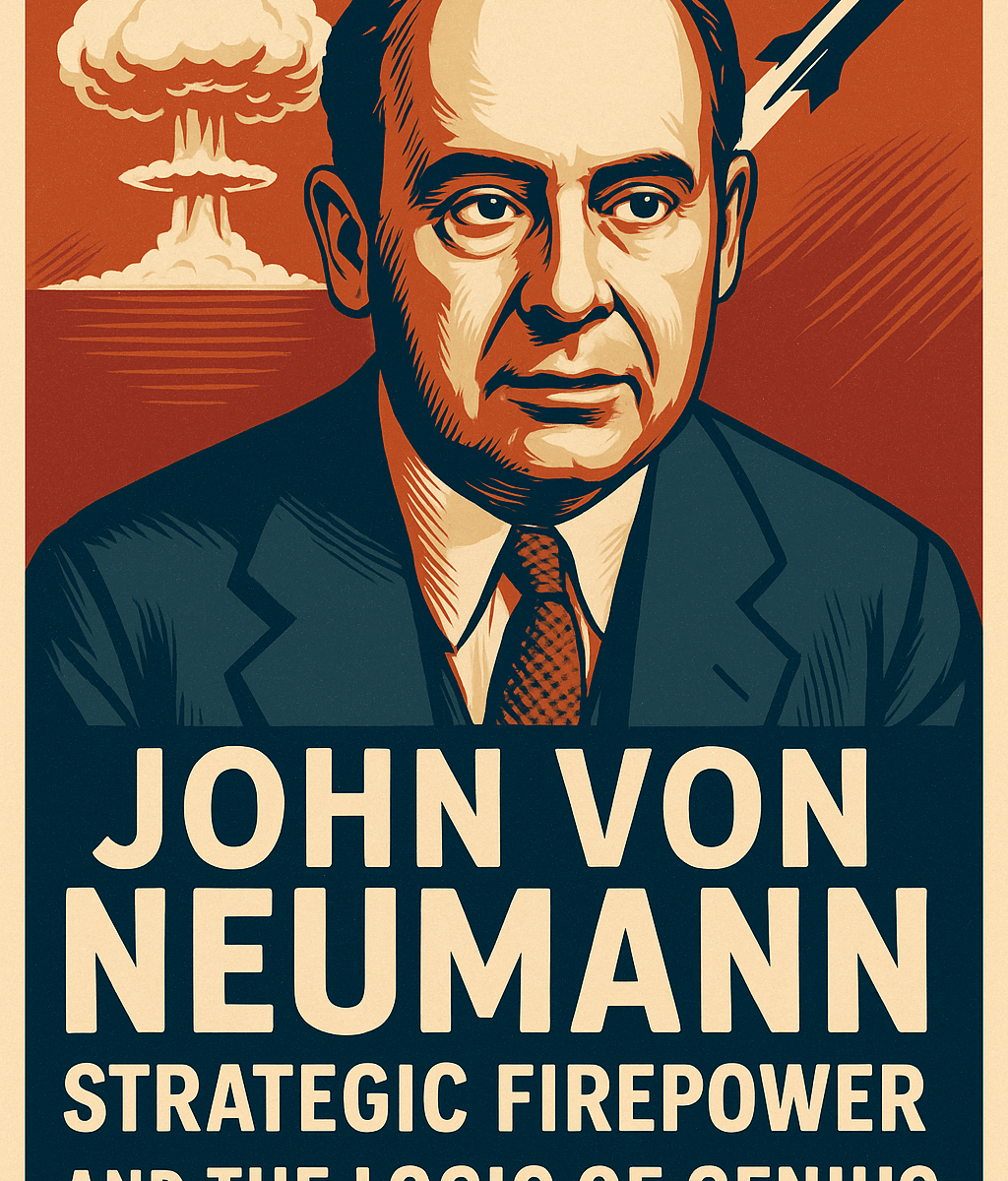
I’ve always been fascinated by great minds—those rare individuals who think across boundaries, lead with insight, and shape the world in ways most of us are still catching up to. Leaders, strategists, polymaths—they tend to emerge at critical moments in history, and their influence often transcends the disciplines they touch. Over the past few years, one name keeps surfacing in conversations about innovation, complexity, and strategic foresight: John von Neumann. Whether I’m reading about the origins of artificial intelligence, game theory, or Cold War deterrence, there he is.
So I decided to dig deeper…
John von Neumann (1903–1957) was arguably one of the greatest polymaths of the 20th century—a figure whose intellect shaped multiple disciplines at foundational levels. As a mathematician, physicist, computer scientist, engineer, and strategist, his contributions were not only vast but transformative. To understand von Neumann’s legacy as a polymath, innovator, and strategist—and what we should still be learning from him today—we can explore four facets of his genius:

1. Polymathic Range: Bridging Disciplines Before It Was Popular
Von Neumann operated in a time when the boundaries between disciplines were more rigid than today, yet he effortlessly spanned them. He made landmark contributions to:
- Pure mathematics (e.g., set theory, functional analysis)
- Physics (e.g., quantum mechanics foundations—especially the von Neumann formulation)
- Economics (e.g., game theory with Morgenstern, transforming decision science)
- Computer science (e.g., the von Neumann architecture, still foundational)
- Defense strategy (e.g., hydrogen bomb development, nuclear deterrence policy)

Lesson for today:
True innovation lies at the edges of disciplines. As complexity in global challenges grows (AI, biotech, quantum), we must foster more “edgewalker” figures who blend technical expertise with philosophical, ethical, and strategic insight. Von Neumann did not ask “which discipline?”—he asked “what problem?”
2. Innovator: Architect of the Modern Digital World
Von Neumann was a pioneer in what we now call algorithmic thinking. He did not merely help build the first programmable computer (the EDVAC); he conceptualized the architecture that still underpins almost all digital computing today. Importantly, he:
- Envisioned self-replicating automata—prefiguring AI, robotics, and synthetic biology
- Understood the implications of feedback loops, decades before cybernetics became mainstream
- Recognized early on the unpredictability and nonlinear behaviors in systems—insights now vital in complex adaptive systems and AI safety
Lesson for today:
Foundational thinking matters. Instead of iterating endlessly on existing systems, today’s innovators should invest more time on first principles and architectures—especially in AI, cyber, and quantum computing, where poor foundational choices have massive downstream risks.
3. Strategist: From Deterrence to Game Theory
During the Cold War, von Neumann was deeply embedded in nuclear strategy and the RAND Corporation’s early modeling efforts. His contributions to game theory reshaped diplomacy, economics, and military strategy. He was an early proponent of mutually assured destruction (MAD) as a form of deterrence, and he saw strategic interaction as fundamentally mathematical.
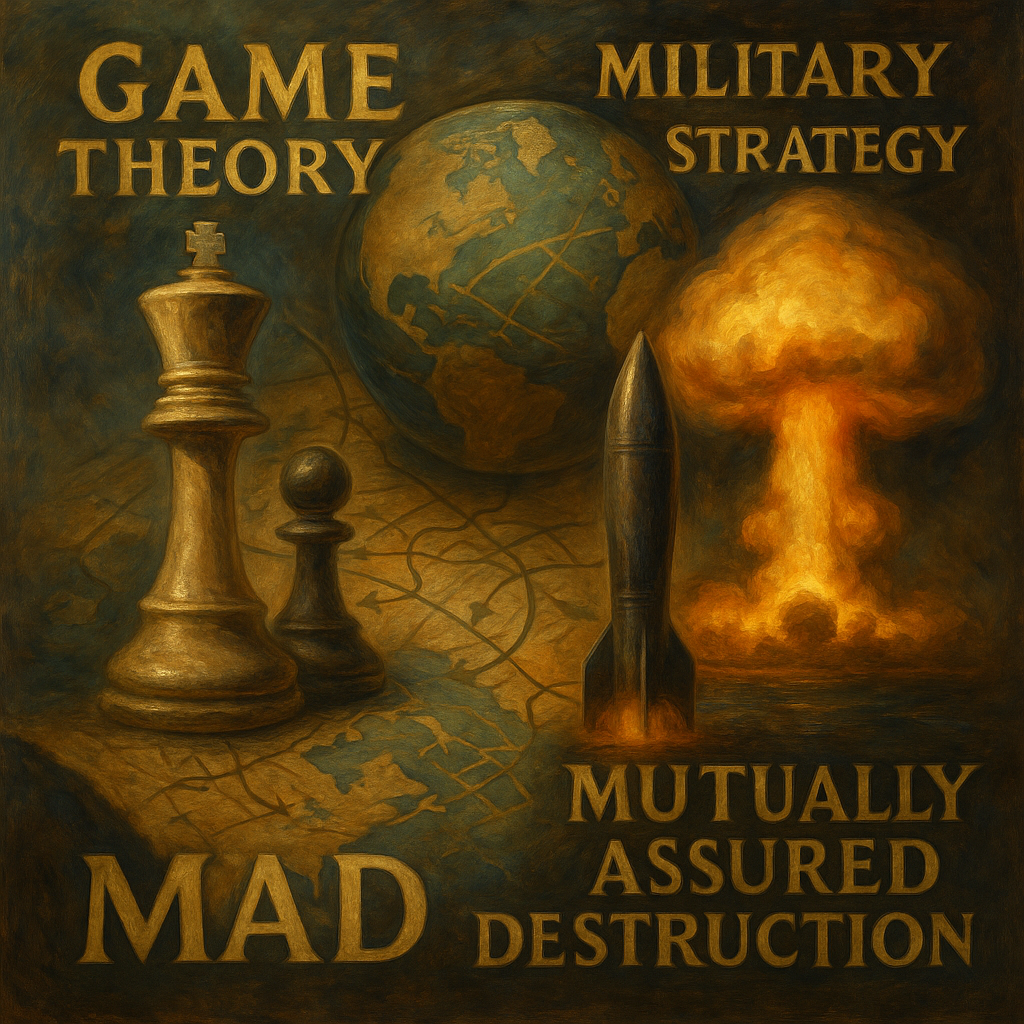
He understood the unintended consequences of technological superiority and urged the U.S. to maintain a lead in computing and physics—an argument that parallels contemporary concerns over AI and hypersonics.
Lesson for today:
Strategic foresight must be mathematically grounded. In a world where strategy is increasingly entangled with algorithms and decision automation, von Neumann’s rigor reminds us not to substitute intuition for modeling. Modern strategists must be comfortable with simulated, probabilistic, and systems-based thinking.
4. Epistemology and Humility: A Cautionary Genius
Despite his brilliance, von Neumann was aware of the limits of human cognition and the possible dangers of the technologies he helped create. He reportedly warned, late in life, that “the ever-accelerating progress of technology… gives the appearance of approaching some essential singularity in the history of the race beyond which human affairs, as we know them, could not continue.”
His thought foreshadows modern existential risk studies and AI alignment concerns. Though a man of logic, he understood that rationality without ethics can be catastrophic.
Lesson for today:
Genius must be tempered with foresight. Von Neumann teaches us to pair computational capability with strategic wisdom and moral clarity. In military innovation, AI design, or biotech, power must be matched with responsibility.
Takeaways for Today’s Military, Academic, and Innovation Leaders
- Encourage polymathic education: STEM, philosophy, ethics, and strategy must mix—especially for senior leaders.
- Invest in simulation and modeling as a core strategic practice—from wargaming to futures literacy.
- Build institutions that allow heterodox thinkers to work across disciplines without bureaucratic constraint.
- Anchor technological development in strategic ethics. Von Neumann’s regrets later in life should be a warning for those developing today’s most powerful tools.
 Mastermind Century Group