
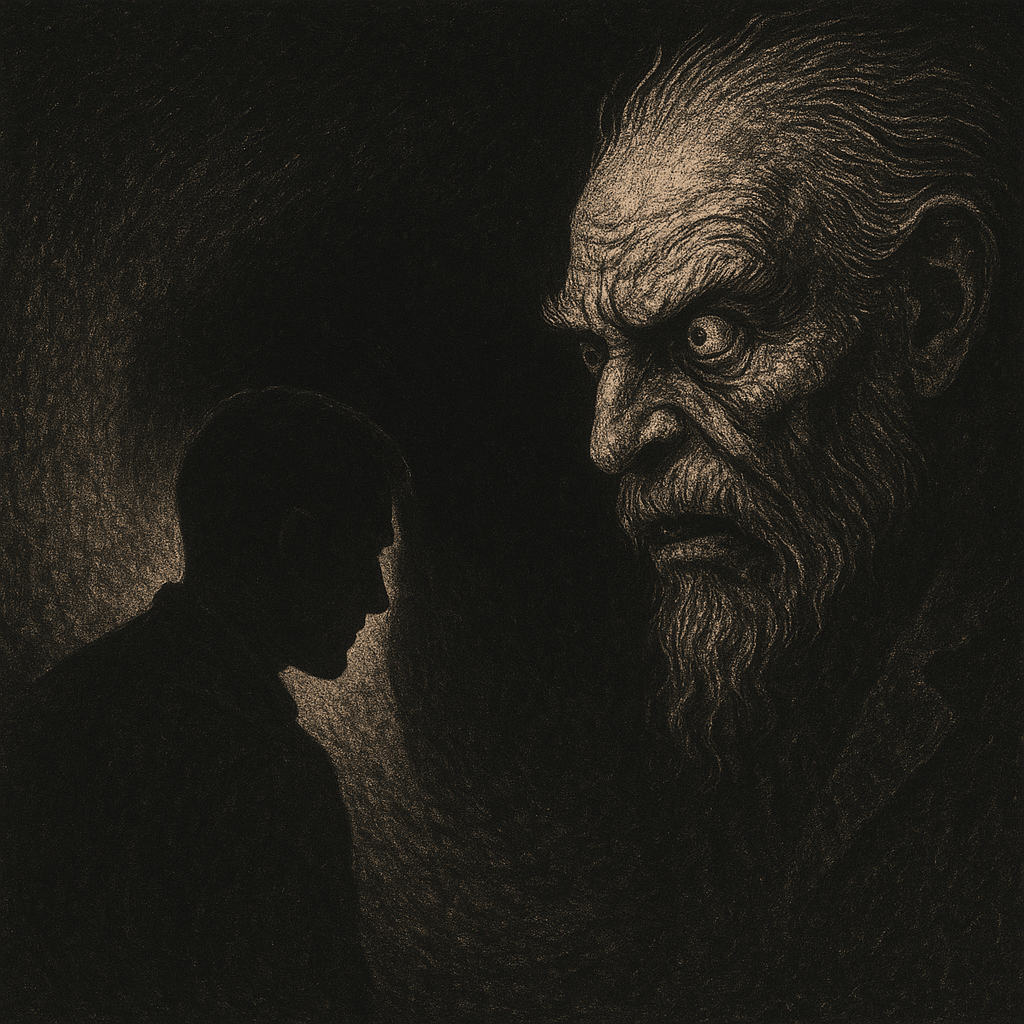
Friedrich Nietzsche warned us: “He who fights with monsters should be careful lest he thereby become a monster. And if you gaze long into an abyss, the abyss also gazes into you.” It was a 19th-century philosophical warning about moral corruption and existential danger. Today, it reads like a headline.
Nietzsche’s famous quote appears in aphorism 146 of his 1886 work Beyond Good and Evil: Prelude to a Philosophy of the Future (Jenseits von Gut und Böse) This quote comes from a section of the book titled “Epigrams and Interludes,” which is composed of short, often paradoxical or poetic statements—miniature explosions of insight. They aren’t embedded in a larger argument but stand alone to provoke thought. Aphorism 146 is one of the most well-known among them.
This quote touches on several recurring themes in Nietzsche’s philosophy:
1. Moral Inversion and Corruption: Nietzsche believed that traditional notions of good and evil were often constructed by the weak to suppress the strong. The danger is that in opposing tyranny or evil, one adopts its tactics and becomes indistinguishable from it.
2. Psychological Projection: Looking too long into the “abyss” (the unknown, the chaotic, the evil) can reflect back one’s own inner darkness. Nietzsche is suggesting a kind of psychological feedback loop: what you confront can change you.
3. The Will to Power and Eternal Return: Both these concepts revolve around what it means to live authentically in a world without inherent moral structure. The abyss could be read as the nihilistic void—a world stripped of meaning—into which we project meaning through strength, courage, and self-overcoming.
Nietzsche wrote Beyond Good and Evil after his break with Wagner and as his mental and physical health began to deteriorate. Though he wouldn’t collapse into madness until 1889, we can already sense a philosophical reckoning in this book. He was deeply concerned with what comes after the death of God—and how a culture reorients itself without traditional moral anchors.
So when he speaks of monsters and abysses, he’s not just writing metaphorically—he’s exploring how to live honestly and courageously in a morally chaotic world.
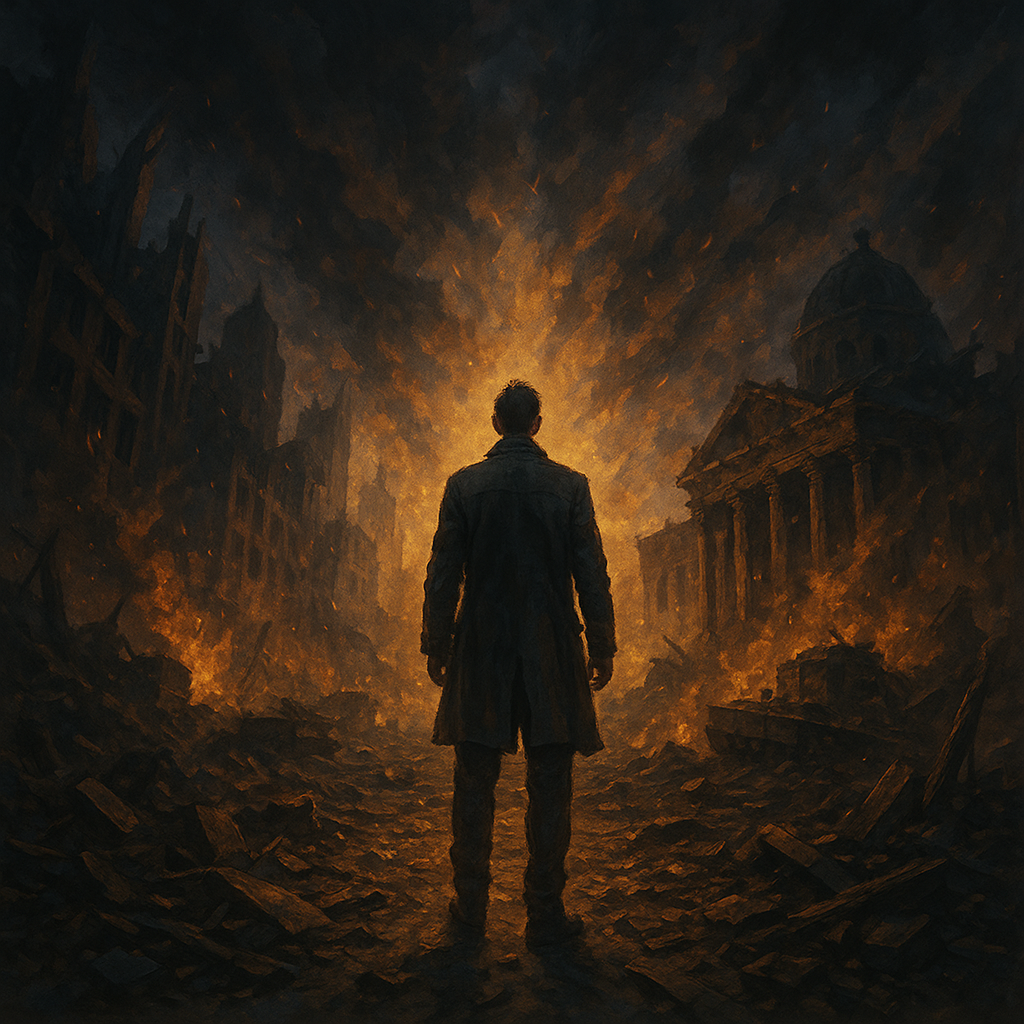
We still live in a world of converging darkness. Great power competition is back with a vengeance, authoritarianism is rising, and democratic societies—including our own—are losing cohesion. The American experiment, long a beacon of democratic norms and liberal values, now finds itself disoriented, doubted by allies, and dangerously fragmented within.
Our foreign policy reflects it. Tariffs are rising. Alliances are fraying. Our global posture oscillates between muscular intervention and cynical withdrawal. At home, division metastasizes. Neighbors distrust each other. Institutions command little loyalty. Algorithms amplify grievance, and the press no longer filters truth but monetizes chaos. The abyss is not some far-off philosophical void. It’s on our doorstep, and we scroll through it daily.
And yet—we look.
Nietzsche’s warning wasn’t to avoid confronting darkness; it was to survive the confrontation without becoming the very thing we oppose. The greatest risk to leaders—whether in the cockpit, the boardroom, or the Situation Room—isn’t that they face monsters. It’s that in fighting them, they lose their own reflection.
What does this mean for leadership?
It means resisting the temptation to become ruthless in the name of effectiveness. It means standing firm in principle when ambiguity and moral compromise feel expedient. It means leading with moral imagination—envisioning a future that isn’t just a mirror of our adversaries’ darkness but a torch against it.
It also means rethinking friendship—both as a nation and as individuals. America still has allies, but fewer friends. Transactional relationships dominate our diplomacy. We ask what others can do for us, not what shared sacrifice might achieve. Trust, like leadership, must be earned—and re-earned. Personally, many Americans are experiencing a parallel loneliness: a fraying of social bonds, an erosion of civic friendship.
To look into the abyss without losing oneself requires the courage to name what we see—and the discipline to not become it. It demands humility, solidarity, and clarity of mission.
The Chaos We Choose
Reading Nietzsche today is not only a philosophical exercise—it’s a survival strategy. Because what we’re facing now isn’t just the abyss. It’s chaos. And chaos has two faces.
Creative chaos is the necessary disorder that precedes growth, innovation, and transformation. It is the chaos of the American Revolution, of Apollo 11, of rebuilding after war or collapse. It can be dangerous, but it is filled with potential.
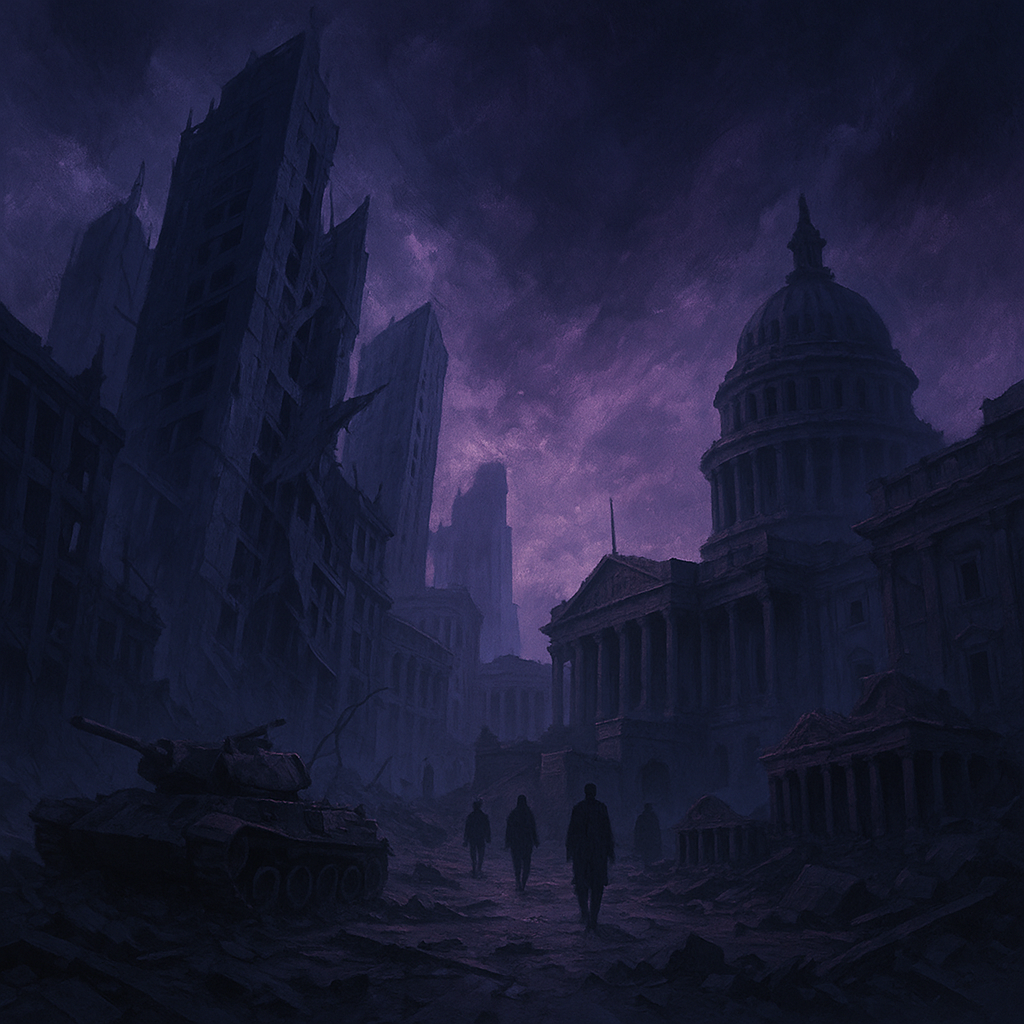
Destructive chaos, by contrast, is chaos untethered from purpose. It’s entropy weaponized. It erodes trust, splinters identity, and rewards fear over hope. We are seeing this now: in hybrid warfare, in media manipulation, in political nihilism, in the rise of strongmen promising order through domination.
As a nation and as individuals, we must learn to discern the difference. Because without careful discernment, even well-meaning leaders can become the very agents of destruction they hoped to fight.
Leading Through the Abyss
To lead in an age of dark chaos is to refuse despair and cynicism. It is to speak the truth plainly, act with moral clarity, and hold fast to what makes us human. It is to keep building, even when everything feels like it’s falling apart. It is to choose generative chaos over degenerative entropy.
So yes, darkness is everywhere. But the abyss only wins if we let it.
The monsters are real. But so is our ability to remain human while fighting them.
⸻
This reflection is offered not as resignation, but as resistance. A call for strategic leaders, warfighters, and citizens alike to lead with eyes wide open, hearts intact, and values unyielding. Part one of a series: Leadership in the Abyss.
 Mastermind Century Group