

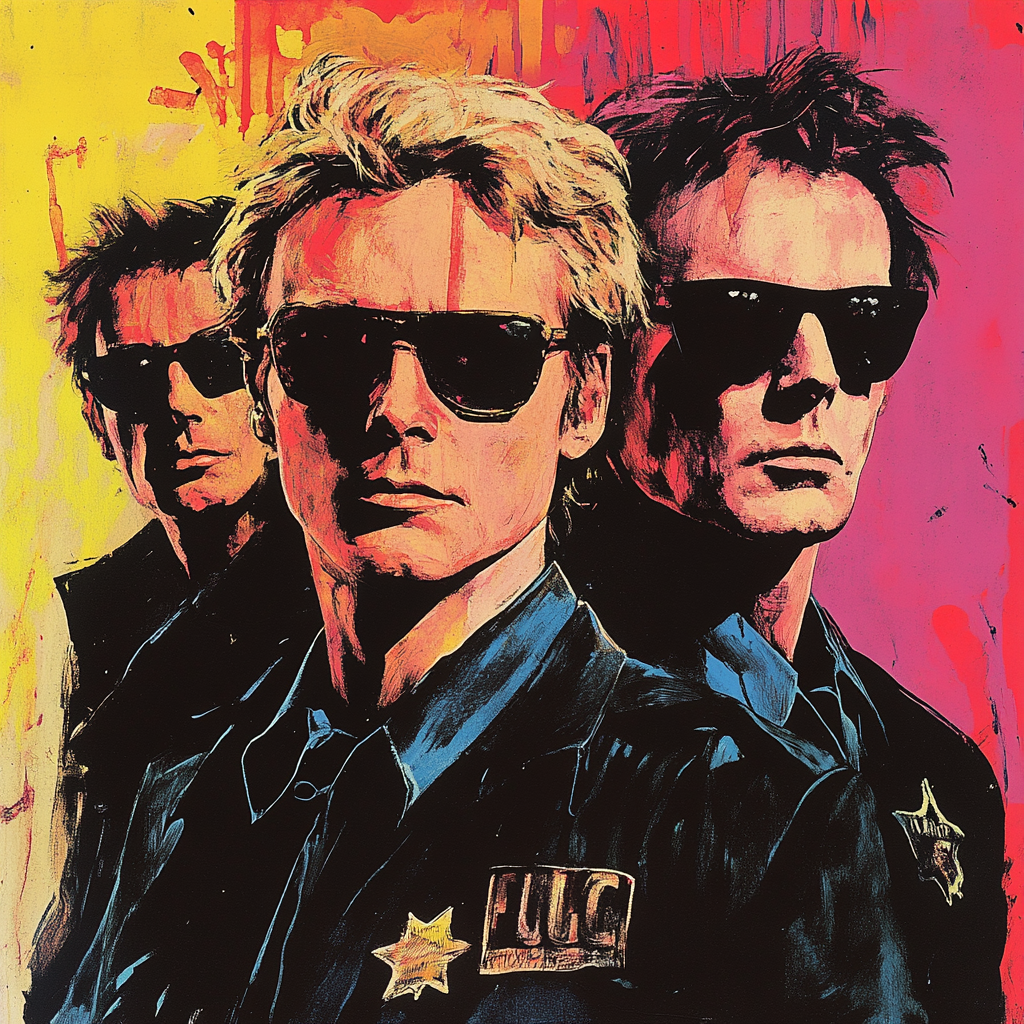
A New Wave Dystopia
In the early 1980s, The Police crafted a sound that blended punk, reggae, and new wave into anthems that were more than just catchy melodies. Beneath the radio-friendly hits lay deeper, darker themes—alienation, war, political decay, and the struggle for meaning in an increasingly mechanized world. Three songs in particular—“Ωmegaman,” “Spirits in the Material World,” and “Invisible Sun”—painted a picture of a civilization teetering on the brink, questioning the viability of modern institutions, and pondering the fate of humanity itself.
Fast forward to today, and the world they described seems eerily prescient. Economic uncertainty, declining global birth rates, increasing geopolitical tensions, resource scarcity, and rapid technological disruptions all contribute to a growing sense of existential unease. The warnings embedded in The Police’s music now serve as an unofficial soundtrack to a world grappling with decline.
1. “Ωmegaman” and the Isolation of the Individual
When Andy Summers wrote “Ωmegaman,” it was reportedly inspired by the 1971 sci-fi film The Omega Man (itself an adaptation of Richard Matheson’s I Am Legend). The movie and song center around a last man standing scenario, where civilization has collapsed, and the protagonist faces off against a world that has turned against him. The theme of isolation resonates deeply in today’s global climate.

Modern Parallels:
- Digital Isolation: The rise of social media, remote work, and AI-driven interactions has paradoxically disconnected individuals from real human engagement. Despite being more connected than ever, loneliness and mental health issues are on the rise.
- Economic and Social Fragmentation: As wealth gaps widen and political polarization intensifies, many feel stranded within their own societies, much like the song’s protagonist trapped in an apocalyptic world.
- Technological Alienation: With the increasing dominance of AI, automation, and digital interfaces, people struggle to maintain relevance in the workforce. Like the lone survivor in Omega Man, many fear becoming obsolete in a rapidly transforming world.
2. “Spirits in the Material World” and Political Disillusionment
The opening track of Ghost in the Machine, “Spirits in the Material World,” is a biting critique of political failure and societal disillusionment. The song expresses skepticism toward governments, revolutionaries, and institutions that claim to provide solutions but only perpetuate the same cycles of control and decay.

Modern Parallels:
- Political Polarization & Institutional Decline: Governments across the world seem locked in endless dysfunction—whether through partisan gridlock, corruption, or loss of public trust. The IMF’s warnings about sluggish global economic growth mirror the song’s sense of frustration with political stagnation.
- Rise of Authoritarianism & Anti-Democratic Sentiment: As democratic institutions weaken, people turn to strongman figures or radical ideologies in search of solutions. This reflects the song’s core critique that there is “no political solution to our troubled evolution.”
- Crisis of Meaning in Society: Today’s youth are more disillusioned with traditional political and economic structures than previous generations. Protests, civil unrest, and declining faith in leadership all reinforce the song’s message that we are lost in a material world with no guiding spirits.
3. “Invisible Sun” and the Persistence of Conflict
“Invisible Sun” was written at the height of the Troubles in Northern Ireland, a period marked by violent sectarian conflict. The song’s haunting lyrics and brooding atmosphere captured the psychological weight of living in a world where violence is constant and hope is dim.

Modern Parallels:
- Ongoing Wars & Geopolitical Tensions: From Ukraine to Gaza, conflicts rage on, and civilians bear the brunt of instability. Much like the Troubles, these conflicts are often deeply rooted in historical, ethnic, and political grievances that defy easy solutions.
- Climate Change as a Driver of Instability: Resource scarcity—whether in water, food, or land—is fueling new conflicts. Experts predict that as climate conditions worsen, wars over essential resources will become more common.
- The “Invisible Sun” of Hope: Despite bleak conditions, people continue to fight for survival, whether through activism, innovation, or sheer resilience. This mirrors the song’s notion that even in darkness, there is an unseen force driving humanity forward.
Are We Really in Decline?
So, were The Police right? Is the world truly in decline, or are we simply facing another transitional period of upheaval and reinvention?
Current Indicators of Global Challenges:
- Economic Stagnation: Global growth forecasts remain sluggish, fueling fears of long-term stagnation.
- Demographic Collapse: Countries like South Korea, Japan, and Italy are experiencing birth rate crises that could reshape entire economies.
- Resource Shortages: From water scarcity to food insecurity, essential resources are under strain.
- Technological Disruption: AI’s rapid evolution poses existential questions about jobs, ethics, and the very fabric of society.
- Geopolitical Instability: Rising nationalism, ongoing wars, and new cold war tensions between superpowers all contribute to a fragile international order.
Strategic Response: Innovation, Leadership, and Adaptation
If decline is inevitable, how do we respond?
1. Leadership in an Era of Complexity
- Adaptive Leadership: Leaders must develop the ability to navigate uncertainty, embracing complexity rather than resisting it.
- Resilience Thinking: Organizations, governments, and individuals must build systems that can withstand shocks—whether economic, environmental, or social.
- Cross-Sector Collaboration: No single entity can solve global problems. Effective leadership will require partnerships between governments, businesses, and civil society.
2. Harnessing Innovation for Stability
- AI and Automation: Rather than resisting technological change, we must find ways to integrate AI ethically and equitably.
- Sustainable Development: Addressing resource scarcity through green technology, circular economies, and alternative energy sources can help stabilize societies.
- Future Literacy & Strategic Foresight: Educating leaders and citizens on long-term thinking will be crucial in shaping sustainable solutions.
3. Rebuilding Societal Trust
- Revitalizing Democratic Institutions: If faith in governance is declining, restoring transparency and accountability will be critical.
- Strengthening Community Bonds: Human connection must be prioritized in an increasingly digital world.
- Promoting a New Vision for the Future: Leaders must articulate a compelling, shared vision that inspires action rather than despair.
In The End: The Soundtrack to Our Future
The Police’s songs from the early 1980s serve as a mirror to the crises of our time. Their themes of isolation, disillusionment, and persistent conflict remain as relevant as ever. But if we are indeed living in a period of decline, it is not an irreversible fate.
Just as “Invisible Sun” reminds us that hope persists in dark times, so too does human ingenuity, resilience, and leadership hold the potential to reshape our trajectory. The key question remains: Will we listen to the warnings in the music and take action, or will we simply keep dancing as the world burns?
 Mastermind Century Group