

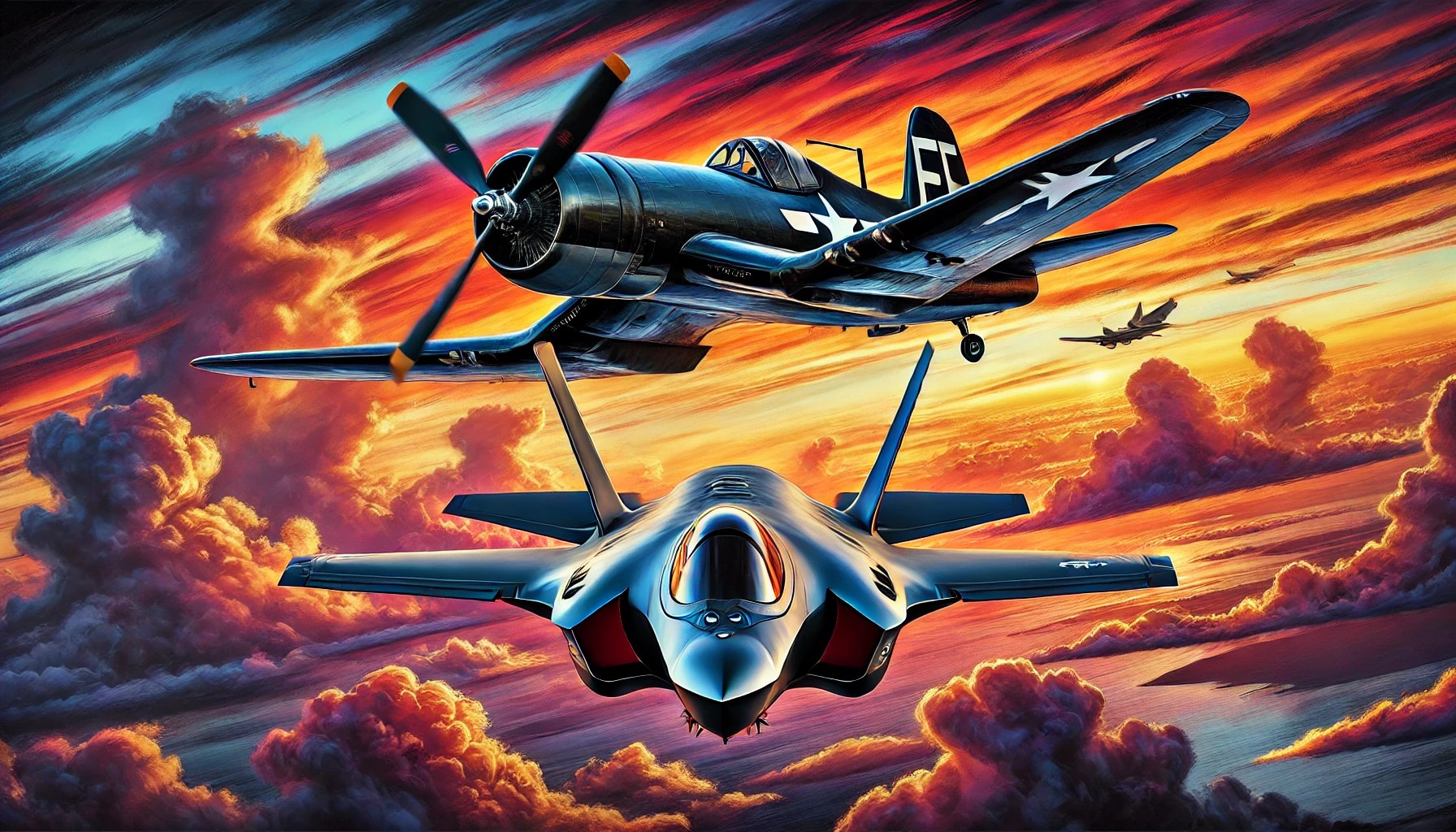
The demands of military service have always been shaped by the nature of war, the available technology, and the geopolitical context. In recent years, there has been significant discussion comparing what the United States accomplished during World War II and what it must do to prepare for future GPC (Great Power Competition) challenges. However, these comparisons often overlook the stark differences in what it takes to serve in the military today, including the training, education, operational demands, and broader systemic changes. These distinctions go far beyond the individual service member, touching on issues like the industrial base, acquisition systems, and political considerations.
This is not to diminish the accomplishments of the “greatest generation,” whose sacrifices and efforts remain unparalleled. Instead, it highlights the evolving nature of military service and the unique demands placed on today’s generation—one that must carefully consider what it takes to serve long before it is required to serve. Understanding this shift is essential to ensuring that future generations are prepared to meet the challenges of a rapidly changing and increasingly complex battlefield.
Military Service in WWII: Strength, Grit, and Mass Mobilization
World War II was a conflict defined by sheer scale, industrial power, and brute force. Millions of individuals were drafted or volunteered to serve, requiring the military to rapidly train large numbers of recruits with limited resources and time.
- Strength and Resolve:
In WWII, physical endurance and the ability to perform under extreme conditions were paramount. Soldiers needed to carry heavy equipment, march long distances, and endure harsh environments. Combat often relied on fortitude, quick decision-making under fire, and the ability to persevere amidst chaos. - Training in 1940:
Training programs were condensed, focusing on basic skills like weapon handling, physical conditioning, and small-unit tactics. Specialized roles (e.g., tank operators or signal corps) required additional technical training, but the emphasis was on functional capability rather than mastery. Given the urgency, many recruits had minimal training before deployment. - Example: Flying a Fighter Aircraft in WWII:
Flying a fighter aircraft in WWII required exceptional reflexes, situational awareness, and resilience. Pilots trained for dogfights, ground attacks, and navigation using rudimentary instruments. Aircraft were highly manual, relying on the pilot’s physical and mental coordination to control the plane in combat. Quick decision-making and courage were critical, as survival depended on raw skill and adaptability in high-stakes situations.
Military Service Today: Precision, Expertise, and Technology
Modern military service places a premium on cognitive skills, technical proficiency, and adaptability in an increasingly complex and technology-driven battlefield.
- Expertise and Adaptability:
While physical fitness remains critical, today’s military prioritizes intellectual capabilities, problem-solving skills, and adaptability. Cybersecurity, drone operations, and space-based technologies require a workforce capable of managing sophisticated systems and analyzing complex data. - Training in 2025:
Training today is significantly longer and more comprehensive. Recruits/cadets must master advanced technologies, understand asymmetric warfare, and operate effectively in joint, multinational environments. Simulations, virtual reality, and advanced analytics are common training tools, ensuring military members are well-prepared for the high-tech battlefield. - Example: Flying a 5th Generation Fighter Today:
Operating a 5th Generation fighter like the F-35 involves managing a sophisticated suite of systems, including advanced avionics, stealth technology, and integrated networked warfare. Pilots are not just flying but also processing and analyzing vast amounts of data from sensors and communications systems. Training emphasizes systems management, real-time tactical decision-making, and collaboration in joint or multinational operations. Mastery of software, mission planning tools, and situational awareness in an electronic warfare environment is essential.
Then vs. Now: Skill Sets and Training Needs
- WWII Skill Sets:
- Physical endurance
- Hands-on mechanical skills (e.g., maintaining weapons, vehicles)
- Resilience under harsh conditions
- Quick, instinctive decision-making
- Modern Skill Sets:
- Advanced technical knowledge (e.g., AI, cybersecurity, and robotics)
- Collaborative problem-solving in complex environments
- Proficiency with digital systems and real-time data analysis
- Adaptability to evolving threats (e.g., hybrid warfare, gray zone conflicts)
- Training Time:
- WWII: Weeks to a few months for basic and role-specific training.
- Today: Years of preparation, including advanced education (e.g., engineering, cyber defense) and continuous professional development.
Addressing the Shift: Challenges in Training and Readiness
The transition from WWII-era training to modern military preparation underscores the need for flexibility and foresight in training paradigms:
- Preparing for Future Wars:
As technology evolves, the military must anticipate future demands. Artificial intelligence, autonomous systems, and space operations will likely dominate tomorrow’s conflicts, requiring continuous innovation in training methods. - Building Resilience:
Psychological resilience still remains crucial, as modern warfare involves not only physical danger but also cognitive and emotional strain from operating in high-stakes, high-pressure environments. Same as it has always been, except perhaps an increase in speed, data, and information. - Balancing Strength and Expertise:
While technology takes center stage, physical fitness and traditional military skills remain critical for scenarios where technology fails or direct combat is unavoidable.
In The End:
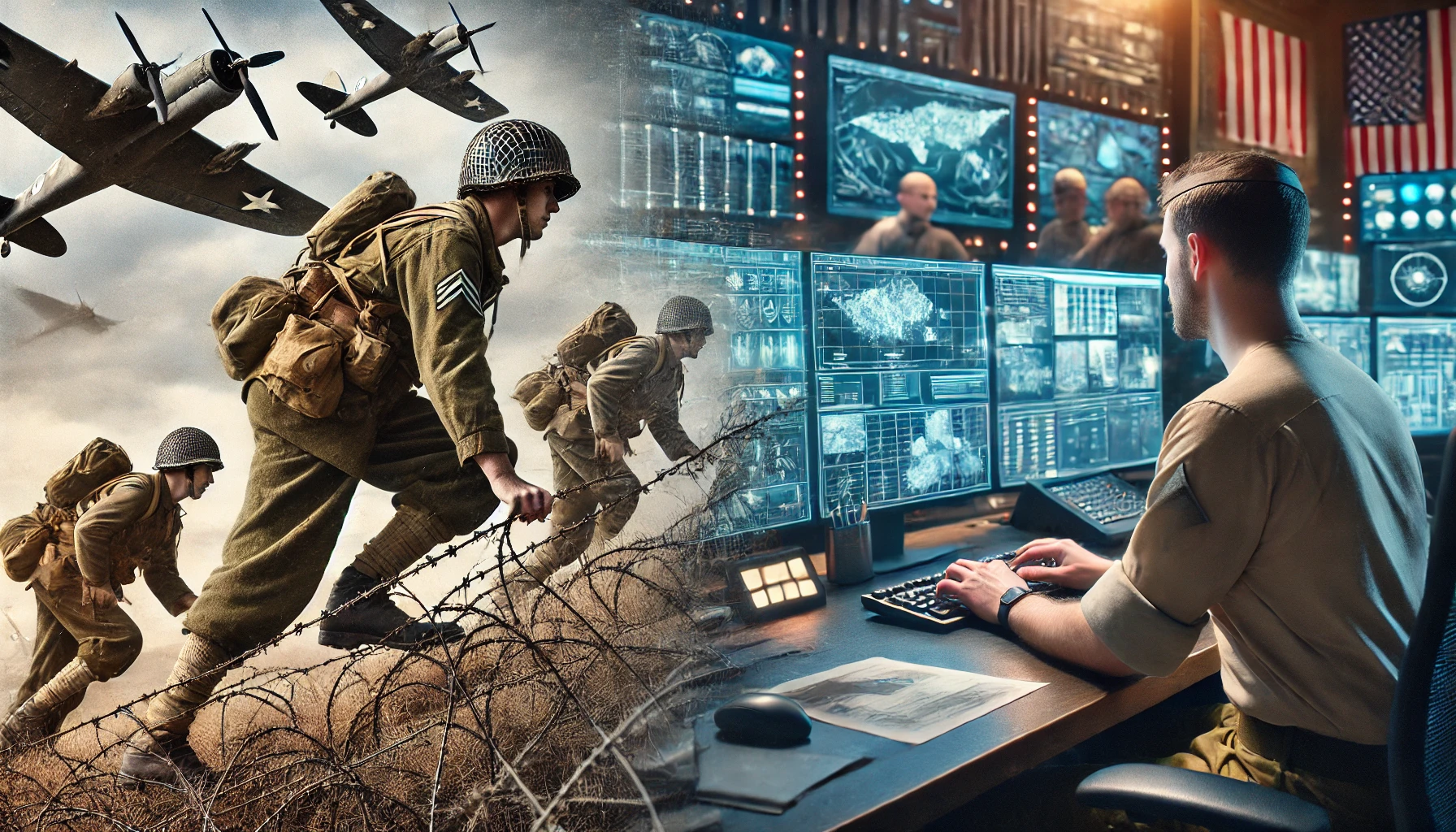
The demands of military service have shifted from the raw physicality and mass mobilization of WWII to the precision, expertise, and technological acumen required today. Training has evolved from a focus on survival skills and immediate readiness to an emphasis on lifelong learning, adaptability, and mastery of complex systems. While the tools and tactics have changed, the essence of military service—discipline, courage, and the ability to perform under pressure—remains timeless.
 Mastermind Century Group