

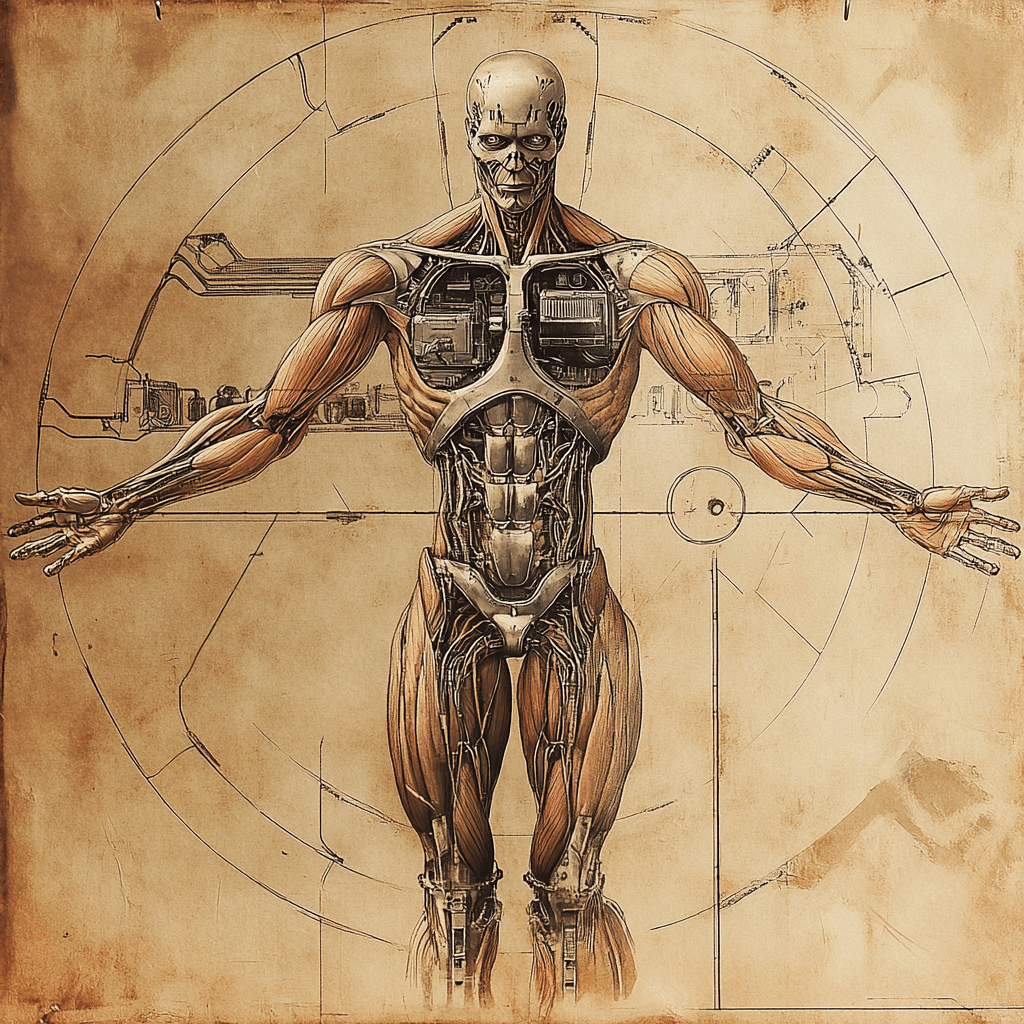
In today’s rapidly evolving world, the ability to innovate is not just a competitive advantage—it is a strategic imperative, particularly within the Department of Defense (DoD). Innovation in the DoD requires navigating complex, interconnected challenges that span technological, operational, geopolitical, and organizational domains. In this environment, the concept of the polymath—a person with extensive knowledge or expertise across diverse fields—emerges as a vital archetype.
Origins of the Polymath Concept
The concept of the polymath has its roots in the Renaissance period, where figures like Leonardo da Vinci embodied the ideal of a “Renaissance man.” The term itself originates from the Greek words poly (meaning “many”) and mathēs(meaning “learned” or “knowledgeable”). Renaissance thinkers believed that knowledge across diverse disciplines was interconnected and could lead to deeper insights and innovation. Academics such as Peter Burke in The Polymath: A Cultural History from Leonardo da Vinci to Susan Sontag have explored how polymathic thinking has shaped human progress. This framework has contemporary relevance in addressing the multifaceted challenges of modern defense.
Why the DoD Needs Polymaths
The DoD operates in an environment that demands cross-disciplinary thinking. Conflicts no longer reside solely in traditional domains but expand into cyber, space, and information warfare. Polymaths thrive in such environments, leveraging their diverse knowledge base to:

- Navigate the Complex Landscape: The modern battlefield extends beyond air, land, and sea to include cyberspace, outer space, and even the sea bottom. For example, the rise of gray-zone warfare—characterized by actions that fall below the threshold of open conflict—demands an understanding of not only military tactics but also diplomacy, cultural nuances, and information campaigns.
- Gray-zone conflicts, like those involving Russia’s activities in Eastern Europe or China’s maneuvers in the South China Sea, require multidimensional approaches that combine military readiness, strategic communication, and economic leverage. Understanding the sea bottom—a domain rich in critical resources—adds another layer to modern defense.
- Integrate Emerging Technologies: Artificial intelligence, quantum computing, and robotics are transforming military operations. Polymaths can bridge technical and strategic perspectives, ensuring these technologies are applied effectively. For instance, AI’s potential in autonomous systems and predictive analytics demands leaders who grasp its technical foundations while understanding its operational implications.
- Understand Sociocultural Dimensions: Culture, philosophy, sociology, and anthropology are critical to understanding allies and adversaries. For example, engaging with Eastern philosophy, Russian history, or Islamic traditions can provide insights into the motivations and strategies of global actors. This understanding is vital when dealing with state actors like China, whose Confucian traditions influence their strategic patience, or non-state actors whose ideologies are deeply rooted in specific cultural or religious contexts.
- Prepare for Great Power Conflict: The DoD faces a spectrum of threats, from the strategic challenges posed by China and Russia to the regional risks of Iran and North Korea, and the asymmetrical dangers of terrorist groups. Addressing these requires a polymathic approach that spans nuclear strategy, tactical operations, and cultural intelligence. The complexity of Great Power Conflict—spanning nuclear brinkmanship, cyberattacks, and economic warfare—demands leaders who can think broadly and connect diverse domains of knowledge.
Historical Polymath Innovators
Throughout history, polymaths have transformed the art of war and innovation. Their ability to bridge disciplines has often set them apart as trailblazers in military and civilian contexts.
Leonardo da Vinci (1452–1519): Known for his designs of war machines, early tank concepts, and anatomical studies, da Vinci combined artistry with engineering to conceptualize innovations far ahead of his time.
Archimedes of Syracuse (287 BCE–212 BCE): Applied mathematical principles to create catapults and other defensive weapons, demonstrating how scientific knowledge can revolutionize military defense.
John Boyd (1927–1997): The creator of the OODA Loop (Observe, Orient, Decide, Act), Boyd integrated systems thinking, psychology, and engineering to transform modern military strategy. His ideas remain central to understanding agility and adaptability in military operations.

Hedy Lamarr (1914–2000): An actress and inventor, Lamarr co-developed frequency-hopping spread spectrum technology, a precursor to secure communications systems used in military applications. This innovation was later foundational to technologies like Wi-Fi and GPS, demonstrating the impact of interdisciplinary thinking.
Characteristics of a Polymath
Polymaths share certain traits that enable their cross-disciplinary expertise:
- Broad Knowledge Base: Expertise in multiple fields, ranging from science and technology to philosophy and the arts. This diversity allows them to approach problems from various perspectives.
- Curiosity: An insatiable desire to explore new ideas and domains, which drives their lifelong learning journey.
- Adaptability: Comfort navigating diverse intellectual landscapes and the ability to pivot between different disciplines.
- Creative Synthesis: The ability to integrate knowledge from different disciplines to solve complex problems, often leading to groundbreaking innovations.
Becoming a Polymath in the DoD
Fostering polymathic qualities within the DoD begins with intentional steps toward interdisciplinary learning and application. However, this is inherently challenging due to the DoD’s career progression model, which emphasizes deep expertise in specific fields. To advance, individuals must first master their designated career fields to gain the credibility needed to influence and enact change. Despite these structural challenges, aspiring polymaths in the DoD can:
- Pursue Broad Education: Encourage military and civilian personnel to engage in cross-disciplinary studies, including science, technology, humanities, and strategic theory. For example, combining studies in cybersecurity with anthropology could provide unique insights into information warfare.
- Encourage Curiosity: Cultivate a culture that values (and incentivizes) lifelong learning and intellectual exploration. This could involve creating programs that reward members for pursuing diverse educational opportunities.
- Facilitate Collaboration: Promote joint exercises, cross-agency initiatives, and partnerships with academia and industry. Initiatives like the Defense Innovation Unit (DIU) exemplify this collaborative approach.
- Leverage Mentorship: Connect personnel with polymathic leaders who can model integrative thinking. Mentorship programs could include exposure to thought leaders in diverse fields like technology, cultural studies, and philosophy.
Achieving this balance is difficult, as the DoD’s hierarchical structure often prioritizes specialization. Yet, by fostering interdisciplinary opportunities, the organization can nurture polymathic potential while ensuring personnel maintain the technical mastery required for credibility.
Recognizing Polymathic Potential
Individuals may exhibit polymathic tendencies if they:
- Regularly draw connections between seemingly unrelated ideas.
- Thrive in roles requiring adaptability and problem-solving across disciplines.
- Demonstrate a habit of continuous learning and intellectual exploration.
- Exhibit a capacity for strategic vision that incorporates diverse perspectives.
Modern Implications for the DoD
In today’s interconnected world, the polymathic approach is vital for addressing multifaceted challenges. From integrating artificial intelligence into decision-making to navigating the complexities of joint operations, polymaths bring unparalleled value to the DoD. Historical examples, such as Dwight D. Eisenhower’s ability to coordinate Allied efforts during World War II or Grace Hopper’s contributions to computing and naval operations, highlight the enduring importance of cross-disciplinary expertise.

The concept of Great Power Conflict further underscores the need for polymathic thinking. This era of global competition involves state and non-state actors, spanning nuclear weapons, tactical engagements, and cyber warfare. Effective strategies require not only mastering the art and science of flight or marksmanship but also understanding adversaries’ cultural, historical, and philosophical contexts. From Eastern philosophies to Russian strategic thought, this breadth of knowledge enables a deeper comprehension of adversarial motivations and behaviors.
The rise of hybrid warfare—combining conventional, unconventional, and cyber tactics—further demands polymathic capabilities. Leaders must understand how adversaries exploit vulnerabilities in information systems, manipulate public opinion through disinformation, and integrate diverse tools of statecraft to achieve their goals. This requires not just tactical proficiency but also an ability to think strategically across domains.
In The End
As the Department of Defense confronts an era defined by complexity and rapid change, embracing the concept of the polymath offers a pathway to transformative innovation. By cultivating broad knowledge, fostering curiosity, and encouraging interdisciplinary collaboration, the DoD can harness the power of polymathic thinkers to outpace adversaries and address the challenges of the 21st century. Just as historical polymaths revolutionized their eras, modern-day innovators in the DoD can shape the future of defense by bridging the gaps between disciplines and envisioning possibilities beyond the horizon.
The need for polymathic thinking has never been greater. The evolving nature of Great Power Conflict, combined with advancements in technology and the expansion of warfare into non-traditional domains, demands leaders who can think broadly and act decisively. By fostering a culture that values interdisciplinary expertise and lifelong learning, the DoD can ensure that it remains agile, innovative, and prepared to navigate the uncertainties of the future.
 Mastermind Century Group