


Maybe we just blame Starbucks?
The other day, my son and I found ourselves deep in a conversation about the “death of the third place.” As a good dad, I naturally slipped into professor mode, explaining how Howard Schultz and Starbucks sought to reimagine the third place—a welcoming space outside of home and work where people could connect and unwind. He smirked, as only a member of Gen Z can, and said, “Dad, that’s a meme now. The third place is totally dead. And not just that—the second place is on life support too. The gig economy and job-hopping have killed it. Oh, and while we’re at it, most young people can’t even afford a first place.”
I sat there for a moment, somewhere between being impressed by his insight and mourning the state of modern life and the decline of this once-great empire. But his comment stuck with me. It was a reality check wrapped in generational wit. Maybe he was right. Maybe we’re seeing a cultural shift where all three “places”—home, work, and community—are losing their grounding in our lives. And if that’s true, what does it mean for society? What are we losing?
With this in mind, I started to unpack the unraveling of these critical spaces.
The Death of the Third Place
The Sociological Roots of the Third Place
Sociologist Ray Oldenburg coined the term “third place” in his seminal book, The Great Good Place. He described these spaces as informal gathering places where people connect, converse, and build community. Unlike the home (first place) or the workplace (second place), third places are neutral grounds, fostering spontaneity and inclusivity. They have existed throughout history, from ancient Roman forums to American diners and European coffeehouses.
Oldenburg argued that third places were essential to a healthy democracy. They provided not just a venue for casual interactions but a foundation for civic life—a place to discuss ideas, debate, and build networks of trust.
Starbucks and the Third Place Experiment
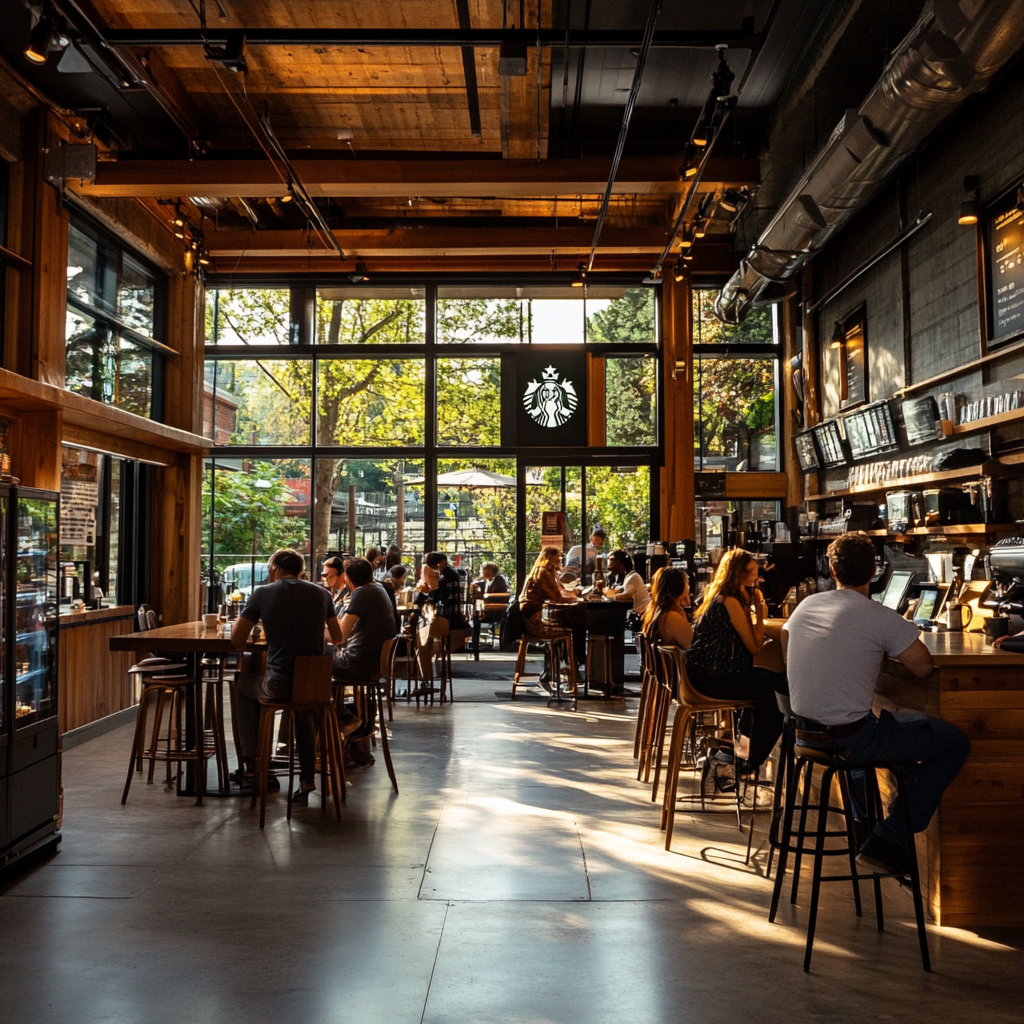
In walks Howard Schultz, the original CEO of Starbucks. Schultz envisioned Starbucks as a third place where people could linger over coffee, work, or chat with friends. The concept resonated deeply with urban professionals and students alike, helping Starbucks grow into a global brand. The company’s design, from communal tables to warm lighting, was deliberate, inviting customers to stay and connect.
The Erosion of the Third Place
Today, the third place faces existential threats. Urban sprawl and car-centric development have diminished the walkability of neighborhoods, making casual stops at local cafes or bookstores less feasible. Digital platforms like social media and video games offer virtual connections but lack the richness of face-to-face interactions.
Moreover, economic pressures have made it harder for third places to survive. Rising rents, labor costs, and the corporatization of retail spaces mean that small, independent third places are disappearing. Even Starbucks, once a pioneer of the third-place model, has shifted focus. The rise of mobile orders and drive-thru services prioritizes speed over community. Some locations have even removed seating entirely, transforming into mere transaction hubs.
Impacts of the Third Place’s Decline
The death of the third place weakens our social fabric. Without informal gathering spaces, communities lose opportunities for bonding and civic engagement. This decline exacerbates feelings of loneliness and alienation, already on the rise in an increasingly isolated society.
Revitalizing the Third Place
Not all hope is lost. Cities and communities are experimenting with ways to revive third places. Libraries have reimagined themselves as community hubs, offering everything from coworking spaces to maker labs. Independent bookstores are thriving in some regions by becoming cultural event spaces. Urban planners are prioritizing walkability, creating public spaces that encourage gathering and interaction.
The Death of the Second Place
The Workplace as a Social Anchor
For much of modern history, the workplace served as more than a site of labor; it was a cornerstone of identity and social life. From factory floors to corporate offices, people forged friendships, built professional networks, and engaged in collective efforts.
What’s Killing the Workplace?

However, the traditional second place is in flux. Remote work, accelerated by the COVID-19 pandemic, has decoupled many jobs from physical spaces. The gig economy has fragmented the workforce, with many workers juggling multiple jobs without a central workplace. Automation and artificial intelligence further threaten traditional roles, reducing the need for large human workforces in shared spaces.
The decline of the workplace as a social anchor has profound implications. Informal interactions, like watercooler chats or team lunches, often serve as the glue of professional relationships. Without them, isolation and disengagement increase.
Reimagining the Workplace
The workplace is not necessarily doomed. Hybrid work models offer a middle ground, balancing remote flexibility with in-person collaboration. Coworking spaces, like WeWork, provide an alternative for remote workers seeking community. Companies that prioritize workplace culture and invest in their employees’ well-being can foster connection even in a changing environment.
The Decline of the First Place
The Home as a Fragile Ideal
The first place—our homes—has long been romanticized as a sanctuary. But this ideal is under siege. Housing costs are soaring, forcing many into precarious living situations. For younger generations, homeownership is increasingly out of reach.
What’s Threatening the First Place?
The gig economy and rising job mobility mean that many people move frequently, never truly settling. The rise of remote work has turned homes into hybrid spaces, blurring boundaries between personal and professional life. For those without a stable home, the impacts are devastating, leading to increased mental health struggles and social disconnection.

Rebuilding the First Place
Affordable housing policies, zoning reforms, and innovative housing models like tiny home villages or co-living spaces offer potential solutions. Community land trusts, where land is owned collectively, ensure long-term affordability. These efforts could help restore the home as a place of stability and refuge.
Interconnected Decline and Broader Implications
How the Three Places Connect
The erosion of one place amplifies the struggles of the others. Remote work burdens the home, while the loss of third places removes outlets for community and relaxation. Together, these trends signal a deeper societal malaise—a fragmentation of the structures that once provided meaning and connection.
Historical Parallels
The decline of these places mirrors the decline of empires. As Rome fell, its forums emptied, its villas decayed, and its labor systems fractured. Today, we face similar challenges, albeit with digital tools complicating the equation.
Conclusion: Rebuilding Our Places
As my son pointed out, the death of our places isn’t just a meme; it’s a reality. But it’s also a call to action. We must reinvest in the spaces that ground us—homes, workplaces, and communities. By fostering policies and practices that prioritize connection, we can rebuild the anchors of our society. I know we are trying to make it happen in downtown Montgomery.
The decline of these places might feel inevitable, but history shows us that change is possible. If we act intentionally, we can create a future where all three places thrive. Perhaps, one day, my son and I will sit together in a vibrant third place, reflecting on how we turned things around.

 Mastermind Century Group