

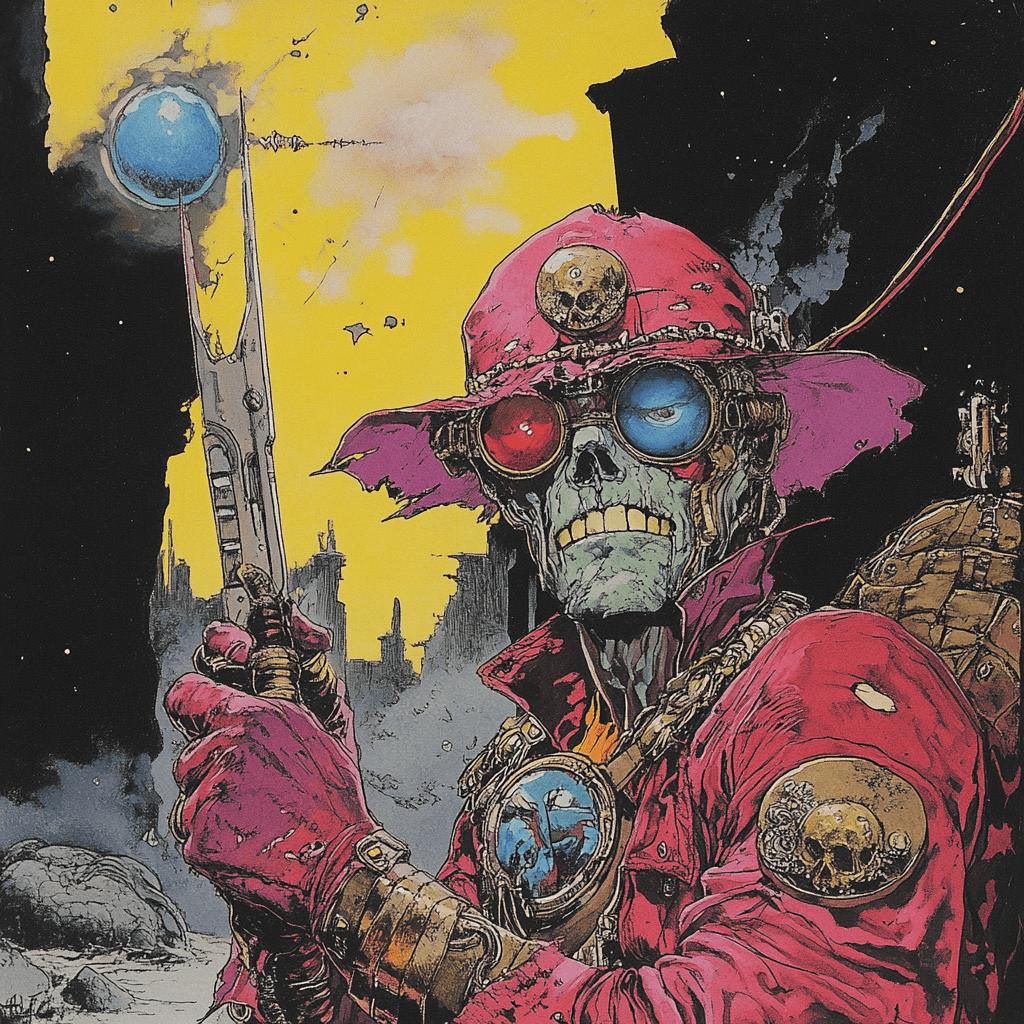
Come on… any Gen Xer remembers the movie Heavy Metal! Released in 1981, this cult classic animated film blended sci-fi, fantasy, and rock music, quickly earning a spot in pop culture. With its vivid imagery, adult themes, and interwoven tales of dystopia and heroism, Heavy Metal became an anthem for a generation. The soundtrack was legendary—on cassette and blasting from every teen’s muscle car. One of the standout tracks, Blue Öyster Cult’s “Veteran of the Psychic Wars,” was often on repeat. (Remember how that worked on a cassette? You had to rewind it manually, carefully timing it to get back to the beginning of your favorite song!) Even today, this song resonates with listeners, transcending its time as a metaphor for the endless battles we face.
Fast forward to the modern world, and “Veteran of a Thousand Psychic Wars” takes on new meaning, reflecting today’s political and geopolitical landscape in striking ways. Whether it’s the emotional toll of global crises, political polarization, or the weariness of enduring conflict after conflict, the themes of this song are as relevant as ever.
1981
“Veteran of the Psychic Wars” also on their 1981 album Fire of Unknown Origin. The song has deep, somewhat esoteric lyrics, often interpreted as reflecting themes of exhaustion, mental strain, and the weariness that comes from ongoing battles—whether those battles are literal, metaphorical, or emotional.
You see me now, a veteran
Of a thousand psychic wars
I’ve been living on the edge so long
Where the winds of limbo roar
And I’m young enough to look at
And far too old to see
All the scars are on the inside
I’m not sure if there’s anything left of me
Don’t let these shakes go on
It’s time we had a break from it
It’s time we had some leave
We’ve been living in the flames
We’ve been eating up our brains
Oh, please, don’t let these shakes go on
You ask me why I’m weary
Why I can’t speak to you
You blame me for my silence
Say it’s time I changed and grew
But the war’s still going on, dear
And there’s no end that I know
And I can’t say if we’re ever-
I can’t say if we’re ever gonna be free
Don’t let these shakes go on
It’s time we had a break from it
It’s time we had some leave
We’ve been living in the flames
We’ve been eating up our brains
Oh, please, don’t let these shakes go on
You see me now, a veteran
Of a thousand psychic wars
My energy’s spent at last
And my armor is destroyed
I have used up all my weapons
And I’m helpless and bereaved
Wounds are all I’m made of
Did I hear you say that this is victory?
Don’t let these shakes go on
It’s time we had a break from it
Send me to the rear
Where the tides of madness swell
And been sliding into Hell
Oh, please, don’t let these shakes go on
Don’t let these shakes go on
Don’t let these shakes go on
Here’s a breakdown of its key elements:
Lyrics and Meaning:
- Psychological and Emotional Warfare: The song’s lyrics speak to the toll of conflict on the human mind. The title phrase, “psychic wars,” suggests internal battles, possibly hinting at emotional or mental strain, rather than physical warfare. This resonates with ideas like PTSD (Post-Traumatic Stress Disorder) or burnout experienced by soldiers or those who have faced significant life struggles.
- Exhaustion and Futility: The repeated lines “I’m a veteran of a thousand psychic wars” and “my energy’s spent at last” reflect a sense of fatigue, as if the person has been fighting these battles for so long that they’re worn out, possibly a reference to the toll of long-term suffering or internal conflict.
- Science Fiction Influence: Blue Öyster Cult often drew inspiration from science fiction and fantasy, and “Veteran of the Psychic Wars” aligns well. The song was co-written by author Michael Moorcock, whose works explore themes of existential battles, destiny, and human struggle. The song reflects the larger-than-life, mythic quality of endless internal or cosmic warfare found in Moorcock’s works.
- Cultural Interpretation: While the song fits into the broader genre of progressive rock and classic rock from the early 1980s, its themes have been timeless in addressing the human condition. The battle against unseen forces—whether psychological, societal, or metaphysical—resonates with audiences in various contexts, including veterans dealing with the emotional aftermath of war.
- Pop Culture and Legacy: This song, especially with its evocative title, has found its way into popular culture as shorthand for intense emotional or psychological battles. It has also been embraced by those who appreciate its poetic depth and its ability to metaphorically express the wear and tear of human life.
Connection to Broader Themes:
- Psychological Impact of War: The song can be viewed as an allegory for the effects of war on individuals, reflecting a soldier’s struggle with the aftermath of combat.
- Existential Conflict: It may also speak to broader human experiences of existential crises, internal strife, and the difficulty of overcoming life’s relentless challenges.
In sum, “Veteran of the Psychic Wars” explores the theme of enduring psychological battles, making it a powerful anthem for anyone who has faced prolonged internal or external conflicts.
21st Century and Today?
In today’s political and geopolitical landscape, the themes explored in “Veteran of the Psychic Wars” resonate deeply as they parallel modern experiences of conflict, both on the international stage and within societies. The song’s emphasis on psychological strain, exhaustion from ongoing battles, and the toll of endless conflict can be applied to several contemporary issues:
1. Global Conflict Fatigue and Mental Strain:
- Geopolitical Tensions: The world is currently witnessing persistent geopolitical conflicts, such as the war in Ukraine, rising tensions between the U.S. and China, instability in regions like the Middle East, and ongoing concerns about the proliferation of nuclear weapons. These conflicts, often prolonged and without clear resolutions, create a sense of geopolitical fatigue for citizens, policymakers, and global institutions, much like the weariness depicted in the song’s “psychic wars.”
- Hybrid and Gray Zone Warfare: Modern conflicts often exist in the “gray zone,” involving cyber-attacks, disinformation, economic pressure, and proxy wars, all of which create new forms of psychological stress on nations and societies. These methods are indirect but have a deeply destabilizing effect, contributing to a sense of ongoing “psychic” warfare where the boundaries of traditional combat are blurred.
2. Psychological Impact of Global Crises:
- Pandemic Aftermath: The global COVID-19 pandemic has left many individuals and societies grappling with emotional and mental exhaustion. Much like the veteran in the song, who has “fought” countless battles, the global population has faced ongoing uncertainty, loss, and change over the past few years. The pandemic revealed deep societal and political divides, many of which have continued to exacerbate collective stress.
- Climate Change Anxiety: The looming threat of climate change and its impact on global stability adds another layer of strain. The unpredictability of climate-induced disasters and their geopolitical consequences (like resource wars and forced migrations) has left many in a perpetual state of concern, akin to the ongoing “psychic war” metaphor in the song.
3. Polarization and Internal Divisions:
- Political Polarization: Many democracies, especially in the West, are experiencing unprecedented levels of political polarization. The rise of populism, nationalism, and extremism in countries like the U.S., Brazil, and parts of Europe has led to internal “wars” over identity, governance, and values. These divisions are often deeply emotional, leading to a pervasive sense of frustration and exhaustion among citizens, much like the mental weariness portrayed in the song.
- Culture Wars: Beyond politics, many societies are embroiled in so-called “culture wars” over issues like race, gender, and freedom of speech. These conflicts may not involve physical violence, but they are battles over ideology and identity that leave lasting psychological impacts, contributing to the sense of being a “veteran” of ongoing, unresolved disputes.
4. Disinformation and Psychological Warfare:
- Cyber and Information Warfare: In today’s geopolitical context, information itself has become a weapon. Disinformation campaigns, fake news, and manipulation of social media platforms by both state and non-state actors (e.g., Russia’s efforts to influence elections) represent new forms of psychological warfare. These tactics aim to destabilize nations, sow discord among populations, and erode trust in institutions. This kind of battle—fought not with bullets, but with narratives and perceptions—can take a significant psychological toll on societies, making citizens feel as though they are caught in an endless war of minds.
- Tech Anxiety: The rapid development of artificial intelligence, surveillance technologies, and the rise of Big Data have also created psychological concerns about privacy, autonomy, and the future of governance. The growing tension between technological advancement and personal freedoms mirrors the existential battles in “Veteran of the Psychic Wars,” as people feel increasingly vulnerable in an era where their minds and lives can be manipulated through technology.
5. Military and Civilian Mental Health:
- Veterans of Actual Wars: The song’s original connection to military fatigue is still relevant today, particularly for veterans of recent conflicts in Afghanistan, Iraq, and Syria. Many soldiers return home with PTSD and other challenges, feeling as though they are veterans of “psychic” wars in addition to physical ones. The song’s emphasis on the exhaustion and mental strain from years of battle resonates with their lived experiences.
- Civilian Mental Health Crisis: Beyond the military, there is also a growing mental health crisis among civilians, exacerbated by the pressures of modern life. Rising rates of anxiety, depression, and burnout—especially among younger generations—can be seen as symptoms of the relentless demands and conflicts of contemporary society.
6. Endless Conflict and Exhaustion in Global Leadership:
- Diplomatic Stalemates: Many global issues, such as the Israeli-Palestinian conflict, North Korea’s nuclear ambitions, or global refugee crises, have persisted for decades with no clear solutions in sight. Global leaders and diplomats may feel like they are “veterans of a thousand psychic wars,” worn down by the seemingly endless nature of these conflicts. There’s a pervasive sense of frustration with the international community’s inability to make lasting peace or progress on these intractable issues.
- Crisis of Governance: In some countries, the perpetual crises of leadership, corruption, and ineffective governance create an environment of exhaustion for citizens and reformers alike. People feel that they are locked in a constant battle for justice and effective leadership, with little hope of real change, contributing to the sense of being caught in endless “wars.”
Conclusion:
The themes of psychological fatigue, existential conflict, and the toll of never-ending battles in “Veteran of the Psychic Wars” can be seen as metaphors for much of the modern political and geopolitical landscape. Whether it’s the internal divisions within societies, the global challenges of climate change and pandemics, or the external conflicts between nations, many people today experience a sense of mental and emotional exhaustion. These ongoing “psychic wars” are not fought with traditional weapons but with ideas, information, and societal pressures, making the song as relevant now as when it was first released.
 Mastermind Century Group