


I often write these pieces to help wrap my head around complex concepts, and Gray War is one that has been on my mind lately. It seems to be a challenge the U.S. faces on multiple fronts, yet I’m not entirely sure what we are doing about it.
Gray War, also known as Gray Zone conflict, refers to the deliberate use of non-traditional warfare techniques that fall below the threshold of formally declared war. These tactics are employed by both state and non-state actors to achieve strategic goals without triggering open military conflict. Operating in a space of ambiguity, Gray War tactics blend military and non-military actions such as cyber operations, economic coercion, disinformation, and diplomatic maneuvers. As a growing feature of modern geopolitical competition, this form of warfare challenges traditional military strategies and international law, leaving me to question: Are we prepared for this?
Key Characteristics of Gray War:
- Ambiguity and Covert Operations: Gray War thrives on ambiguity, making it difficult for opposing states to definitively attribute actions to a specific actor or to categorize the behavior as warfare. This deliberate use of covert operations allows aggressors to manipulate the international system while minimizing the risk of retaliation. Ambiguity also prevents swift and decisive responses from targeted nations, as they must first navigate the challenges of attribution and proportionality.
- Non-Military Tools: While Gray War may involve the use of military forces, such as unmarked soldiers or paramilitary groups, its hallmark is the employment of non-military tools. These can include cyber attacks that disrupt critical infrastructure, covert financial manipulation, disinformation campaigns designed to sow discord and undermine democratic institutions, and the strategic use of economic measures such as trade sanctions or currency manipulation. By leveraging these tools, Gray War actors seek to incrementally weaken their adversaries while avoiding the overt appearance of hostility.
- Plausible Deniability: A central feature of Gray War is plausible deniability. Actors conducting Gray War operations often deny involvement, leaving enough uncertainty that responses remain limited. For example, cyber attacks are typically carried out in ways that obscure the source, making it difficult to assign blame with certainty. This lack of clear attribution hinders targeted nations’ ability to marshal international support for a collective response.
- Sub-Threshold Operations: Gray War activities are designed to remain below the threshold that would traditionally justify a military response under international law. By carefully calibrating their actions to avoid provoking outright war, aggressors can undermine the status quo without crossing red lines that would force their adversaries into conventional military retaliation. These sub-threshold operations create a strategic dilemma for nations like the United States, which must balance the need to defend national interests without escalating into a larger conflict.
Gray War and Emerging Technologies:
Emerging technologies, particularly in the realms of artificial intelligence (AI), synthetic biology, and cyber capabilities, have profoundly impacted the dynamics of Gray War. In The Coming Wave, Mustafa Suleyman discusses how rapid technological advances, particularly in AI, are reshaping global order by enhancing the ability of actors to conduct operations autonomously and at scale. Suleyman warns that without proper regulation and control mechanisms, such as government-issued licenses and failsafe systems, these technologies could be exploited for Gray War activities in ways that outpace our capacity to respond.

For example, AI could be used to launch sophisticated disinformation campaigns that operate autonomously, overwhelming adversaries with false information and eroding public trust in democratic institutions. The integration of AI into cyber warfare could also make attacks more frequent, more effective, and harder to trace. Suleyman’s focus on the need for governance reflects the potential for emerging technologies to disrupt the balance of power in Gray Zone conflicts, creating new opportunities and risks for states engaged in these activities.
Gray War in the U.S. National Defense Strategy:
The United States has recognized the growing importance of Gray Zone conflict, particularly as rivals such as China and Russia increasingly rely on these tactics to advance their geopolitical objectives. The U.S. National Defense Strategy emphasizes the need to counter Gray War by integrating all instruments of national power—diplomatic, informational, military, and economic (DIME)—to respond to the complex and multifaceted nature of these threats.
- Cyber and Informational Warfare: Cyber warfare has become one of the most prominent tools in Gray War, enabling actors to disrupt vital infrastructure, steal sensitive data, or manipulate public opinion without ever firing a shot. The U.S. has recognized the critical importance of bolstering its cyber defenses to protect key sectors like energy, finance, and communications. Additionally, disinformation campaigns, particularly those targeting democratic elections, have demonstrated the need for robust countermeasures, including public awareness campaigns, media literacy initiatives, and international cooperation to expose and combat these efforts.
- Economic and Diplomatic Responses: Gray War actors frequently exploit economic vulnerabilities to exert pressure on their targets. The U.S. has responded by enhancing its use of economic sanctions and diplomatic pressure to counter coercive actions, particularly in regions like the Indo-Pacific where China’s economic influence has grown. By building coalitions with allies and partners, the U.S. seeks to apply coordinated economic pressure that deters adversaries from pursuing Gray Zone strategies.
- Military Adaptation: While Gray War often avoids conventional military confrontation, the U.S. military is adapting to the possibility of hybrid threats that combine irregular tactics with traditional forces. This includes a focus on improving capabilities for special operations, intelligence, surveillance, and reconnaissance (ISR), and fostering a flexible force posture that can respond rapidly to unconventional threats around the world.
Case Studies in Gray War:
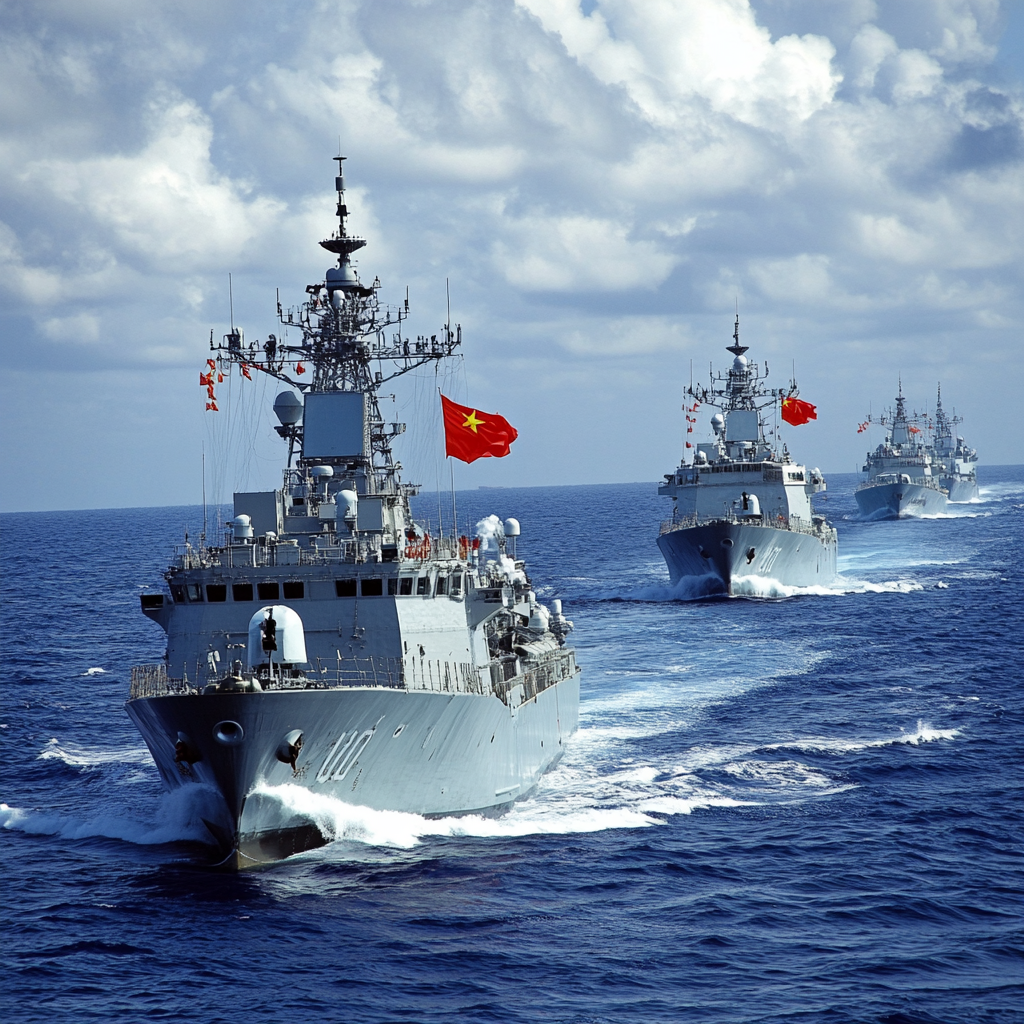
- China’s Strategy in the South China Sea: China’s actions in the South China Sea illustrate classic Gray War tactics. By constructing artificial islands and militarizing them, China has gradually asserted control over disputed waters without provoking direct military confrontation. These actions are supported by economic coercion and diplomatic pressure on neighboring states, allowing China to shift the regional balance of power in its favor. At the same time, China uses its economic leverage to ensure that regional actors are hesitant to oppose its actions too forcefully.
- Russia’s Influence Operations in Europe: Russia’s use of cyber attacks, disinformation, and proxy forces in Eastern Europe highlights its ability to operate in the Gray Zone. For example, the 2016 U.S. presidential election saw widespread interference from Russian actors, who used disinformation and social media manipulation to influence public opinion. In Ukraine, Russia employed “little green men”—unmarked soldiers—to seize Crimea, while also using cyber attacks and disinformation campaigns to destabilize the region without triggering a full-scale war.
Gray War vs. Hybrid War:
Although Gray War and Hybrid War share common features, such as the integration of irregular tactics and non-military tools, they differ in scope and execution:
- Gray War relies on maintaining ambiguity and plausible deniability, avoiding overt military engagements to achieve strategic objectives. It operates below the threshold of conventional war, often using covert or indirect methods to apply pressure.
- Hybrid War combines conventional military operations with irregular tactics in a coordinated and often more overt manner. This approach blends guerrilla warfare, cyber attacks, disinformation, and traditional military force to overwhelm and confuse adversaries, as seen in Russia’s annexation of Crimea.
Policy Recommendations for Countering Gray War:
Think tanks and defense experts have provided several recommendations for countering Gray Zone activities:

- Enhance International Collaboration: The U.S. must work closely with allies and partners to counter Gray War tactics effectively. This includes sharing intelligence, coordinating cyber defenses, and creating frameworks for collective responses to disinformation and covert operations. By fostering stronger alliances, the U.S. can create a united front against Gray Zone threats.
- Invest in Technological Innovation: The rapidly evolving nature of Gray War requires continuous investment in cutting-edge technologies, particularly in areas like cyber defense, artificial intelligence, and information warfare. The U.S. should prioritize research and development in these fields to stay ahead of adversaries who seek to exploit technological vulnerabilities.
- Develop Clearer Gray War Strategies: The U.S. must craft specific strategies for addressing Gray War scenarios, including clear criteria for attribution, thresholds for response, and options for escalation management. This requires building flexibility into military planning, allowing for swift adaptation to the fluid nature of Gray Zone conflict.
- Increase Resilience: Building societal resilience against Gray War tactics is essential. This includes bolstering public awareness of disinformation campaigns, protecting critical infrastructure from cyber attacks, and ensuring that democratic institutions remain robust in the face of external influence.
In The End: Gray War is an evolving form of conflict that exploits the ambiguity between peace and war, challenging traditional military doctrines and international norms. With the rise of emerging technologies and increasingly sophisticated tactics, the ability to navigate this ambiguous space has become a critical component of modern security strategies. By integrating diplomatic, military, economic, and informational tools, nations can develop comprehensive responses to the growing threats posed by Gray Zone conflicts. The future of warfare may be defined not by open battles but by the covert and strategic maneuvering that characterizes Gray War, making it imperative for policymakers and military strategists to adapt to this new reality.
 Mastermind Century Group