


Spending a bit of time watching the series Gilded Age. The series was created by Julian Fellowes, is a historical drama set in 1880s New York City, exploring the societal dynamics and conflicts of this transformative era in American history. The series debuted on HBO in 2022, focuses on the contrasting worlds of the “new money” and “old money” socialites of New York. Key characters include Bertha Russell, a representative of the new money, and Agnes van Rhijn, a symbol of old wealth and traditions. The series got me to thinking—are we living in Gilded Age 2.0?
In the annals of American history, the Gilded Age stands out as a period of profound transformation, marked by rapid industrialization, technological innovation, and stark socio-economic contrasts. Spanning from the 1870s to the early 1900s, this era witnessed the rise of titanic industries and magnates, often referred to as robber barons, whose fortunes were built on steel, railroads, and oil. Now, fast forward to the 21st century, a modern parallel can be drawn, “Gilded Age 2.0.” This contemporary counterpart is characterized by similarly groundbreaking technological advancements and significant wealth disparities, but within the realms of digital technology, biotechnology, and renewable energy. While both periods share core themes of innovation and economic power concentration, the Gilded Age 2.0 unfolds in a vastly different global landscape, shaped by digital interconnectedness, climate change, and a more complex social fabric. This comparison not only highlights the cyclical nature of economic and industrial evolution but also underscores the unique challenges and opportunities that define each epoch.
Gilded Age 1.0
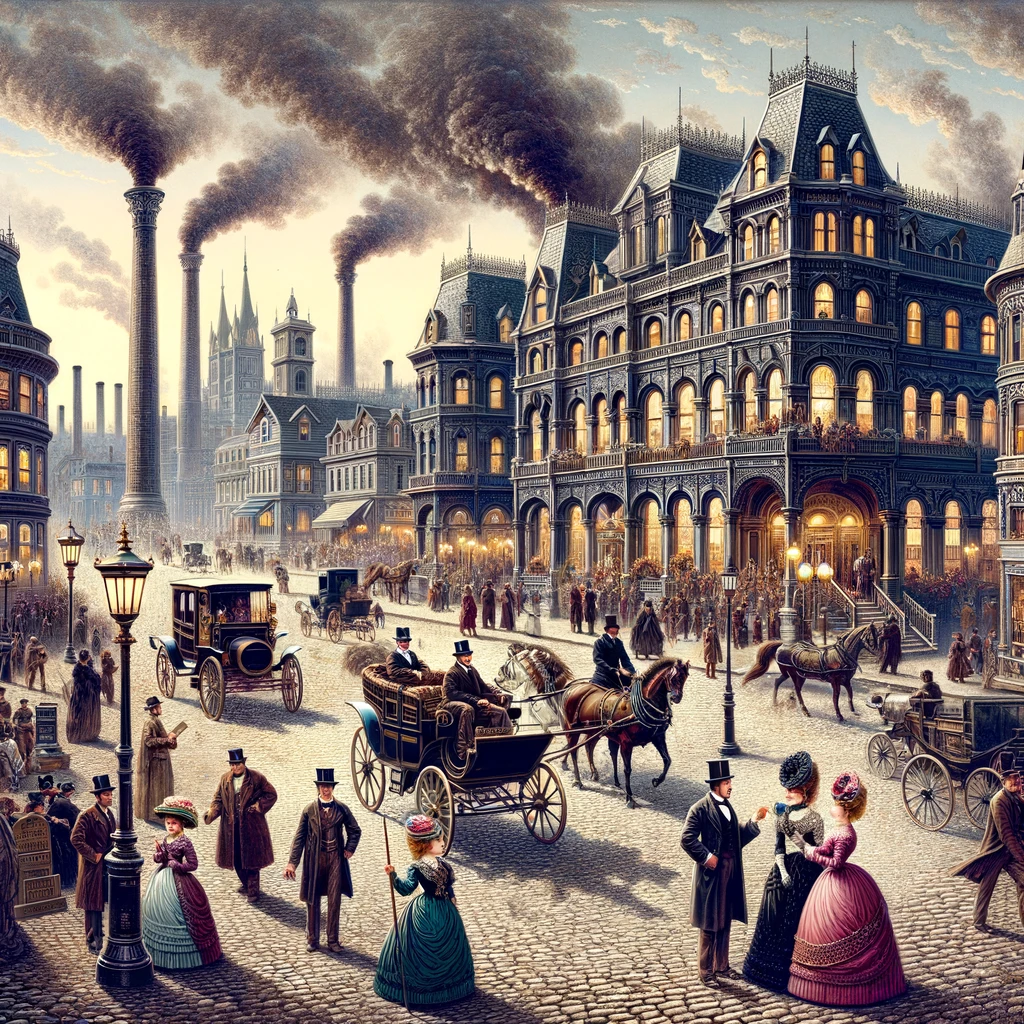
The Gilded Age was a period in American history, roughly spanning the late 19th century, from the 1870s to about 1900. This era was marked by rapid economic growth, especially in the North and the West. It was characterized by:
- Industrialization: The U.S. transformed from a predominantly agrarian society to an industrial powerhouse. Advances in technology, transportation (like railroads), and manufacturing led to increased production and urbanization.
- Wealth and Inequality: The era saw the rise of extremely wealthy entrepreneurs, often referred to as “robber barons,” like John D. Rockefeller and J.P. Morgan. They amassed great fortunes, while the gap between the rich and the poor widened significantly.
- Political Corruption and Laissez-faire Policies: The period was notorious for political corruption, with business magnates exerting significant influence over government policies. Laissez-faire capitalism was the norm, with minimal government intervention in business.
- Social and Labor Issues: As urbanization increased, so did problems like overcrowding, poor working conditions, and labor unrest. This era saw the rise of labor unions and strikes, as workers sought better conditions and wages.
- Cultural Changes: The Gilded Age was also a time of significant cultural developments, with the rise of new forms of entertainment, literature, and the arts, reflecting both the opulence and the social challenges of the era.
The term “Gilded Age” itself, popularized by Mark Twain and Charles Dudley Warner in their book “The Gilded Age: A Tale of Today” (1873), suggests a layer of gold gilding over a less flattering base, indicating the disparity between the era’s glittering wealth and the underlying social issues.
Gilded Age Industries
During the Gilded Age, several key industries dominated the American economy, largely driving the rapid economic growth and technological advances of the era:
- Steel Industry: The steel industry was crucial, with figures like Andrew Carnegie leading the way. The Bessemer process and other technological innovations in steel production enabled the mass production of steel, which was essential for building skyscrapers, bridges, railroads, and various other infrastructures.
- Railroads: The expansion of the railroad network was central to the Gilded Age, both as a driver of economic growth and as a symbol of the era. It facilitated the movement of goods and people across vast distances, opening up new markets and enabling the rise of national businesses.
- Oil Industry: Pioneered by individuals like John D. Rockefeller, the oil industry grew significantly during this period. The demand for kerosene and, later, gasoline for automobiles, led to the growth of companies like Standard Oil, which became one of the world’s first and largest multinational corporations.
- Banking and Finance: The banking and finance sector, led by figures like J.P. Morgan, played a crucial role in funding the industrial expansion of the United States. This era saw the rise of modern financial institutions and practices.
- Textiles and Garment Industry: The production of textiles and garments remained a significant part of the American economy, particularly in the Northeast, and was one of the key sectors that experienced industrialization.
- Coal Mining: Coal mining was essential for providing the fuel needed for steel production, railroads, and emerging electrical utilities.
- Telegraph and Telephone: The telegraph and, later, the telephone industries revolutionized communication. Companies like Western Union and Bell Telephone Company were at the forefront of this transformation.
- Agriculture: Despite the growth of urban centers and industrialization, agriculture remained a significant part of the economy, with the development of new agricultural technologies and the expansion of farming into the Western United States.
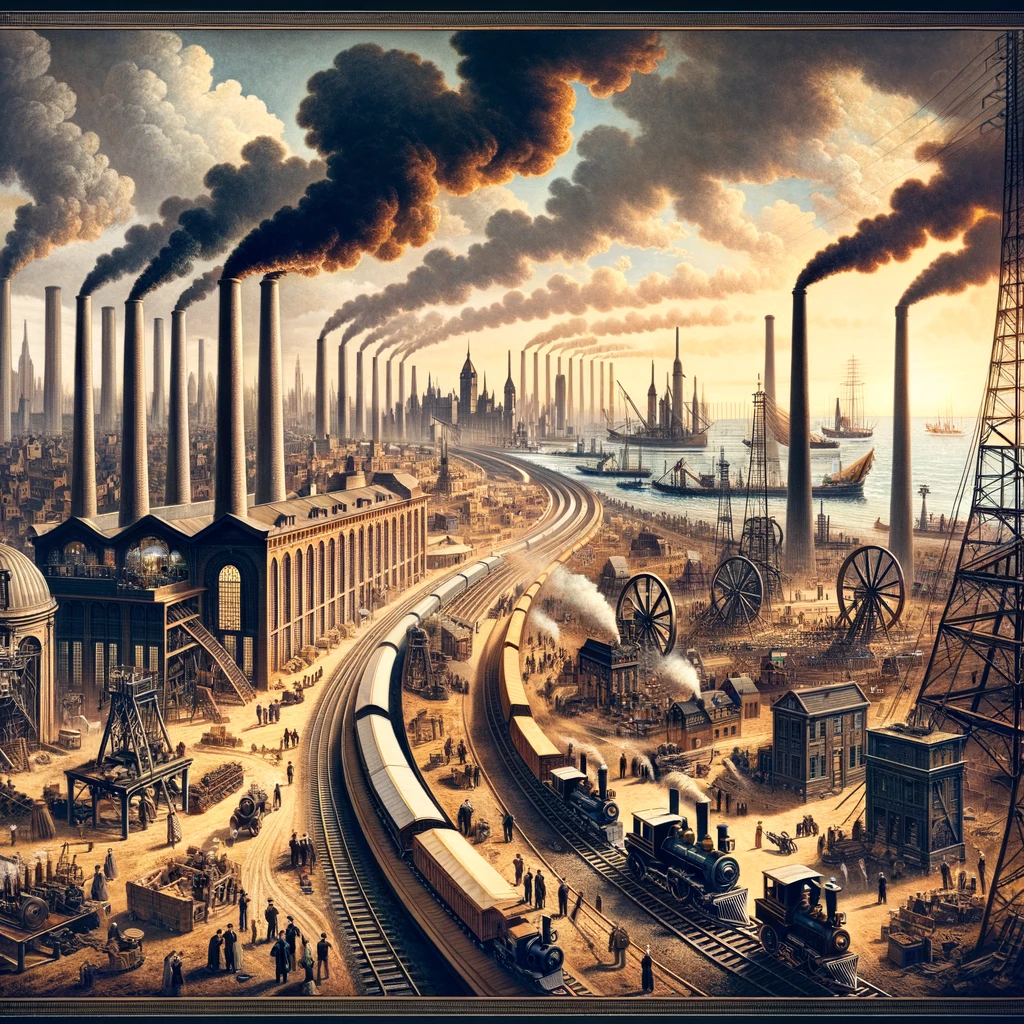
These industries collectively transformed the U.S. from a largely agrarian society into an industrial powerhouse, setting the stage for its emergence as a leading global economy in the 20th century. However, this rapid industrialization also brought about significant social and environmental challenges, including labor unrest, urban overcrowding, and environmental degradation.
Personalities: Robber Barons
The term “robber baron” originated in medieval Germany, where it was used to describe feudal lords who charged exorbitant tolls to travelers passing through their river territories. These feudal lords were not authorized by any centralized authority to collect these tolls, and their actions were often deemed illegal and oppressive. They were literally “robbing” travelers, hence the term “robber barons” (in German, “Raubritter,” meaning “robber knights”).
The term was later adopted in the United States during the late 19th century to describe certain American businessmen and financiers. In this context, it carried a different but related connotation. These individuals were perceived as having used unethical or questionable business practices to amass their wealth. This included exploiting workers, manipulating markets, and influencing government officials for personal gain. Their actions, though legal, were often seen as morally equivalent to the medieval robber barons’ exploitation and greed.
The term was used critically to highlight the perceived economic and social injustices of the Gilded Age, an era marked by stark economic inequality and rapid industrialization.
Over time, the term has evolved and is occasionally used in contemporary discussions to criticize business leaders perceived as using their wealth and influence unethically, although it’s important to note that the context and specifics of modern capitalism are quite different from those of the late 19th century.
The “robber barons” of the Gilded Age were a group of industrialists and financiers who amassed vast wealth and power, often through ruthless and unscrupulous methods. Here are ten individuals commonly associated with this term:
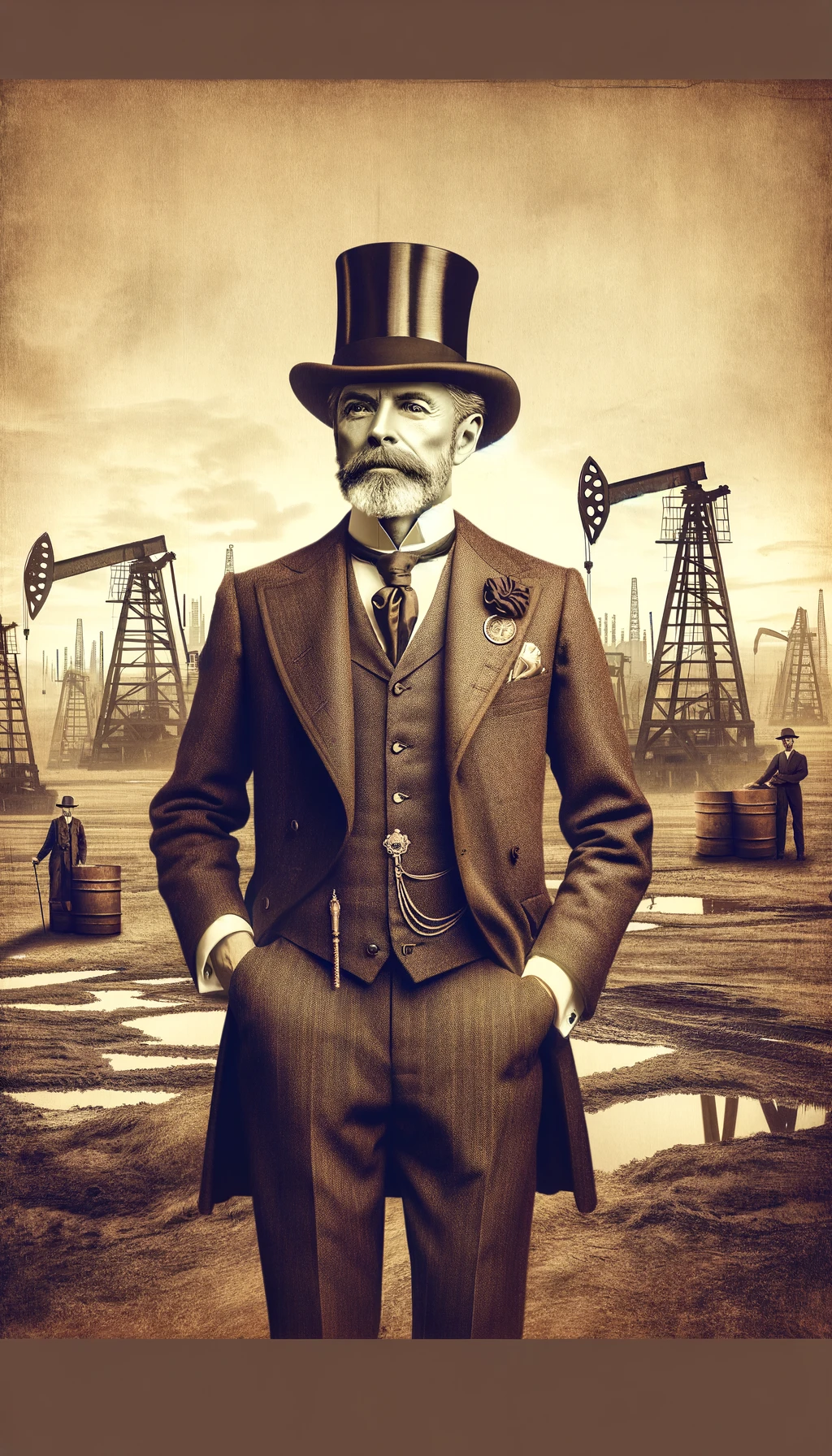
- John D. Rockefeller: Founder of Standard Oil, he became the world’s richest man and first U.S. dollar billionaire.
- Andrew Carnegie: A steel magnate, Carnegie was known for his role in expanding the American steel industry.
- Cornelius Vanderbilt: He built his wealth in railroads and shipping.
- J.P. Morgan: A powerful banker, Morgan played a significant role in the consolidation of various industries.
- Jay Gould: Known for his success in the railroad and telegraph industries.
- Leland Stanford: Co-founder of the Central Pacific Railroad, he was also a prominent political figure and founder of Stanford University.
- Charles Crocker: Another key figure in the building of the Central Pacific Railroad.
- James Fisk: He was known for his unscrupulous financial and stock market manipulations.
- George Pullman: Inventor of the Pullman Sleeping Car for railroads and founder of the company town, Pullman.
- Henry Clay Frick: An associate of Andrew Carnegie, Frick was instrumental in the expansion of the steel industry.
These individuals played critical roles in the industrialization of the United States, but their methods and the immense wealth they accumulated also led to significant public backlash and calls for reform. This era eventually paved the way for progressive changes, including antitrust laws and labor reforms.
End of The Gilded Age:
The end of the Gilded Age, transitioning into what is often called the Progressive Era, was not marked by a single event but rather a series of social, political, and economic changes that unfolded over the late 19th and early 20th centuries. Several key factors contributed to the end of the Gilded Age:
- Economic Panics and Downturns: Financial panics, particularly the Panic of 1893, led to economic downturns. These crises highlighted the weaknesses and inequalities in the Gilded Age economy, spurring calls for reform.
- Political Reforms: The Progressive Movement, gaining momentum in the early 20th century, advocated for a range of political reforms. This included the introduction of more democratic processes like the direct election of senators (17th Amendment), women’s suffrage (19th Amendment), and measures to curb the influence of big business in politics.
- Labor Movements and Strikes: The labor unrest that had begun during the Gilded Age grew into more organized and widespread labor movements. Strikes and labor actions, such as the Pullman Strike (1894), highlighted the need for labor reforms. This led to regulations on working conditions, child labor, and workers’ rights.
- Antitrust Legislation: In response to the monopolistic practices of the large trusts and corporations of the Gilded Age, the federal government began to implement antitrust laws, such as the Sherman Antitrust Act (1890) and later the Clayton Antitrust Act (1914), to regulate and break up monopolies.
- Social Reforms: The Progressive Era saw a heightened focus on social reform, including efforts to address poverty, health, education, and urban conditions. Activists and reformers sought to alleviate the social ills brought about by rapid industrialization and urbanization.
- Technological and Industrial Maturation: As industries matured and new technologies emerged, the economic landscape shifted. The rapid, unchecked growth of the late 19th century began to stabilize into more regulated and structured forms of industrial capitalism.
- Cultural Shifts: There was a growing cultural shift towards rejecting the ostentatious lifestyles and practices of the Gilded Age’s elite, advocating instead for greater social responsibility and ethical standards in business and politics.
- World War I: The onset of World War I in 1914 also marked a definitive end to the Gilded Age. The war brought about significant changes in the global economic and political order, shifting the focus from domestic issues and setting the stage for the modern era.
POTUS
The end of the Gilded Age and the transition into the Progressive Era was overseen by several U.S. Presidents, as it was a gradual process rather than a sudden shift. However, President Theodore Roosevelt is often most closely associated with the end of the Gilded Age and the onset of the Progressive Era.
Theodore Roosevelt, who became President after the assassination of William McKinley in 1901 and served until 1909, was a key figure in championing progressive policies. His presidency marked a significant shift in the federal government’s role in economic affairs and social reforms. Roosevelt was known for his “Square Deal” domestic policies, which focused on conservation of natural resources, control of corporations, and consumer protection. He also enforced the Sherman Antitrust Act to break up large monopolies, earning him a reputation as a “trust buster.”
While Roosevelt played a pivotal role, it’s important to recognize that other presidents also contributed to the transition. William McKinley’s presidency (1897-1901) saw significant economic growth and the beginnings of American imperialism, which were key aspects of the end of the Gilded Age. Following Roosevelt, William Howard Taft and Woodrow Wilson continued with various progressive reforms, further solidifying the end of the Gilded Age and the establishment of the Progressive Era.
Gilded Age 2.0
The idea of a “Gilded Age 2.0” is a concept used by some analysts and historians to draw parallels between the current era and the original Gilded Age of the late 19th century. While no historical period is an exact replica of another, there are several similarities and differences that can be considered:

Similarities:
- Wealth Inequality: Like the original Gilded Age, the modern era has seen significant wealth accumulation at the top, with a growing gap between the wealthiest individuals and the average citizen.
- Technological Innovation: Just as the first Gilded Age was marked by rapid industrialization and technological advances, the current era is defined by the digital revolution, with significant impacts on the economy and society.
- Corporate Power: The influence of large corporations and financial institutions in political and economic spheres is evident in both periods.
- Globalization: The modern era, like the late 19th century, is characterized by an increasingly interconnected global economy.
Differences:
- Regulatory Environment: Today, there are more regulations in place aimed at curbing monopolistic practices and protecting workers’ rights, a response to the excesses of the first Gilded Age.
- Social Safety Nets: Modern societies generally have more developed social safety nets, including healthcare, unemployment insurance, and retirement benefits.
- Technology and Society: The nature of technological change is different, with the digital age impacting social structures, communication, and information dissemination in ways that were not seen in the 19th century.
- Global Challenges: Contemporary issues like climate change, digital privacy, and global pandemics present new challenges that did not exist in the original Gilded Age.
Industries
In the contemporary era the dominant industries reflect the technological, social, and economic shifts of the 21st century. These industries, characterized by rapid innovation and significant influence on both the economy and daily life, include:
- Technology and Information: This sector, encompassing companies in software, hardware, and internet services (like Google, Apple, Microsoft, and Amazon), is pivotal. It drives innovation in various fields, including artificial intelligence, cloud computing, and social media.
- Finance and Investment: The finance sector remains influential, with significant developments in areas like fintech, cryptocurrency, and digital banking transforming traditional financial services.
- E-Commerce and Retail: Online retail, led by giants like Amazon and Alibaba, has revolutionized the way people shop, significantly impacting traditional retail.
- Pharmaceuticals and Biotechnology: This industry has seen rapid growth, particularly with advancements in genomics, personalized medicine, and, as evidenced by the COVID-19 pandemic, vaccine development.
- Energy, Especially Renewable Energy: While oil and gas remain significant, there’s a growing focus on renewable energy sources like solar, wind, and electric vehicles (EVs), with companies like Tesla leading the way.
- Telecommunications and Media: The rise of streaming services like Netflix and Disney+, along with the ongoing importance of telecommunications infrastructure, reflects the sector’s evolution and continued influence.
- Automotive, Especially Electric Vehicles: The automotive industry is undergoing a major transformation with the shift towards electric vehicles, autonomous driving, and new mobility solutions.
- Real Estate and Construction: With urbanization and smart city projects, real estate remains a key sector, including new trends in sustainable building and housing.
- Healthcare Services and Technology: Advancements in medical technology, telemedicine, and healthcare IT solutions are transforming patient care and the healthcare industry.
- Aerospace and Defense: This industry continues to be significant, with innovations in areas like space exploration (SpaceX, Blue Origin) and defense technology.
These industries are shaping the economic landscape of the 21st century, much like the dominant industries of the original Gilded Age. They are at the forefront of addressing contemporary challenges and opportunities, from climate change and sustainability to the digital transformation of societies. However, like in the first Gilded Age, these developments also raise questions about economic inequality, regulatory oversight, and the social impact of rapid technological change.
Personalities: Modern Day Robber Barons
As mentioned, the term “robber baron” historically referred to the unscrupulous and often monopolistic tycoons of the Gilded Age. In modern times, while the exact term “robber baron” is not commonly used in the same context, there are certainly influential and wealthy individuals in various industries who have garnered attention for their immense wealth and influence, sometimes amidst controversies regarding business practices, labor relations, or market dominance. However, it’s important to note that today’s business leaders operate in a significantly different legal and ethical landscape compared to the Gilded Age, with more regulations and public scrutiny.
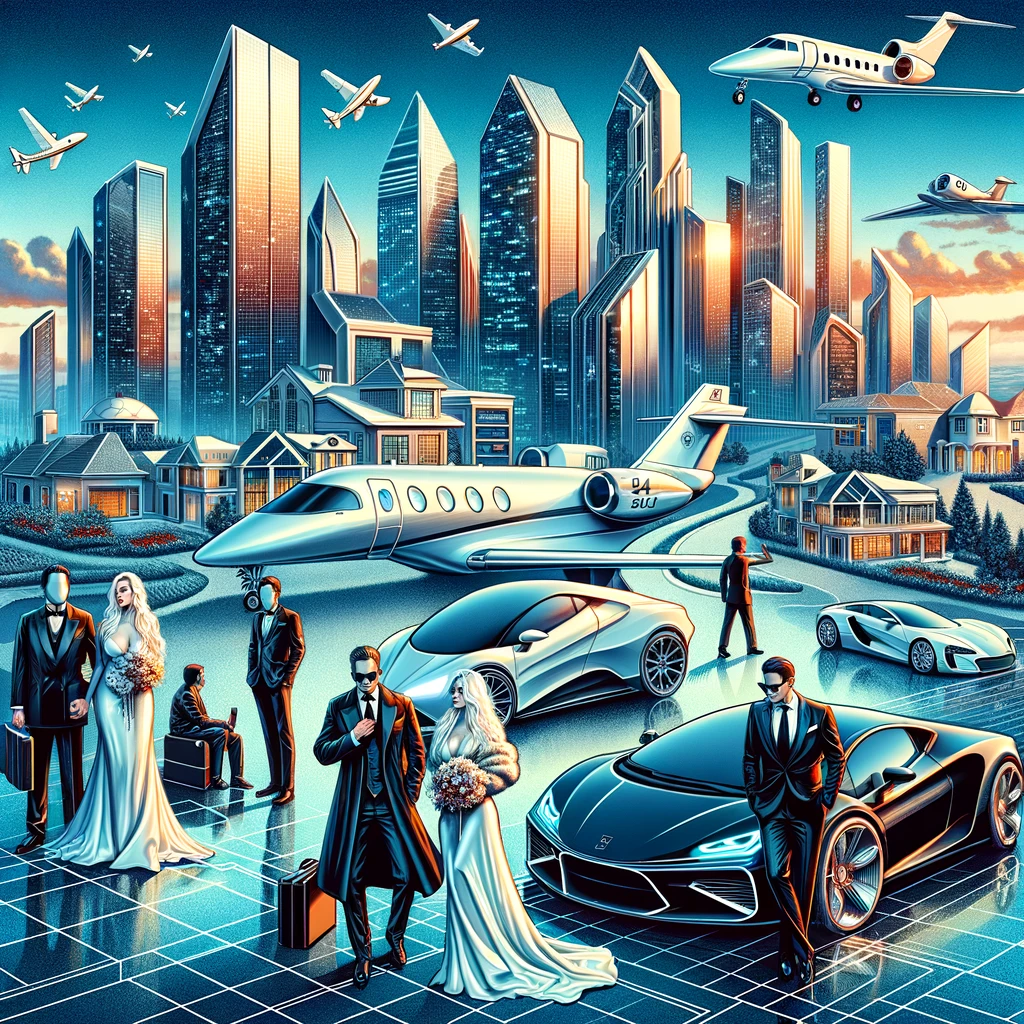
Here are ten influential business figures in the contemporary era, noted for their significant impact and wealth in their respective industries:
- Jeff Bezos: Founder of Amazon, known for transforming retail through e-commerce.
- Bill Gates: Co-founder of Microsoft, pivotal in the personal computer revolution.
- Warren Buffett: CEO of Berkshire Hathaway, known for his investments and wealth.
- Mark Zuckerberg: Co-founder of Facebook (now Meta), influential in social media.
- Elon Musk: CEO of Tesla and SpaceX, known for his role in electric cars and space travel.
- Larry Page and Sergey Brin: Co-founders of Google, major figures in internet search and technology.
- Bernard Arnault: Chairman and CEO of LVMH, a prominent figure in the luxury goods market.
- Carlos Slim: Mexican business magnate, known for his telecommunications empire.
- Larry Ellison: Co-founder of Oracle Corporation, influential in the software industry.
- Mukesh Ambani: Chairman of Reliance Industries, a major player in Indian business, particularly in petrochemicals, refining, and telecommunications.
These individuals are recognized for their entrepreneurial success and have had a significant impact on the global economy. Their influence and wealth can sometimes lead to criticisms and comparisons to the robber barons of the past, but it’s crucial to consider the differences in the economic, legal, and social environments in which they operate.
End of Gilded Age 2.0?
Predicting the end of “Gilded Age 2.0” and envisioning how it might unfold involves considering current trends and potential future developments. It’s important to note that historical parallels provide insights, but each era has many unique circumstances. In my thinking, here are some factors that might shape the end of this contemporary period:

- Technological Advancement and Automation: The ongoing digital and technological revolution, particularly advancements in AI and automation, could significantly change the job market and economic structures. This might lead to new economic models or reforms in labor laws and education systems to address these changes.
- Wealth Inequality and Economic Reforms: Increasing awareness and discontent over wealth inequality could lead to significant economic reforms. This might include more progressive taxation, stronger antitrust regulations, and policies aimed at reducing the wealth gap.
- Climate Change and Sustainability: The urgency of addressing climate change could lead to a major shift in energy policies, moving away from fossil fuels to renewable energy sources. This transition may redefine industries and create new economic leaders.
- Globalization and Its Discontents: The current trends in globalization might face challenges. Issues like global supply chain vulnerabilities, national security concerns over technology, and the desire for local production could reshape global economic interactions.
- Social and Political Movements: Grassroots movements, increasingly facilitated by digital platforms, could drive significant social and political changes. These movements may advocate for issues like social justice, economic equity, and environmental sustainability.
- Regulatory and Legal Changes: Increased regulation of technology companies, especially concerning data privacy, misinformation, and monopolistic practices, could redefine the tech landscape.
- Public Health and Biotechnology: Advances in biotechnology and experiences from global health crises like the COVID-19 pandemic might shift priorities towards healthcare innovation and accessibility.
- Cultural and Ethical Shifts: A cultural shift towards greater corporate responsibility and ethical business practices could change the way companies operate and are perceived.
- Geopolitical Shifts: Emerging geopolitical dynamics, including the rise of new economic powers and shifting alliances, could have a significant impact on the global economic order.
- Innovation in Finance: Developments in finance, including digital currencies and decentralized finance, could transform the financial industry and its regulatory framework.
The end of the “Gilded Age 2.0” will likely be shaped by a combination of these factors, among others. It’s crucial to recognize the role of policy decisions, technological advancements, and societal changes in determining the direction of this transition. As history shows, such shifts are often gradual and complex, influenced by a multitude of interconnected factors.
In The End:
Perhaps I spend too much time watching streaming shows: but, the exploration of the Gilded Age, both in its original late 19th-century context and its modern interpretation, reveals a compelling narrative of societal transformation, economic upheaval, and the perpetual dance between progress and tradition. The original Gilded Age, a period of rapid industrialization and stark socio-economic contrasts, set the stage for the profound changes that would shape modern America. It was an era marked by its technological innovations, immense wealth accumulation by a few, and significant social challenges that eventually led to the progressive reforms of the early 20th century.
As history continues to unfold, the lessons and reflections drawn from studying the Gilded Ages — both the original and its modern counterpart — remain relevant. They remind us of the continuous need for progress, the importance of addressing inequalities, and the role of individuals and communities in shaping the course of history. Whether through the lens of historical analysis or through the storytelling of series like “The Gilded Age,” these periods continue to fascinate and instruct, offering insights into the human condition and the ever-evolving tapestry of society.
 Mastermind Century Group
One Reply to “”