


America’s New Map Review
Years ago, I delved into Thomas P.M. Barnett’s influential work, “The Pentagon’s New Map,” and its sequels in his initial trilogy, which include “Blueprint for Action: A Future Worth Creating” and “Great Powers: America and the World After Bush.” These books left a lasting impression on me, their ideas and theories often resurfacing in my mind. This was particularly the case during my tenure at the Pentagon in the Joint Chief’s J5 Division, where I was engaged in developing inter-agency strategy. Upon the release of Barnett’s latest book, I was quick to immerse myself in it, eager to engage with his insights once more. While I found it as intellectually stimulating as his earlier works, it also appeared to grapple with some of the same challenges and limitations as his initial publications.
Thomas P.M. Barnett’s latest book, “America’s New Map: Restoring Our Global Leadership in an Era of Climate Change and Demographic Collapse,” describes an evolving geopolitical environment shaped by two main forces: climate change and demographic shifts. Barnett asserts that climate change is causing instability along the equator, leading to increased environmental refugees moving towards more temperate zones.
This movement is coupled with significant demographic changes, such as the aging population in developed nations and the demographic decline in countries like China due to its one-child policy. These forces are anticipated to reshape global power structures, with the U.S. competing against a changing China for influence in these unstable regions. Barnett’s work suggests a future where America must adjust its foreign and domestic policies to thrive in this new security and economic landscape, integrating environmental refugees to bolster its aging society and embracing new global roles in response to these shifts.
“America’s New Map” is an exploration into the United States’ position in this rapidly changing global landscape. The book has several forward-looking perspectives, as noted, around the themes of climate change and demographic shifts. Barnett, a well-regarded geo-strategist (at times, by his own admission), outlines seven “throughlines” to redefine the United States’ ambitions and posture on the global stage. The book indeed offers several fresh and provocative course changes for America to navigate the 21st century towards prosperity and peace.
Barnett revisits his earlier concept of the “non-integrating gap,” a volatile region along the equator prone to insurgencies, terrorism, and conflicts, now further exacerbated by climate change. The author delves into the challenges and opportunities posed by environmental refugees migrating towards the northern hemisphere, advocating for their integration to rejuvenate aging societies in the U.S. and Canada. The book also highlights the demographic challenges faced by China due to its one-child policy and the rising influence of India on the global stage. However, the book presents grand ideas, it falls short on providing detailed policy recommendations for executing the proposed strategies. The most obvious challenge is a clear roadmap to address the challenges of integrating millions of refugees and the current political climate’s impact on global supply chains and economic recovery.

Furthermore, the book emerges from Barnett’s collaboration with senior leadership, graphic artists, and content designers, reflecting a multidisciplinary approach to the discussed issues. The book, positioned as an essential read for leaders, strategists, and innovators and is part of Barnett’s broader discourse on global strategies, extending from his previous work, “The Pentagon’s New Map.”
The diverse perspectives and critical analysis in “America’s New Map” contribute to the ongoing dialogue on America’s role in the evolving global scenario, particularly in light of climate change and demographic changes.
_________________________________
In analyzing “America’s New Map,” strategists may adopt a perspective focusing on how Barnett’s theories impact military strategy and the dynamics of civil-military relations within an evolving global environment.
Barnett’s exploration of the “non-integrating gap,” a volatile region along the equator, and its evolving nature due to climate change, must be be dissected to understand the new security challenges and military engagements that may arise. The migration of environmental refugees towards more stable regions, as proposed by Barnett, also presents a novel scenario for military and humanitarian operations, potentially altering the traditional roles and responsibilities of armed forces.
Moreover, the demographic shifts, particularly in powerhouse nations like China and the rising influence of India, require deeper examination for their military and strategic implications. The competition for influence in unstable regions, and the contrasting approaches of the U.S. and China, provide a rich context for analyzing how military strategies might need to adapt in response to these geopolitical dynamics.
Furthermore, the book’s lack of detailed policy recommendations, as noted, could be a point of discussion among military planners and wargamers. It might lead to an exploration of the practical steps that military leaders and policymakers could take to implement Barnett’s grander vision, or a critique on the feasibility of such broad strategic shifts in the current political and social climate.
Of course, discussion must also extend to the societal aspect, examining how the proposed integration of environmental refugees would impact civil-military relations, and how the armed forces might play a role in facilitating or hindering such integration, given the political sensitivities surrounding immigration and refugee policies.
Civilian and Military Relationships and Work
As one considers Barnett’s “America’s New Map” in relation to the defense establishment and civil-military relations it is important to examine the roles and expectations of the military in the evolving geopolitical environment he describes. Barnett’s assessment of global hotspots and the concept of the “non-integrating gap” necessitates a reevaluation of how military forces are deployed, how they interact with civilian populations, and how they support or shape foreign policy.
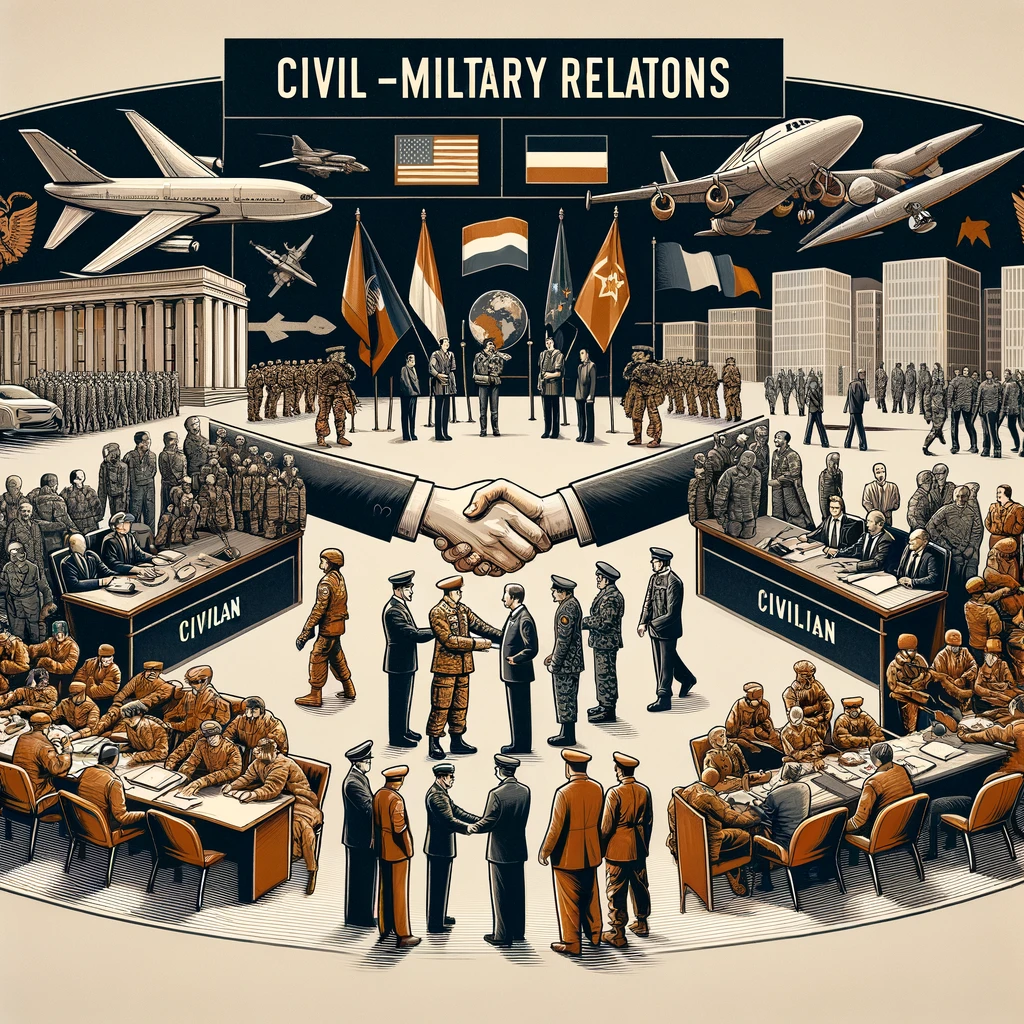
Civil-Military Relations: Barnett’s proposition that the U.S. should welcome environmental refugees suggests a shift in the traditional role of the military from combat to humanitarian assistance and disaster response. This has significant implications for civil-military relations, potentially leading to a military that is more deeply integrated into societal structures and international development. However, Barnett’s work could be critiqued for not fully exploring the complexity of such a shift, particularly the impact on the military’s organizational culture, resource allocation, and training.
Democracy: Involvement of the military in non-traditional roles could influence democratic processes. Increased military engagement in civilian affairs might necessitate new checks and balances to preserve democratic norms. Barnett’s strategies lack a detailed consideration of how to maintain a healthy balance between military and civilian spheres in democracy, which is critical to prevent the militarization of foreign and domestic policy.
Crisis Management: Barnett’s vision suggests a world where crisis management becomes a central function of the military, particularly as environmental catastrophes increase. This expands the military’s remit beyond national defense to global stability operations. However, there seems to be a gap in Barnett’s assumptions regarding the readiness and adaptability of the armed forces to take on these expansive roles, especially given the complexities of international law and the potential for mission creep.
Barnett’s treatment of military institutions appears to call for a paradigm shift in military operations and doctrine. The book implies a future where military strategies are more closely aligned with addressing the root causes of instability, such as climate change and demographic shifts, rather than the symptoms, such as conflict and terrorism. Yet, this raises questions about whether these institutions are equipped to handle such roles, and whether such a focus might detract from core competencies in defense and warfare.
Barnett’s assertions and assumptions offer a provocative vision of the future role of the armed forces in an era of global change. However, they may overlook the nuanced and intricate nature of civil-military relations, the preservation of democratic norms, and the detailed crisis management strategies that such changes would necessitate. There’s a rich area here for further exploration and debate within the defense and academic communities, particularly those focused on strategy and innovation within military practice and policy.
The Research and Rigor
Barnett’s analysis is grounded in a rich tapestry of empirical data, covering climate change projections, demographic trends, and economic forecasts. His examination of the “non-integrating gap” is particularly striking, offering a nuanced understanding of how environmental changes are reshaping traditional geopolitical hotspots. However, while the book is replete with data, Barnett occasionally glosses over the complexities of integrating this data into practical policy frameworks.
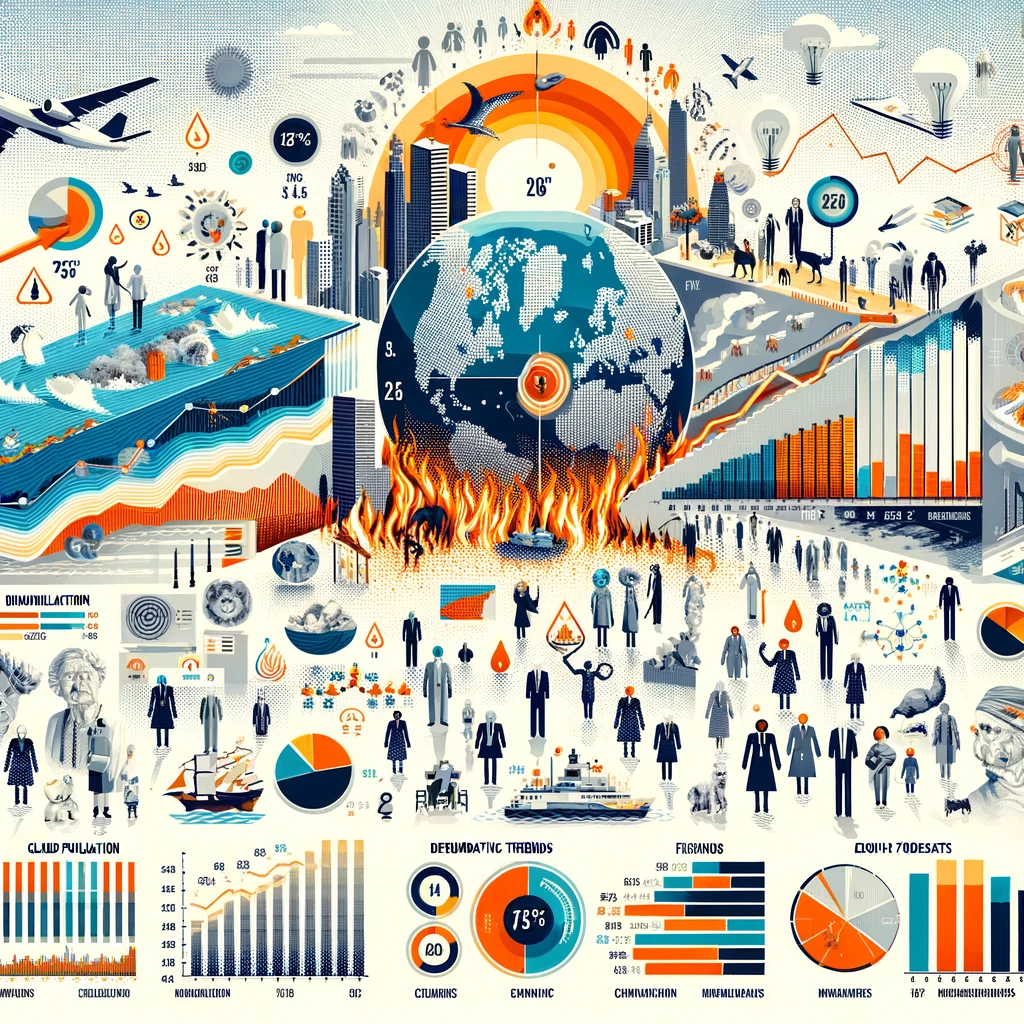
Barnett’s intellectual rigor is evident in his comprehensive analysis of the interconnected nature of global challenges. He successfully synthesizes diverse fields — from security studies to environmental science — into a coherent argument. However, Barnett’s policy prescriptions occasionally lack the depth and specificity needed to fully convince. His advocacy for the integration of environmental refugees, for instance, raises more questions than it answers regarding the practicalities of such an endeavor.
The book is indeed well-researched, with Barnett employing a wide range of evidence to support his claims, from historical precedents to current policy debates. This is complemented by Barnett’s accessible writing style, which brings complex issues to a broader audience without sacrificing analytical depth. However, the book could benefit from more case studies to illustrate how Barnett’s strategies might play out in real-world scenarios.
“America’s New Map” is a thought-provoking contribution to the discourse on America’s role in a changing world. Barnett successfully challenges readers to reconsider established paradigms of global strategy in light of emerging realities. While the book could benefit from more detailed policy analysis, its strengths lie in its ambitious scope and Barnett’s ability to distill complex global trends into clear strategic insights. It is a must-read for policymakers, strategists, and anyone interested in understanding the future of global geopolitics.
 Mastermind Century Group