


Mission Command has long been heralded as a transformative approach to military leadership and operations. Its principles of decentralization, empowerment, and adaptive decision-making resonate with many who envision a more agile and responsive Air Force. Yet, the concept often seems easier said than done, especially when viewed through the lens of the United States Air Force’s (USAF) recent history.
Over the past two to three decades, the culture within the USAF has evolved in a direction that seems almost antithetical to the tenets of Mission Command. The post-9/11 era, in particular, has been characterized by centralized control, rigid hierarchies, and a cautious approach to decision-making. These traits, while perhaps offering a sense of stability and order, stand in stark contrast to the flexibility and initiative that Mission Command espouses.
So, what does it take to pivot from this entrenched operational mindset to a Mission Command-oriented posture? It’s a complex question requiring a deep dive into various facets of the issue. From examining the psychological underpinnings of empowerment to evaluating the effectiveness of different organizational structures, one must navigate the intricate landscape that the USAF must traverse to successfully adopt Mission Command.

As one ventures into this exploration, consideration must be given to academic perspectives, reviewing seminal literature, and a discussion on the practical implications. The goal is to provide a comprehensive understanding that can inform both policy and practice, offering a roadmap for those committed to making Mission Command not just an aspirational concept, but a lived reality in the Air Force.
AFDP 1-1 (Air Force Doctrine Publication 1-1)
The concept of Mission Command, as outlined in AFDP 1-1 (Air Force Doctrine Publication 1-1), emphasizes decentralized execution, flexibility, and the empowerment of lower-level leaders to make decisions based on their understanding of the commander’s intent. This approach is designed to be adaptive to rapidly changing operational environments and to leverage the unique skills and insights of individual airmen. Here’s how Mission Command could change the way the Air Force organizes, plans, or executes at the operational level of war:
Organizational Changes
Flatter Hierarchies: Traditional hierarchical structures may be flattened to allow for quicker decision-making processes.
Cross-Functional Teams: The formation of agile, cross-functional teams that can operate semi-autonomously could become more common.
Specialization: There may be an increased focus on specialized capabilities tailored to specific operational needs, rather than one-size-fits-all solutions.
Human Capital: Investment in leadership development and decision-making skills at all levels will likely increase.

Planning Changes
Adaptive Planning: Traditional, rigid planning cycles may give way to more adaptive, iterative planning processes that can quickly incorporate new information.
Scenario-Based Planning: More emphasis could be placed on planning for multiple scenarios and contingencies, rather than focusing on a single most-likely outcome.
Real-Time Analytics: Advanced data analytics and AI could be integrated into planning processes to provide real-time insights.
Decentralized Planning: Lower-level units may be given more responsibility for planning their own missions within the broader framework of the commander’s intent.
Execution Changes
Rapid Decision-Making: Empowered lower-level leaders can make decisions on the fly, allowing for more agile and responsive operations.
Mission-Type Orders: Commanders may issue orders that specify the objective but leave the details of how to achieve it to the discretion of the subordinate leaders.
Feedback Loops: Continuous feedback mechanisms could be implemented to allow lessons learned during execution to be rapidly incorporated into planning and decision-making processes.
Resource Allocation: Resources may be allocated in a more flexible manner, allowing units to adapt to changing conditions on the ground.
Academic Implications
From an academic standpoint, the adoption of Mission Command could necessitate new research areas and curricula focusing on decentralized leadership models, decision-making under uncertainty, and the psychology of empowerment. It could also lead to case studies that examine the efficacy of Mission Command in various operational contexts, providing empirical data to refine the doctrine further.
BREAKING IT DOWN:
Organizational Changes
Flatter Hierarchies: Traditional hierarchical structures may be flattened to allow for quicker decision-making processes.
Theoretical Framework:
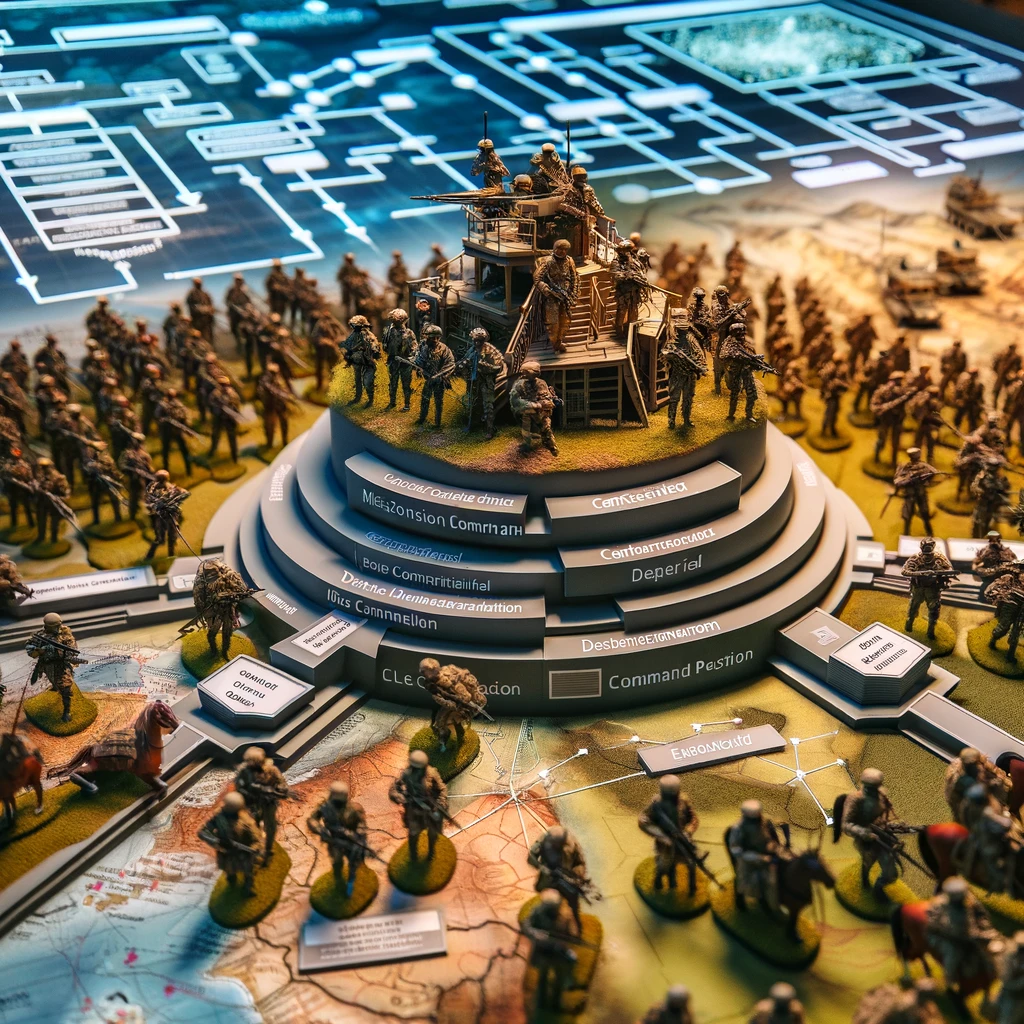
Flatter hierarchies are rooted in organizational theories that emphasize agility, responsiveness, and empowerment. They contrast with traditional “tall” hierarchies that have multiple layers of management and often result in slower decision-making processes.
Implications:
- Speed of Execution: Fewer layers mean that decisions can be made and executed more quickly, which is crucial in modern, fast-paced operational environments.
- Accountability: With fewer layers, each individual has a clearer line of sight to the overall objectives, increasing accountability.
- Communication: Information flows more freely in flatter organizations, reducing the likelihood of “broken telephone” effects where messages get distorted as they pass through layers.
Nuances:
- Decision Autonomy: While flatter hierarchies speed up decision-making, they also place a greater burden on lower-level leaders to make the right calls.
- Information Overload: Fewer layers may mean more information flowing directly to the top, which could lead to information overload for senior leaders.
Challenges:
- Cultural Shift: Moving from a traditional hierarchy to a flatter one requires a significant cultural shift, which may face resistance.
- Role Clarity: With fewer layers, roles may become less clearly defined, leading to potential conflicts or overlaps.
Academic Research Opportunities:
- Comparative Studies: Research could compare the effectiveness of flatter versus traditional hierarchies in military operations.
- Organizational Behavior: Studies could explore how flatter hierarchies impact individual and team behavior, morale, and performance.
Cross-Functional Teams: The formation of agile, cross-functional teams that can operate semi-autonomously could become more common.
Theoretical Framework:
Cross-functional teams bring together expertise from different domains to solve complex problems. This is rooted in systems thinking and interdisciplinary approaches to problem-solving.
Implications:
- Agility: These teams can adapt quickly to new challenges, pulling in the necessary expertise as needed.
- Innovation: Diverse perspectives can lead to more innovative solutions.
- Resource Optimization: Resources can be allocated more efficiently when teams are formed around specific operational needs.
Nuances:
- Team Dynamics: The effectiveness of cross-functional teams depends heavily on team dynamics, including communication and trust.
- Resource Allocation: These teams may require dedicated resources, which could strain the overall organizational budget.
Challenges:
- Coordination: Cross-functional teams may struggle with coordination, especially if they are pulled together quickly for specific missions.
- Expertise Balance: Striking the right balance of expertise within the team can be challenging.
Academic Research Opportunities:
- Team Effectiveness: Research could focus on the factors that contribute to the effectiveness of cross-functional teams in military settings.
- Resource Optimization: Studies could explore how best to allocate resources to these teams for maximum impact.
Specialization: There may be an increased focus on specialized capabilities tailored to specific operational needs, rather than one-size-fits-all solutions.
Theoretical Framework:
Specialization is based on the principle that focused, expert resources can solve specific problems more effectively than generalists.
Implications:

- Expertise: Specialized units can develop deep expertise in specific operational domains.
- Precision: Specialization allows for more targeted and effective operations.
- Efficiency: Specialized units can often achieve objectives with fewer resources.
Nuances:
- Adaptability: While specialization allows for deep expertise, it may also reduce a unit’s adaptability to new or unexpected challenges.
- Interdependence: Specialized units may become highly dependent on other units for support, leading to potential vulnerabilities.
Challenges:
- Training: Specialized units require specialized training, which can be resource-intensive.
- Obsolescence: Specialized skills and technologies may become obsolete, requiring constant updating.
Academic Research Opportunities:
- Operational Effectiveness: Research could examine the operational effectiveness of specialized units compared to more generalist units.
- Skill Decay: Studies could explore how specialized skills decay over time and the implications for military readiness.
Human Capital: Investment in leadership development and decision-making skills at all levels will likely increase.
Theoretical Framework:
Investing in human capital is rooted in the belief that skilled, empowered individuals are a key organizational asset. This aligns with human resource theories that emphasize the importance of continuous learning and development.
Implications:
- Leadership: Developing leadership skills at all levels creates a more resilient and adaptive organization.
- Decision-Making: Training in decision-making frameworks can improve outcomes and reduce errors.
- Morale and Retention: Investment in personal and professional development can improve morale and reduce turnover.
Nuances:
- Individual vs. Collective Development: While individual skill development is important, collective capabilities such as teamwork and communication are equally crucial.
- Soft Skills: Leadership and decision-making are often categorized as “soft skills,” which can be harder to quantify and measure.
Challenges:
- Measurement: Quantifying the ROI of human capital investment in terms of mission success or other KPIs can be challenging.
- Implementation: Effective training programs require careful design, implementation, and follow-up, which can be resource-intensive.
Academic Research Opportunities:
- Leadership Development: Research could focus on the most effective methods for developing leadership skills in a military context.
- Decision-Making Models: Studies could explore different decision-making models and their applicability in high-stakes, fast-paced environments like military operations.
Organizational Changes
Adaptive Planning: Traditional, rigid planning cycles may give way to more adaptive, iterative planning processes that can quickly incorporate new information.
Implications:
- Operational Agility: Adaptive planning allows for quick pivots in strategy, making the force more agile and responsive to changing conditions.
- Resource Fluidity: Resources can be reallocated more dynamically, allowing for better optimization.
- Risk Management: The ability to adapt plans on the fly allows for more effective risk management, as threats and opportunities can be reassessed continuously.
Nuances:
- Flexibility vs. Structure: While adaptive planning allows for greater flexibility, it must be balanced with enough structure to ensure alignment with strategic objectives.
- Feedback Mechanisms: Adaptive planning often relies on continuous feedback loops, which require robust data collection and analysis capabilities.
Challenges:
- Resource Allocation: Adaptive planning may require more frequent adjustments to resource allocation, which can be logistically challenging.
- Change Management: Rapid changes in plans may lead to resistance or confusion among personnel.
Academic Research Opportunities:
- Adaptive Strategies: Research could focus on the effectiveness of adaptive planning strategies in rapidly changing operational environments.
- Resource Optimization: Studies could explore how adaptive planning impacts resource utilization and operational efficiency.
IN THE END
In the end, the journey towards integrating Mission Command within the Air Force is a multifaceted endeavor that requires a profound shift in culture, strategy, and operations. It highlights the intricate dynamics of organizational change, the challenges of decision-making under uncertainty, and the psychological nuances of empowerment. Academic implications must be considered such as transformation, recognizing the need for research and education that align with these evolving paradigms.
As noted, the transition to a Mission Command framework is not merely about adopting a new set of tactics; it’s about fostering a mindset that embraces agility, decentralization, and trust at all levels. It’s a move away from the rigidity of hierarchical structures to a more fluid and responsive form of leadership that empowers individuals to act with initiative and autonomy.
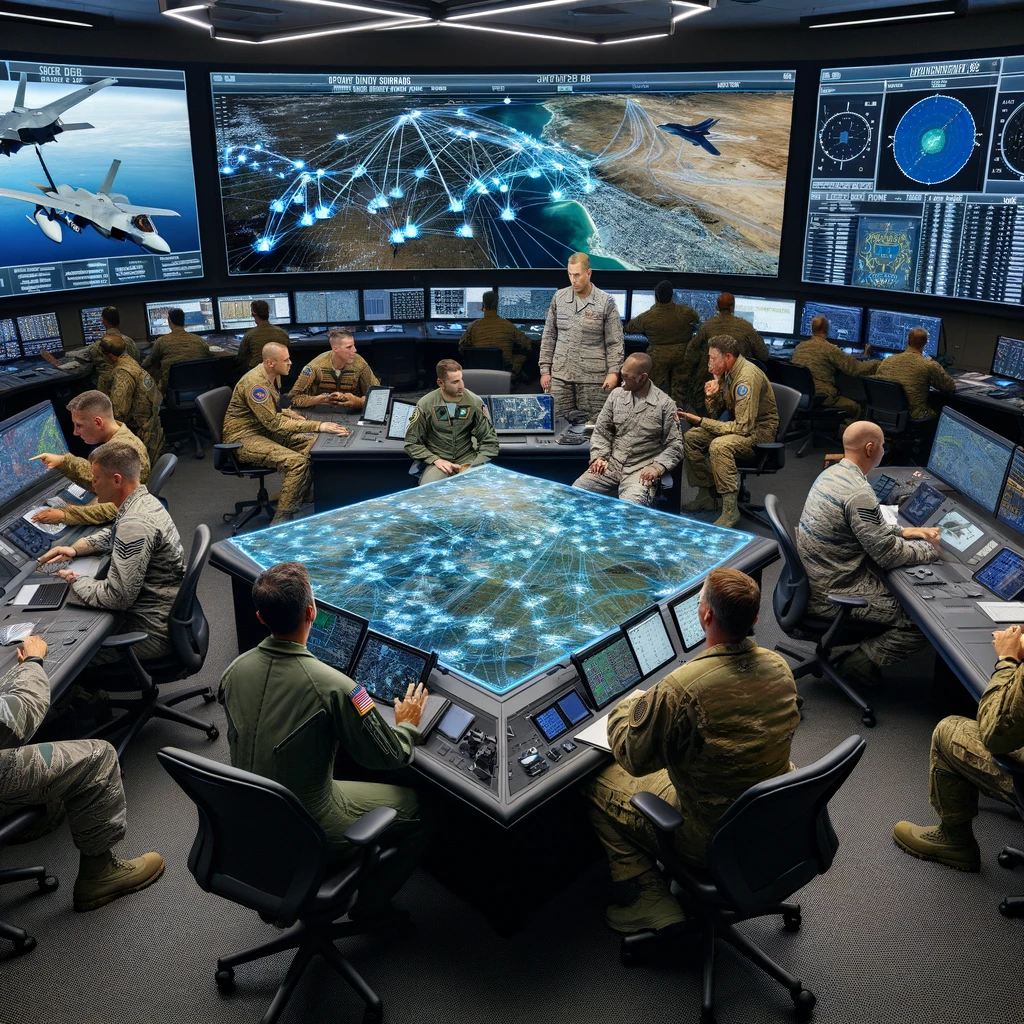
The implications of this shift are profound, extending beyond the military context to inform civilian sectors about the value of empowered execution and decentralized management. The comparative studies on military hierarchies and organizational effectiveness can serve as valuable benchmarks for various industries seeking to navigate the complexities of the modern world.
For the Air Force, embracing Mission Command could be the key to unlocking a new era of operational excellence, one that is better suited to the unpredictable and rapidly changing nature of contemporary conflicts. It’s a bold step forward, but one that holds the promise of a more dynamic, effective, and resilient force.
Finally, it’s clear that the path to Mission Command is not without its challenges. It will require a concerted effort to reevaluate and potentially overhaul long-standing practices. However, the potential benefits—a more adaptable and innovative Air Force, capable of meeting the demands of the 21st century—make this journey not just necessary, but imperative.
 Mastermind Century Group