

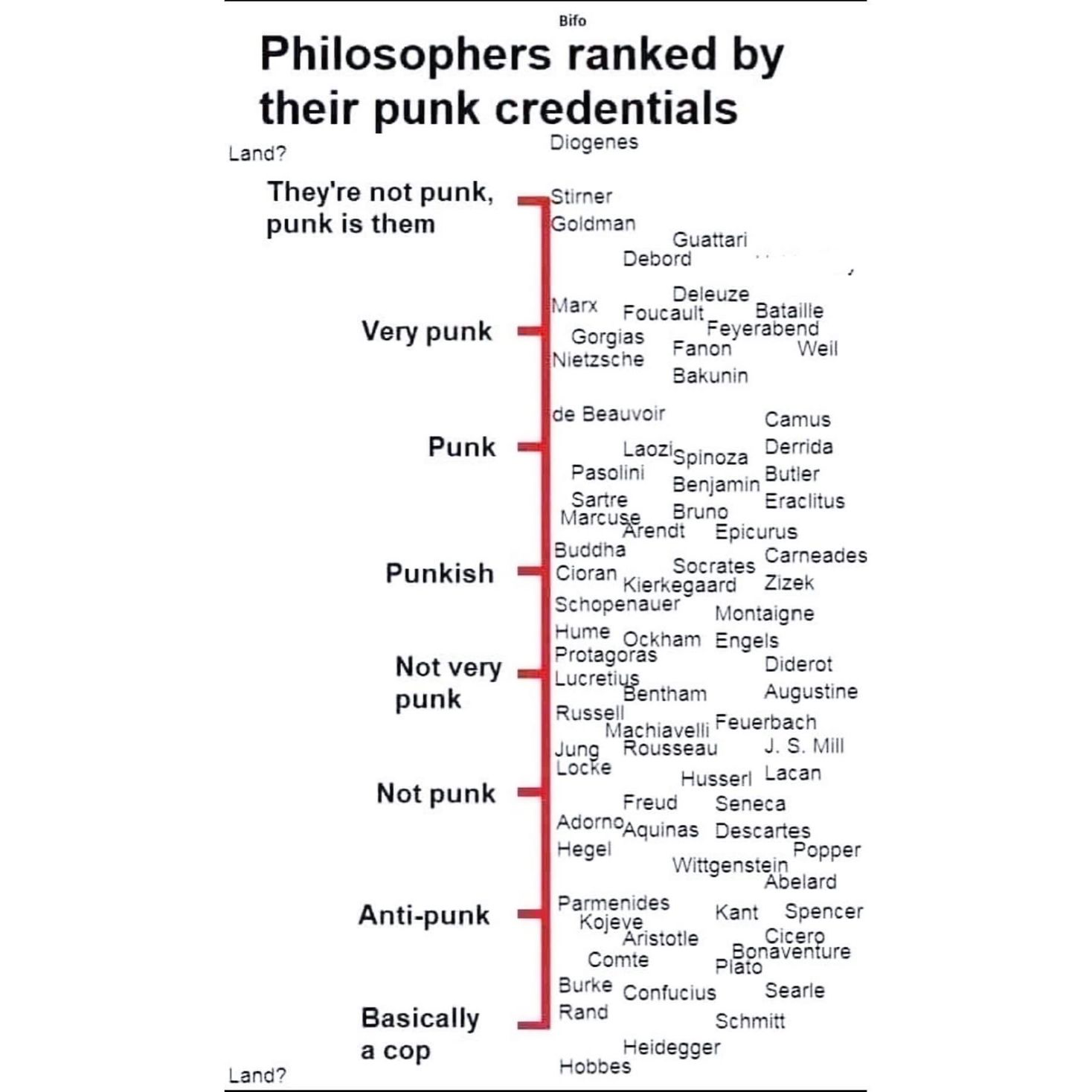
A few weeks ago, a colleague shared the attached PDF with me. Given my background as a padiwan philosopher and a recovering punk rocker, I initially found it intriguing and somewhat amusing. However, as I began delving deeper into its contents, my fascination grew. So, perhaps we commence our exploration from the top, specifically focusing on the section titled “They’re not Punk, Punk is Them.” I studied philosophers Guattari and Deleuze extensively for my dissertation, so let’s kick off the analysis with a discussion centered around Deleuze’s ideas.
Gilles Deleuze, a French philosopher, and punk rock, a rebellious music and cultural movement, seemed like an unlikely pairing at first glance. However, there are some interesting parallels and connections between Deleuze’s philosophical views and the ethos of punk rock:
- Anti-establishment and countercultural stance: Punk rock emerged as a reaction against the mainstream music industry and the established social norms of the time. Similarly, Deleuze’s philosophy often challenges traditional philosophical frameworks and established ways of thinking, seeking to break free from established concepts and categories.
- DIY (Do It Yourself) attitude: Punk rock celebrates a DIY ethos, encouraging individuals to create their own music, zines, and art without relying on major labels or institutions. Deleuze’s philosophical approach is also characterized by a DIY spirit, emphasizing the creation of new concepts and the forging of unique paths of thought rather than relying on pre-existing philosophical systems.
- Emphasis on individuality and difference: Punk rock values individual expression and celebrates diversity. Similarly, Deleuze’s philosophy is known for its focus on difference and becoming, highlighting the uniqueness and variability of existence and rejecting the notion of a fixed, universal essence.
- Rejecting hierarchy and authority: Punk rock often criticizes authority figures and societal hierarchies. Deleuze’s philosophy also challenges conventional hierarchies, advocating for a rhizomatic, non-linear mode of thinking that opposes traditional vertical structures.
- Intensity and affectivity: Punk rock is known for its raw and passionate energy, reflecting the intensity of lived experiences and emotions. Deleuze’s concept of “affect” emphasizes the pre-personal and non-representational qualities of experience, aligning with the emotional and affective elements present in punk rock.
- Subversion of norms: Both punk rock and Deleuze’s philosophy seek to subvert established norms and question dominant cultural values. They encourage individuals to think critically, challenge authority, and push boundaries.
It’s essential to note that these comparisons are not meant to imply a direct and deliberate connection between Deleuze and punk rock. Rather, they highlight certain shared themes and attitudes that have resonated with individuals seeking alternative perspectives and ways of engaging with the world. Both Deleuze’s philosophy and punk rock have had a significant impact on the cultural and intellectual landscape, inspiring many to think differently and question the status quo.
Deleuze philosophical Punk Views:
Gilles Deleuze’s philosophical views cannot be classified as “punk” in the traditional sense, I mean punk is primarily a musical and cultural movement rather than a specific philosophical school of thought–but work with me here. Deleuze was a highly influential and complex philosopher whose ideas were rooted in Continental philosophy and influenced by various intellectual traditions, including the works of Nietzsche, Spinoza, and Bergson.
However, some aspects of Deleuze’s philosophy can be seen as resonating with the punk ethos, particularly in terms of his critique of established systems, emphasis on individuality and difference, and rejection of traditional authority. Here are some of Deleuze’s philosophical views that share certain affinities with the spirit of punk:
- Anti-essentialism: Deleuze rejected the notion of fixed essences and universal categories. He emphasized the uniqueness and singularity of individuals, events, and concepts. This aligns with punk’s rejection of uniformity and its celebration of individual expression and diversity.
- Becoming and transformation: Deleuze’s concept of “becoming” emphasizes the idea that everything is in a constant state of change and flux. This notion resonates with punk’s emphasis on breaking away from societal norms and creating new, authentic identities.
- Rhizomatic thought: Deleuze and Guattari introduced the idea of the rhizome, which refers to a non-hierarchical and interconnected mode of thought. This challenges traditional linear thinking and mirrors punk’s rejection of hierarchical structures and authority.
- Nomadism and deterritorialization: Deleuze explored the concept of nomadism, which involves detaching oneself from fixed territories and established structures. This echoes punk’s anti-establishment and anti-conformist attitude.
- Desire and intensity: Deleuze’s philosophy places a strong emphasis on desire and the affective intensity of life. This resonates with punk’s passionate and emotive expression through music, art, and lifestyle.
- Critical engagement with power structures: Deleuze’s works often involve a critique of dominant power structures and the ways in which they control and limit individual freedoms. This aligns with punk’s resistance to authority and social norms.
Deleuze Challenging The System:
Deleuze’s philosophy challenges traditional philosophical frameworks and established ways of thinking in several ways:
- Anti-essentialism: Deleuze rejects the notion of fixed and immutable essences. Traditional philosophy often seeks to define objects, concepts, and individuals based on stable and unchanging essences. In contrast, Deleuze’s philosophy emphasizes the dynamic and ever-changing nature of reality. He proposes that everything is in a constant state of becoming and that identities are not fixed but are continuously transformed.
- Difference and multiplicity: Deleuze opposes the idea of binary oppositions and dualisms that have been prevalent in Western philosophy. Instead of focusing on identity and sameness, Deleuze highlights difference and multiplicity. He argues that the world is composed of diverse and interconnected elements, and understanding reality requires acknowledging this multiplicity.
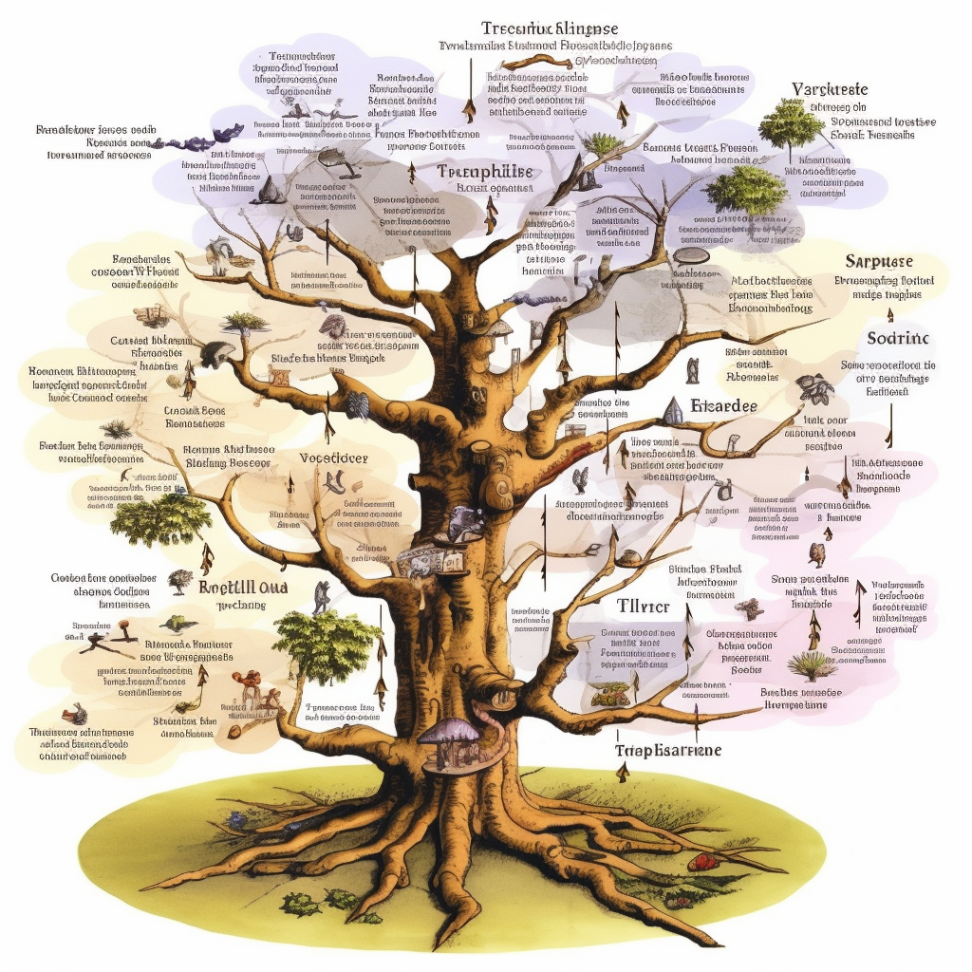
- Rhizomatic thought: Deleuze and Guattari’s concept of the rhizome challenges traditional hierarchical thinking. They propose a rhizomatic mode of thought where ideas, connections, and knowledge spread horizontally, without a fixed center or linear progression. This approach opposes the traditional tree-like structures of knowledge and encourages a more interconnected and open-ended understanding of concepts.
- Critique of representation: Deleuze questions the representational model of thought, which assumes that language and concepts accurately mirror reality. He argues that this representational approach limits our understanding and experiences of the world. Instead, Deleuze advocates for a philosophy of immanence, which explores the internal forces and relations that give rise to our experiences.
- Affective philosophy: Deleuze introduces affectivity as a central aspect of his philosophy. Rather than focusing solely on rationality and cognition, he emphasizes the importance of affect and emotion in shaping our experiences and perceptions of the world. This challenges the traditional emphasis on reason and logic in philosophical discourse.
- Nomadism and deterritorialization: Deleuze’s concept of nomadism involves detaching oneself from fixed territories and established norms. He advocates for creative and nomadic lines of flight that enable individuals to break away from oppressive structures and think beyond conventional boundaries.
- Creating new concepts: Deleuze’s philosophy involves creating new concepts and modes of thought rather than relying on pre-established categories. He believes that philosophers should be inventors of concepts that express the uniqueness and complexity of reality.
Overall, Deleuze’s philosophy challenges the dominant paradigms of traditional Western philosophy by embracing difference, multiplicity, and creativity. It opens up new avenues of thought and encourages a more fluid and dynamic understanding of reality, freeing philosophy from rigid frameworks and allowing for innovative ways of thinking.
Punk …Challenging The System:
Punk rock challenged traditional philosophical frameworks and established ways of thinking in various ways, particularly through its cultural and musical expressions. Here are some of the ways punk rock pushed against the norms:
- Anti-establishment and DIY ethos: Punk rock emerged as a rebellious countercultural movement that rejected the mainstream music industry and the established norms of the time. It encouraged individuals to create their own music, zines, and art, promoting a DIY (Do It Yourself) attitude. This approach challenged the traditional notion of relying on big record labels and demonstrated that anyone could participate in creating and disseminating music.
- Rejecting conformity and authority: Punk rock was critical of societal norms and authorities. It challenged conventional ideas of beauty, success, and societal expectations. Punk musicians and fans often expressed themselves through unconventional styles, fashion, and music, rejecting the pressure to conform to mainstream standards.
- Individuality and authenticity: Punk rock celebrated individuality and encouraged people to be true to themselves, embracing their uniqueness. It rejected the idea of presenting an idealized image and encouraged artists to express their raw and genuine emotions, even if it meant challenging conventional notions of what was considered “good” or “acceptable.”
- Social and political critique: Many punk songs and lyrics addressed social and political issues such as inequality, discrimination, and corruption. Punk rock bands used their music as a platform to express discontent with the status quo and advocate for social change and justice.
- Embracing non-conventional musical styles: Punk rock rejected the highly polished and technical approach of mainstream rock music. Instead, it embraced a more raw and aggressive musical style that challenged traditional notions of musical excellence and aesthetics.
- Subverting musical norms: Punk rock questioned the conventional structures of songs and introduced a more simplistic and straightforward approach to music. This subversion of musical norms challenged established ideas about what constituted “good” music and expanded the boundaries of musical expression.
- Fostering community and inclusivity: Punk rock created a sense of community among its followers. It encouraged inclusivity, welcoming people from different backgrounds and identities to participate in the punk subculture. This challenged societal divisions and promoted a sense of unity and solidarity.
- D.I.Y. Philosophy: The punk ethos often extended beyond music and into other aspects of life, promoting self-reliance, self-expression, and self-determination. This DIY philosophy encouraged people to question the authority and take control of their own lives, including their political, social, and economic choices.

Overall, punk rock’s challenge to traditional philosophical frameworks was not articulated through complex theoretical treatises but rather through its bold and unapologetic rejection of societal norms, authority, and conformity. It opened up new possibilities for self-expression, individuality, and social critique, inspiring generations of people to question established ways of thinking and live authentically on their own terms.
Deleuze’s philosophical approach and the DIY spirit
Deleuze’s philosophical approach characterized a DIY spirit in several ways, emphasizing the creation of new concepts and the forging of unique paths of thought:
- Creation of New Concepts: Deleuze was not interested in rehashing old philosophical ideas or adhering to pre-existing systems. Instead, he believed in the power of creating new concepts to understand and interpret reality. He encouraged philosophers to be like artists, inventing new tools and concepts to explore the complexities of existence.
- Affirmation of Difference: Deleuze’s philosophy celebrated difference and multiplicity rather than seeking universal principles or fixed essences. He believed that reality was made up of a diverse and interconnected web of differences, and it was crucial to engage with this complexity rather than trying to reduce everything to familiar categories.
- Rhizomatic Thinking: Deleuze and Guattari introduced the concept of the rhizome as an alternative to hierarchical and linear thought. A rhizomatic approach allows for multiple connections and lateral movements between ideas, creating a more open and flexible system of thought. This non-linear thinking encourages a DIY mindset of exploring unconventional connections and forging one’s own intellectual paths.
- Anti-Systematic Philosophy: Deleuze’s philosophy resisted the idea of constructing all-encompassing philosophical systems that attempted to explain everything. Instead, he focused on creating localized concepts that were applicable to specific situations and problems. This decentralized and fragmentary approach aligns with the DIY spirit, as it allows individuals to engage with philosophical ideas in a more personal and hands-on manner.
- Becoming and Change: Deleuze emphasized the idea of becoming, suggesting that everything is in a state of continuous transformation. This view rejects the static nature of traditional philosophical systems and invites thinkers to embrace change and openness. It encourages a DIY approach to philosophy, where individuals can continually adapt and develop their ideas over time.
- Personal Engagement with Philosophy: Deleuze’s works often present philosophy as a personal and creative endeavor rather than an abstract and distant discipline. He encouraged individuals to actively engage with philosophical concepts, to experiment with ideas, and to use philosophy as a tool for self-discovery and self-expression.
In summary, Deleuze’s philosophical approach characterizes a DIY spirit by challenging the reliance on established philosophical systems and encouraging individuals to create their own concepts and forge unique paths of thought. It celebrates the affirmation of difference, open-ended exploration, and active personal engagement with philosophy, promoting a more individualistic and creative approach to understanding the world.
Difference and Becoming
Deleuze’s philosophy focused on difference and becoming in several key ways, highlighting the uniqueness and variability of existence while rejecting the notion of a fixed, universal essence:

- Difference as Ontological Principle: Deleuze proposed that difference is not merely a secondary quality but an essential characteristic of reality. He argued that the world is composed of different intensities, forces, and processes, and these differences are what give rise to the diversity of existence. Rather than seeking universals or stable essences, Deleuze’s philosophy emphasizes the multiplicity and heterogeneity of the world.
- Rhizomatic Thinking: Deleuze and Guattari’s concept of the rhizome is a key metaphor for understanding difference. A rhizome is a non-hierarchical and interconnected network that grows horizontally, without a fixed center or predetermined pathways. This image reflects the non-linear and open-ended nature of difference in Deleuze’s philosophy.
- Becoming: Deleuze introduced the concept of “becoming,” which emphasizes the dynamic and transformative nature of existence. Becoming is a process of continual change and flux, where entities and ideas are not fixed but are in a constant state of transformation. This concept rejects the notion of static identities and underlines the variability and plasticity of reality.
- Anti-Essentialism: Deleuze’s rejection of fixed essences is tied to his anti-essentialist stance. He argued that traditional philosophy often sought to define objects and concepts based on essential qualities, seeking to capture their immutable and unchanging nature. Deleuze’s philosophy, on the other hand, suggests that things are defined by their relationships and differences, not by any inherent essence.
- Events over Things: Deleuze’s emphasis on events rather than things further reinforces the focus on difference and becoming. Events are moments of intensity and transformation that disrupt stable identities. They bring about new possibilities and challenge established structures. Deleuze privileges the process of events unfolding over the static nature of things.
- Intensive Magnitudes: Deleuze introduced the notion of “intensive magnitudes” to account for the dynamic and changing aspects of reality. These magnitudes represent the degrees of difference and intensity that characterize events, processes, and experiences. They are non-measurable and resist fixed representation, underscoring the variability inherent in existence.
Overall, Deleuze’s philosophy places difference and becoming at the center of its ontology. It celebrates the uniqueness and variability of existence, embracing the complexities of reality and rejecting the pursuit of fixed, universal essences. By doing so, Deleuze encourages a more dynamic and open-ended understanding of the world, inviting us to explore the endless possibilities that arise from difference and transformation.
Challenge Conventional Hierarchies
Deleuze’s philosophy challenged conventional hierarchies and advocated for a rhizomatic, non-linear mode of thinking in several ways:
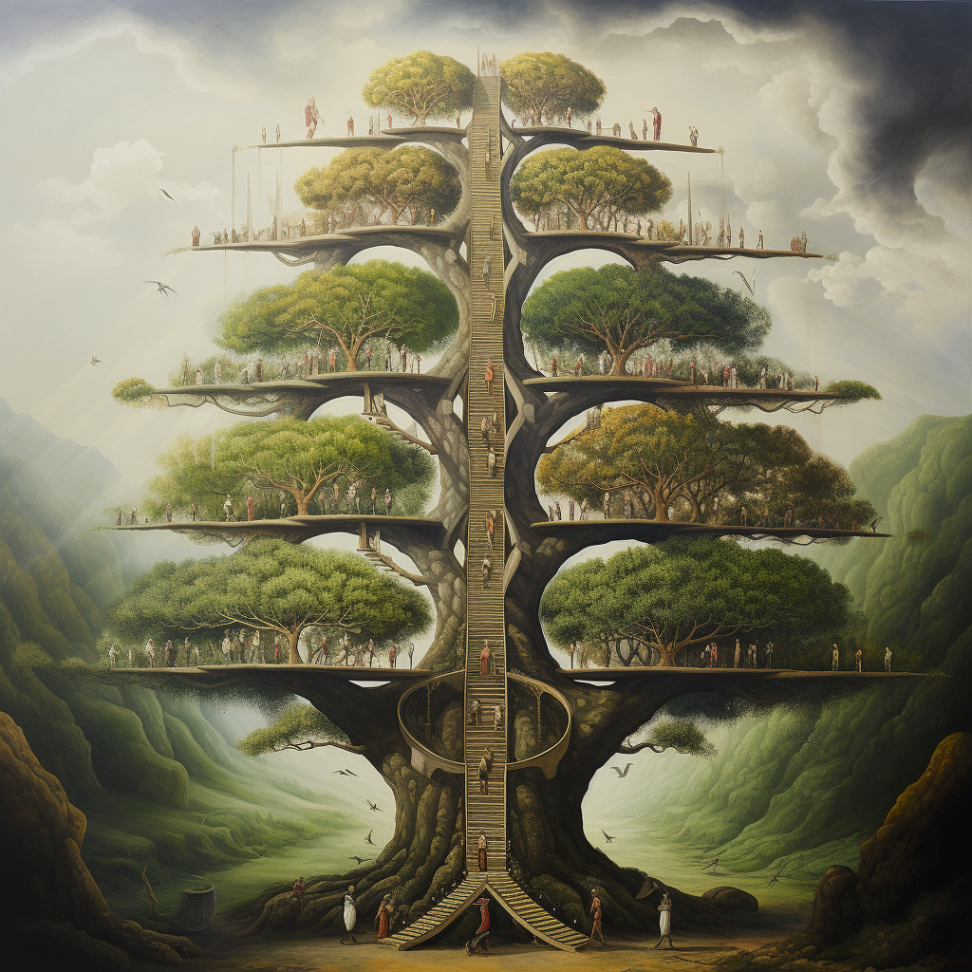
- Rhizomatic Thinking: Deleuze and Guattari’s concept of the rhizome presented an alternative to the hierarchical, tree-like structures that have often been used to organize knowledge and information. A rhizome is a horizontal and interconnected network of ideas, without a fixed center or a predetermined pathway. This non-linear mode of thinking opposes the traditional vertical structures found in many philosophical systems.
- Anti-Hierarchical Ontology: Deleuze’s ontology is characterized by a rejection of hierarchical order. He emphasized the importance of difference and multiplicity, where everything exists on equal footing. Instead of positing a single, overarching foundation or essence, Deleuze’s philosophy highlights the interplay of diverse and interconnected entities, all contributing to the complex web of reality.
- Nomadism and Deterritorialization: Deleuze’s concept of nomadism involves detaching oneself from fixed territories and established structures. He encourages a nomadic mode of thinking that resists rigid categorizations and fixed positions. This notion challenges the tendency to classify and prioritize ideas based on hierarchical criteria.
- Difference over Opposition: Deleuze’s philosophy favors difference over opposition. Rather than organizing concepts in binary pairs (e.g., good/bad, true/false), Deleuze advocates for a philosophy of affirmation that appreciates the nuances and complexities of difference. This approach undermines hierarchical distinctions between polarized concepts.
- Multiplicity of Perspectives: Deleuze encourages a multiplicity of perspectives and viewpoints. Instead of seeking a single, ultimate truth or a fixed point of view, he values the coexistence of multiple perspectives, each contributing to the richness of understanding without reducing one to the other.
- The Line of Flight: Deleuze introduces the concept of the “line of flight,” which represents a movement away from established norms and structures. This line of flight is an escape from rigid hierarchies and oppressive systems, encouraging a non-linear, creative, and transformative mode of thinking.
- Rhizomatic Connections: In Deleuze’s philosophy, ideas and concepts are connected in unpredictable and creative ways, much like the rhizome’s lateral growth. This approach allows for a more open and diverse exploration of thought, breaking free from the limitations imposed by hierarchical organization.
By challenging conventional hierarchies and promoting a rhizomatic, non-linear mode of thinking, Deleuze’s philosophy encourages a more flexible and dynamic understanding of reality. It opens up new possibilities for creative thought and empowers individuals to break away from fixed structures, leading to a more liberated and imaginative engagement with the world.
Subverting Established Norms and Questioning Dominant Cultural Values.
Deleuze’s philosophy sought to subvert established norms and question dominant cultural values in several ways:
- Anti-Essentialism: Deleuze rejected the notion of fixed and stable essences in his philosophy. Instead of seeking universal and timeless truths, he emphasized the ever-changing and dynamic nature of reality. By challenging the idea of fixed essences, Deleuze disrupted traditional conceptions of identity, truth, and knowledge, questioning established norms that relied on stable and universal foundations.
- Difference and Multiplicity: Deleuze celebrated difference and multiplicity as fundamental aspects of existence. He argued that the world is made up of diverse and interconnected elements, each with its own unique characteristics. This emphasis on difference challenged the tendency to homogenize and categorize phenomena, subverting conventional ways of organizing knowledge and culture.
- Becoming and Change: Deleuze introduced the concept of “becoming,” emphasizing the process of continual transformation and change. This focus on becoming challenged the idea of fixed identities and static realities, encouraging a more fluid and open-ended understanding of existence.
- Rhizomatic Thinking: Deleuze and Guattari’s concept of the rhizome provided an alternative to hierarchical and linear modes of thought. A rhizomatic approach opposes the traditional vertical structures and encourages a non-linear and interconnected mode of thinking. This subversion of conventional thought patterns opened up new possibilities for understanding and engaging with the world.
- Nomadism and Deterritorialization: Deleuze’s notion of nomadism involves detaching oneself from fixed territories and established norms. It encourages a process of deterritorialization, where individuals break away from rigid structures and established ways of living and thinking. This subversive approach challenges the dominance of conventional cultural values and invites creative experimentation.
- Critique of Representation: Deleuze questioned the traditional representational model of thought, which assumes that language and concepts accurately mirror reality. He argued that this representational approach limits our understanding and experiences of the world. By challenging representational thinking, Deleuze sought to disrupt the dominance of established systems of meaning and knowledge.
- Creative Concepts: Deleuze’s philosophy emphasized the creation of new concepts to capture the complexities of existence. He believed that philosophers should be inventors of concepts, forging new pathways of thought that challenge established ideas. This creative approach subverted the reliance on pre-existing philosophical systems and encouraged the generation of new perspectives.
Overall, Deleuze’s philosophy sought to subvert established norms and question dominant cultural values by challenging essentialism, embracing difference and multiplicity, celebrating becoming and change, encouraging rhizomatic thinking, promoting nomadism and deterritorialization, critiquing representation, and fostering the creation of innovative concepts. By doing so, Deleuze’s philosophy provided a transformative and subversive approach to understanding the world and engaging with culture and society.
In The End
In conclusion, Gilles Deleuze’s philosophical stance can be aptly likened to the rebellious spirit of punk. Just as punk rock emerged as a countercultural movement, challenging established norms and rejecting conformity, Deleuze’s philosophy embodies a similar ethos within the realm of thought. His emphasis on becoming, difference, and immanence mirrors punk’s rejection of fixed identities and hierarchical structures.
Deleuze’s philosophy, like punk, encourages creative concepts and a DIY approach to understanding the world. His rhizomatic thinking and nomadic exploration align with punk’s non-linear and individualistic spirit. Just as punk rock questioned mainstream musical conventions, Deleuze questioned traditional philosophical frameworks, urging us to forge our own paths of understanding.
Moreover, Deleuze’s celebration of affectivity and intensity resonates with the raw emotion and passion of punk music. His rejection of representation and embrace of the pre-personal align with punk’s rejection of superficiality and its drive for authenticity.
In essence, Deleuze’s philosophical views share a rebellious and innovative energy with punk rock. Both challenge the status quo, inspire individual expression, and provide avenues for breaking away from conventional norms. This parallel demonstrates how philosophy, like music, can be a platform for pushing boundaries, fostering creative freedom, and inviting us to engage with the world in our own unique and unapologetic ways.
 Mastermind Century Group