


 As the USAF prepares for new challenges and opportunities of the coming decades, it faces sobering 21st-century realities: pandemics, rising state on state competition, global centers of power have become more distributed and the terrorism threat more dispersed. Most importantly, the emerging environment is demonstrating a trend that could prove to be the defining one of current times: the accelerating pace of change.
As such, the Air Force’s ability to continue to adapt and respond faster than potential adversaries is the greatest challenge it faces during the next 30 years.
As an organization, the USAF has spent years pondering LEAN, AGILE, AFSO21, but I have to believe organizations large and small have now learned how to be lean and agile, and how to best execute a strategy at a high level—but how’s that working for America in the 21st Century? Is it time for a change?
Secretaries of the Air Force since Deborah Lee James and Chiefs of Staff since Gen. Mark A. Welsh III have developed strategies and frameworks to guide Air Force planning and resourcing over coming decades. But, what kind of leader must we develop to guide the Air Force during the execution of said strategy (or strategies)?
Let’s ponder some large bureaucracies that failed to develop the correct leader: General Motors had a robust strategy but still declared bankruptcy, Blockbuster closed its last store, and Blackberry quickly moved from leading to bleeding. And let’s not forget Hewlett-Packard, Sony, Dell, and a host of other companies who failed to thrive despite its leaders and workers being constantly busy executing strategy developed by leaders that failed to anticipate the future.
In order to operate in this new age of hyper-change and growing uncertainty, it is imperative we learn and develop a new competency—anticipatory leadership.
The future is there for us to see when we know where and how to look at it.
An Anticipatory Leader must hone three very important traits and skills:
 1) Futurist: A futurist systematically explores predictions and possibilities about the future and how they can emerge from the present, whether that of human society in particular or of life on Earth in general.
The term “futurist” most commonly refers to authors, consultants, organizational leaders and others who engage in interdisciplinary and systems thinking to advise private and public organizations on such matters as diverse global trends, possible scenarios, emerging market opportunities and risk management.
In the mid‑1940s the first professional “futurist” consulting institutions like RAND and SRI began to engage in long-range planning, systematic trend watching, scenario development, and visioning, at first under World War II military and government contract and, beginning in the 1950s, for private institutions and corporations.
More generally, the futurist label includes such disparate lay, professional, and academic groups as visionaries, foresight consultants, policy analysts, cultural critics, planners, marketers, forecasters, prediction market developers, road-mappers, operations researchers, investment managers, actuaries and other risk analyzers, and future-oriented individuals educated in a myriad of academic discipline, including anthropology, complexity studies, computer science, economics, engineering, Urban design, evolutionary biology, history, management, mathematics, philosophy, physical sciences, political science, psychology, sociology, systems theory, technology studies, and other disciplines. A leader that is indeed a futurist presents an organization with massive diversity. They are visionaries.
 2) Strategist: A strategist is a person with responsibility for the formulation and implementation of strategy. Strategy generally involves setting goals, determining actions to achieve the goals, and mobilizing resources to execute the actions. A strategy describes how the ends (goals) will be achieved by the means (resources). The senior leadership of an organization is generally tasked with determining strategy. Strategy can be intended or can emerge as a pattern of activity as the organization adapts to its environment or competes. It involves activities such as strategic planning and strategic thinking. Simply put—they are thinkers.
A strategist is someone who has the ability to see beyond the near term – Richard Mander
A strategist is concerned with establishing the long-term direction of a business. – Anas, Strategy Consultant
A strategist is responsible for conceptually and holistically thinking of a future direction based on incomplete information. —Rui Martins, Director
“That men do not learn very much from the lessons of history is the most important of all the lessons that history has to teach.” ― Aldous Huxley
 3) Integrator: An integrator is a leader who specializes in bringing together component subsystems into a whole and ensuring that those subsystems function together. These systems are not simply physical, but are also metaphorical in nature. A true integrator can bring ideas from a myriad of sources, art, academia, history, entertainment, and science (naming only a few) together to build a myriad of solutions. An Integrator is growing in importance as the world becomes more ‘connected’. As well as integrating new systems, the task of integrating current systems is attracting massive amounts of research and effort.
The current problem is how to harness all the information available, from the various information generators into one complete picture. The level of information, needed by the different levels in the strategic structure, and the relevance of the information (information can become outdated in seconds) is so variable that it may be necessary to have more than one system or agency connected.
A true integrator is a master of culture and can connect as easily in a military organization as with academia, business, or other government agencies. They are true educators and connectors.
Visionary, thinking, and culturally competent, and educated leaders….Is it easy? Heck no! But, it is far past time to dump the buzz words and concepts of the 20th Century and embrace our current state.
 A leader is a dealer in hope. —Napoleon Bonaparte
______________________________
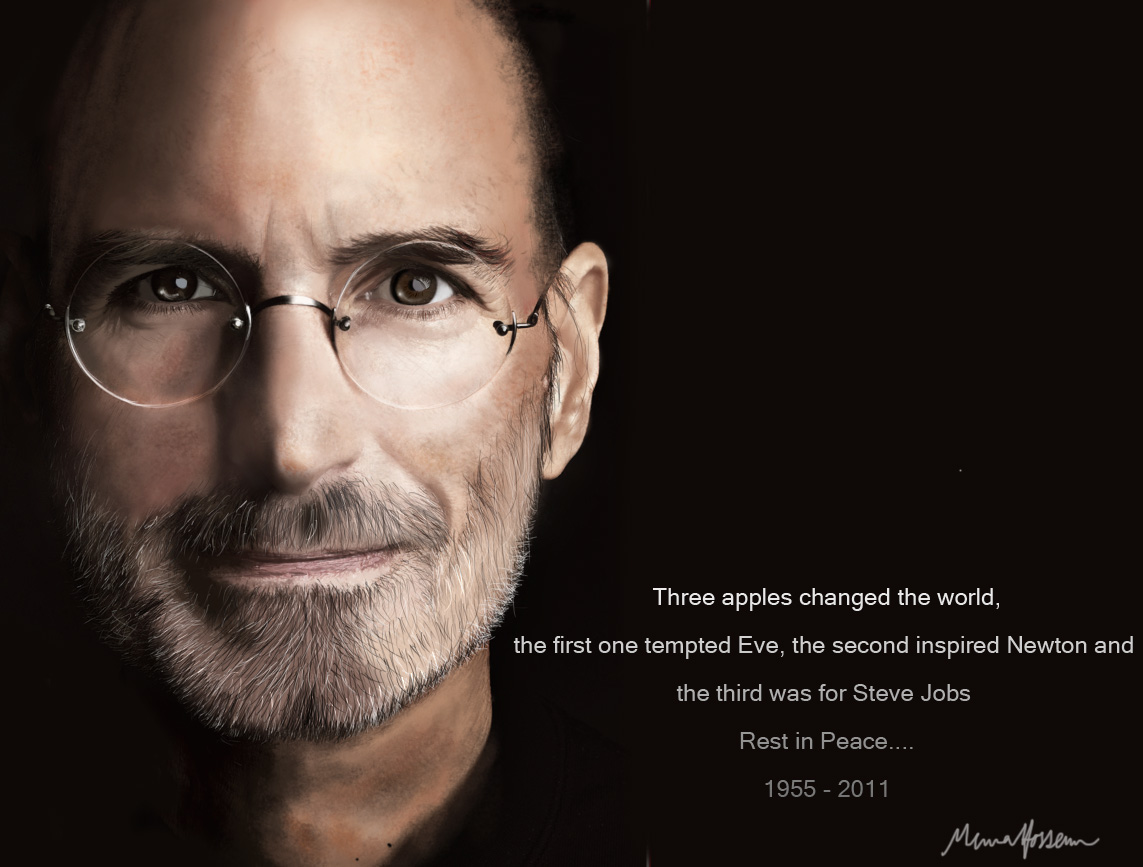
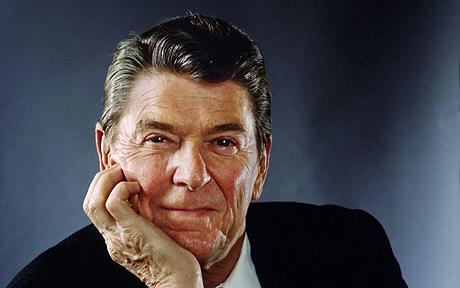
A few Anticipatory Leaders to consider (pictured above)
Napoleon Bonaparte
George C. Marshall
Ronald Reagan
Steve Jobs
Elon Musk
________________
The Futurist, Strategist, and Integrator Concept is based on The Art of the Future Concept: For more on anticipatory leadership see Anticipatory Leadership at Art of the Future
 Mastermind Century Group
Hi Bill,
This is an interesting read. I have oft wondered how to deal with the disruptive tendencies of free information exchange. Something that is at the heart of what is going on here — globalization of information extended to its logical conclusions. Someone will always find novel uses for bits of information. These will lead to new inventions and also new integration of technology. The real issue is how to make a behemoth like the US DoD or GM or Apple agile enough to handle the pace of change in an information connected world that is staring at affordable, made to order 3-d printing, on-line or at your nearest maker-faire.
Entities like US DoD and big companies that succeed over long times spend lots of effort strategizing and investing in future infrastructure to support their “line of business” — something that takes time and money to realize. The risk analysis and flexibility that must be designed in to these expensive and long lived systems must be robust or you build the “Achilles heel’ once or perhaps multiple times.
In the commercial world, if you guess wrong, you go from the darling child of wall street to the dust bin quickly. The surest clue that a company is in future trouble (as opposed to current quarter trouble) is when the lawyers start suing competitors over trivial pieces of software or patent infringements for dubious patents (click to buy, slide to open, or rounded corners comes to mind). To me that is a signal that out-innovating is no longer viable for the skill set they have or for the market they are in. Time for a change that will be done by you or to you….
In the government side of things, again, it is a big ship that moves at the speed of politics. In today’s world that is basically a logjam. Yet, the inventors and integrators of ideas continue to do so with all that connectedness that comes with globalization. So we begin to see things happen in our own country where there are many outsiders that are acting inside our national O-O-D-A loop. These can be small problems like events on the borders, or big problems like the mid-east etc, but they are all on the 6 o’clock news. I am not by any means advocating censorship as a way to protect our edge, to do so is fallacy since information will always be freed sooner or later. What I am for is continuing to nurture an environment where innovation thrives here. We must do what it takes to keep that here as opposed to sending it elsewhere.
I agree leadership is needed, especially at the strategic level. So much for ideas like putting a man on the moon and returning him safely in 10 years…… We need some more strategy and leadership that leads to goals like that. I guess the real question is how to you sell a strategy that deals with a different kind of a two front war? The nation state threat is still there, but there are transnational and other threats as well that require a different kind of architecture to handle. Then there are the soft skills such as civil affairs that we know we need, but can’t get the rest of US govt to sign up for (yet). Maybe we need to change how agile government can be when it comes to issues that transcend politics. It is back to leadership on that one….
Cheers,
Ben
Good points Ben… I ponder the concept of ecosystem as well. We really don’t have an ecosystem in the DoD or the Fed Gov that can support and nourish innovation. There is a lot of talk, but I’m not sure I see the action–the bureaucracy is simply daunting. Seems to be a way to build and/or perhaps prime the ecosystem is with incentives. But you are 100% correct it all comes back to leadership.
This is a balanced and precise reflection.
The remedial approach in dealing with the current modern world disruptions is through the application of creative intelligence, which you technically refer to as a futurist,wonderful.
Thanks for the info.