

by Micah Zenko
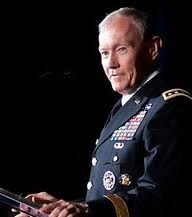
On February 15, General Martin Dempsey, chairman of the Joint Chiefs of Staff, told the House Armed Services Committee: “I can’t impress upon you that in my personal military judgment, formed over thirty-eight years, we are living in the most dangerous time in my lifetime, right now.” Two weeks later, during a House Budget Committee hearing, when asked to expand upon his earlier statement, he replied:
“There are a wide variety of nonstate actors, super-empowered individuals, terrorist groups, who have acquired capabilities that heretofore were the monopoly of nation states. And so when I said that it’s the most dangerous period in my military career, thirty-eight years, I really meant it. I wake up every morning waiting for that cyber attack or waiting for that terrorist attack or waiting for that nuclear proliferation, waiting for that proliferation of technologies that makes it an increasingly competitive security environment around the globe.”
Under U.S. law, the chairman of the Joint Chiefs is the “principal military adviser to the President, the National Security Council, and the Secretary of Defense” on a range of issues, including strategic planning, contingency planning and preparedness, budgets, and training. I respect General Dempsey’s responsibility to prepare the armed forces to respond to a number of scenarios and contingencies. Although the chairman cannot order troops into battle, his authority stems from the bully pulpit of the nation’s most senior military official.
However, I respectfully disagree with the assessment that America is in a more dangerous position today than at any other point since 1974, when General Dempsey graduated from West Point.
Take nuclear weapons. As I pointed out previously, for the past sixty-two years, the U.S. intelligence community has continuously assessed the potential for nuclear terrorist attacks on the United States. Despite the expressed interest of three terrorists groups in acquiring a bomb, there is no known instance of a nonstate actor or “super-empowered” individual possessing a nuclear weapon, or the requisite fissile material to build one. Meanwhile, nine states—the United States, Russia, France, the United Kingdom, China, Israel, Pakistan, India, and North Korea—have the bomb.
Moreover, the threat of nuclear terrorism is markedly reduced from the early 1990s, when more than thirty thousand nuclear weapons and tons of fissile material were poorly secured at over two hundred facilities throughout the former Soviet Union. After twenty years of U.S.-funded cooperative threat reduction programs that removed, consolidated, and secured nuclear material, Harvard University professor and nuclear security expert Matthew Bunn wrote in April 2010: “Overall, the risk of nuclear theft in Russia has been reduced to a fraction of what it was a decade ago.”
The habitual tendency to overinflate threats facing the United States was the focus of an essay I co-wrote with Michael A. Cohen in the current edition of Foreign Affairs, “Clear and Present Safety: The United States Is More Secure than Washington Thinks.” In stark contrast to the prevailing rhetoric from Washington, we argued that the world today is one with fewer violent conflicts, increased political freedom, and greater economic opportunity than at virtually any other point in human history. On average, people enjoy longer life expectancy. The United States faces no plausible existential threats and no near-term competition for the role of global hegemon. The U.S. military is indisputably the most powerful in the world, and the U.S. economy remains the largest as well as among the most vibrant and dynamic.
A tremendous number of blog posts and online observations have been written about our piece—see below for a number of such responses. In addition, we’ve heard from friends and colleagues in academia, media, think tanks, and the Obama administration, and the responses have been overwhelmingly positive. Unfortunately, despite our hopes of generating a substantive debate, no serious blog post or essay has yet been written that challenges our main thesis.
Ahead of what is sure to be a highly contested election season, U.S. government officials, policymakers, and pundits owe the American people an honest and realistic assessment of the threats facing the country, which can only be realized through a genuine debate that challenges what we believe to be a flawed conventional worldview. It is up to the American citizens and the media to question and contest such over-hyped threats.
 Mastermind Century Group