
John Boyd’s Destruction and Creation is one of those slim essays that, once read, refuses to leave the bloodstream. Written in 1976, in the shadow of Vietnam and the twilight of American confidence, it is at once a meditation on cognition and a blueprint for strategy. Boyd insists that orientation—our ability to interpret and act in a …
Tom Sawyer on the Cognitive Frontier: Awakening in the Age of the Eminence Front: DeMarco Banter
The opening snare roll of Tom Sawyer is a call to consciousness. It’s more than a song—it’s a declaration of mental independence, a drumbeat against conformity. When Rush released it in 1981, Neil Peart’s lyrics described a “modern-day warrior” whose “mind is not for rent to any god or government.” It was a line of defiance in …
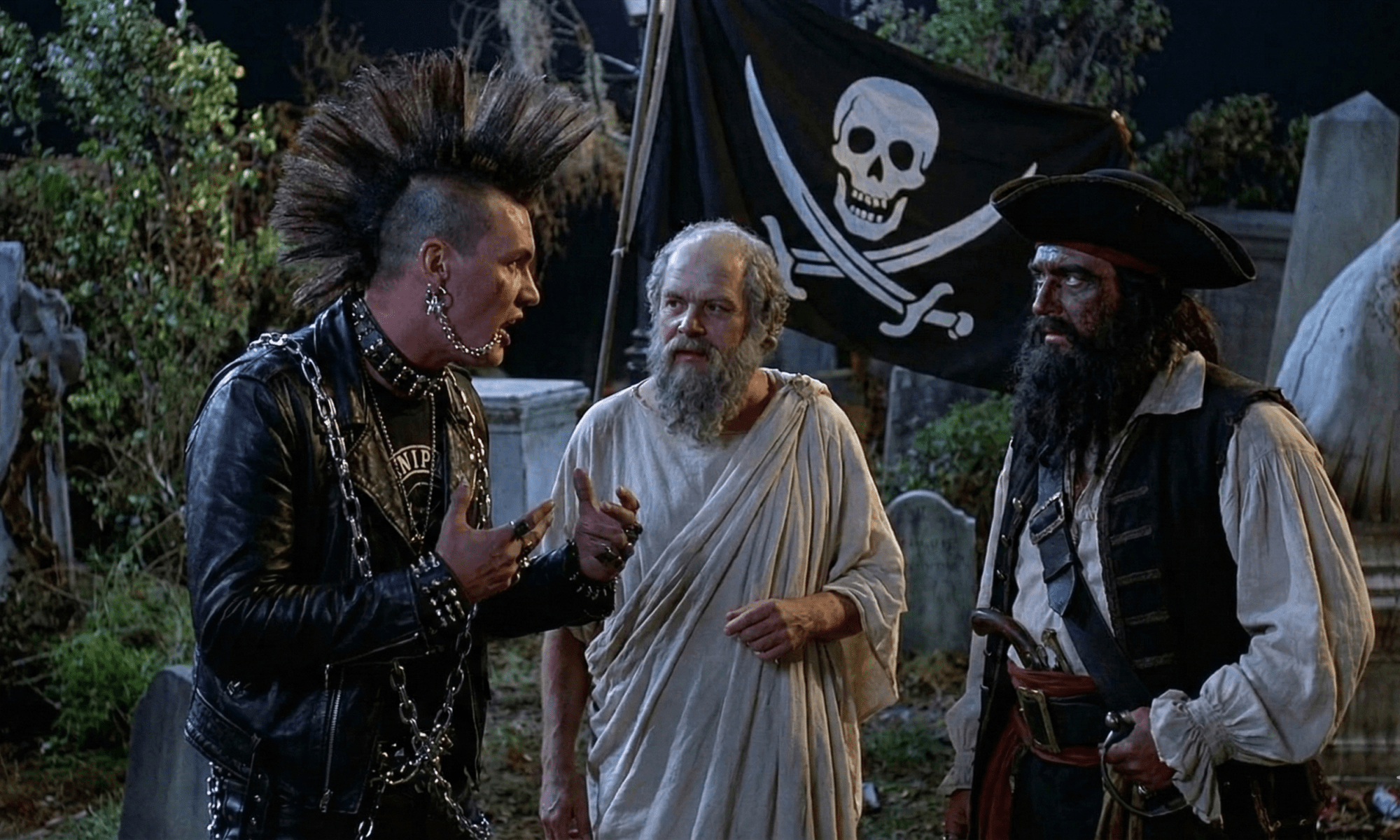
Survival of the Fittest: Strength, Cunning, Brains, and Ethics at the Edge of National Security and Personal Life: DeMarco Banter
We often hear Darwin’s phrase “survival of the fittest” invoked as if it were a hymn to brute strength. In boardrooms and briefing rooms alike, people nod gravely as if the secret to endurance lies in the sharpest claws, the biggest armies, or the loudest voices. Yet Darwin himself meant nothing of the sort. “Fitness” …
Paralysis as Victory: The Architecture of 21st Century Conflict: DeMarco Banter
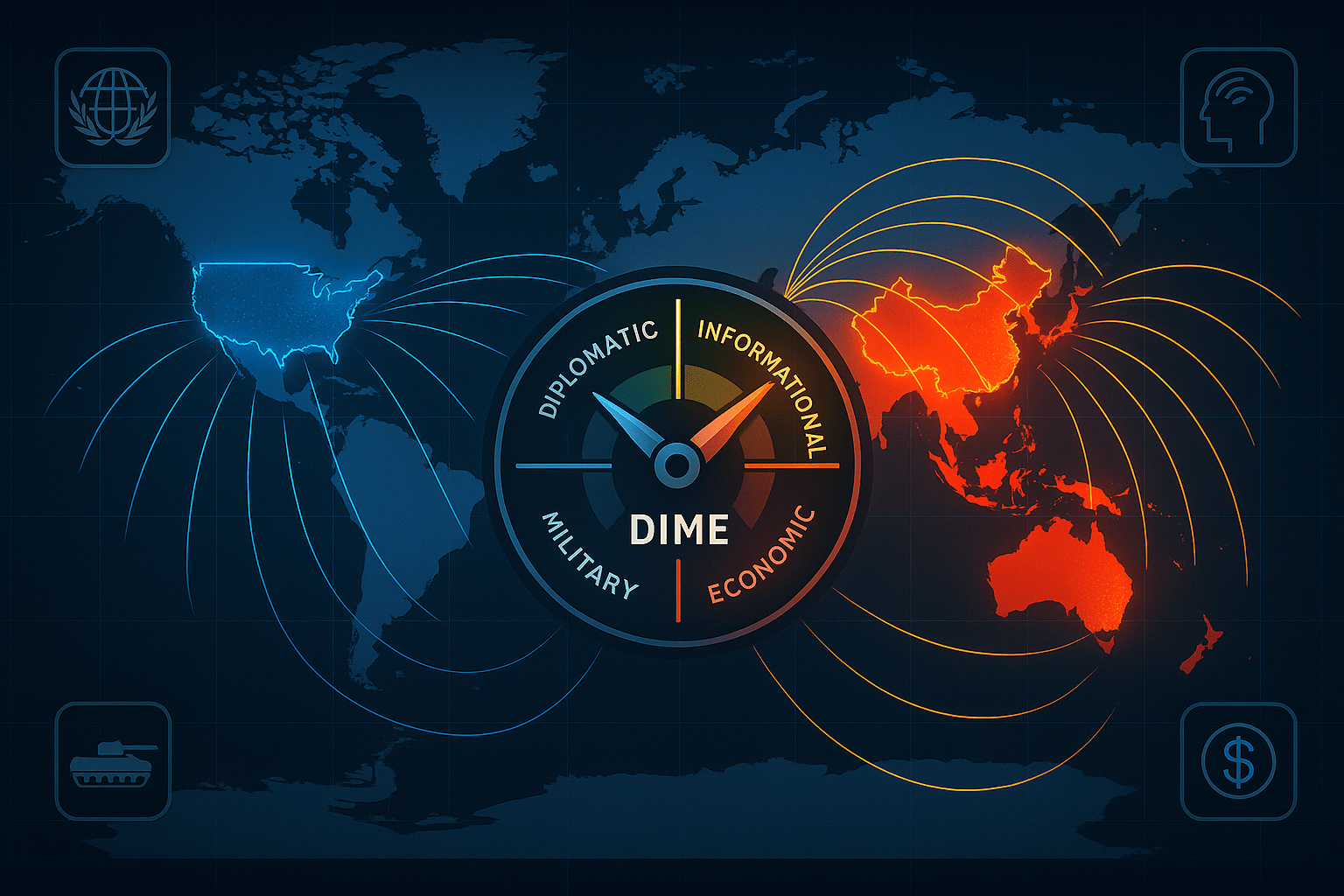
The Obsolescence of Overmatch A tectonic shift is underway in the character of war....and maybe I am just spitballing here...but, the traditional Clausewitzian conception—war as the destruction of an enemy’s military forces to compel political will—is collapsing under the weight of modern complexity. In its place emerges a new model of victory: one achieved not …
Continue reading "Paralysis as Victory: The Architecture of 21st Century Conflict: DeMarco Banter"
Chessboards and Sandcastles: The Quiet Power of Long-Term Strategy–DeMarco Banter
“We’re playing 2-D chess while Beijing is playing 4-D chess.” — Former National Security Council China Director I’ve been thinking about strategy for most of my life — as a student of history, a practitioner of leadership, and a citizen watching the world shift around us. What makes strategy truly strategic? What separates deliberate, long-range action …
Continue reading "Chessboards and Sandcastles: The Quiet Power of Long-Term Strategy–DeMarco Banter"
The Year the Lights Dimmed: A Strategic Fable of the Cognitive Cold War: A Neo-DeMarcoian Story?
In the winter of 2028, the lights in the western hemisphere didn't go out all at once. They flickered—on screens, in minds, in institutions—until the world quietly realized it had entered a new kind of darkness. A darkness not of power, but of perception. Not of silence, but of signal. It was the year the …
When Good Isn’t Enough: Eagles, Hotel California, and the Discipline of Change: DeMarco Banter
The Comfort of “Good Enough” There’s a peculiar danger that stalks successful organizations, leaders, and even artists: the trap of “good enough.” When the metrics look solid, when the crowd is clapping, when the machine is humming along smoothly, the temptation is to keep things as they are. Why rock the boat? Why introduce turbulence …
Navigating the AI Singularity’s Shadow: Why Futures Literacy Is the Leadership Meta-Skill of Our Time: DeMarco Banter
Artificial Intelligence is no longer a speculative concept but a defining condition of our era. Leaders across sectors have grown comfortable describing AI as a “tool,” yet this framing is already outdated. A tool waits passively to be used; a condition saturates the environment whether we engage it or not. Just as weather, markets, and …
Everybody Knows: Leonard Cohen’s Prophetic Mirror for the 21st Century: DeMarco Banter
The Song as Prophecy Leonard Cohen’s “Everybody Knows” first appeared in 1988, yet it sounds like it was written yesterday. Its refrain—everybody knows—is a haunting chorus of resignation, a recognition that corruption, betrayal, and decay are not hidden but openly visible. We live in an age of unprecedented transparency: livestreamed wars, financial scandals dissected in …
The Hammer and the Horizon: Nietzsche’s Challenge to Leadership in an Age of Revaluation: DeMarco Banter
1. Nietzsche’s Enduring Challenge to Conventional Leadership Paradigms Few thinkers unsettle as profoundly as Friedrich Nietzsche. His writings on morality, truth, and meaning strike at the roots of Western culture, exposing what he saw as its life-denying foundations. He argued that conventional values—humility, obedience, piety—emerged not from vitality or strength but from what he called slave morality: the …