

Introduction: The Evolution from Brawn to Brain in Warfare
Throughout history, military success has hinged on the balance between sheer force (bie) and cunning strategy (métis). The ancient Greeks recognized this dichotomy, with bie representing brute strength and métis embodying wisdom and cunning. Similarly, Eastern philosophies such as Taoism discuss the interplay of yin (passive, strategic) and yang (active, forceful) energies. In modern warfare, particularly during the interwar period, Germany exemplified the shift towards métis by developing innovative doctrines and tactics to offset its material disadvantages.
Conversely, France’s focus on the Maginot Line illustrates an emphasis on bie, relying on static, force-on-force defenses. Today, as we stand on the brink of an AI-driven revolution in military affairs, understanding this balance is crucial for shaping future strategic thought.
Interwar France: The Embodiment of Bie
After World War I, France sought to prevent future invasions by constructing the Maginot Line—a vast network of fortifications along its eastern border. This strategy epitomized bie, emphasizing physical strength and static defense over adaptability. The Maginot Line, while a formidable defensive structure, reflected a force-on-force mentality, preparing for a repeat of trench warfare rather than anticipating new forms of conflict. However, this focus on static defense neglected the potential for rapid, maneuver-based warfare, leaving France vulnerable to Germany’s innovative strategies.
The reliance on the Maginot Line led to a false sense of security. When Germany bypassed these fortifications through the Ardennes—a region considered impassable—France’s static defenses proved ineffective. This outcome underscores the limitations of a strategy overly focused on brute strength without sufficient adaptability. In contrast, Germany employed métis, leveraging operational flexibility and innovative military doctrines to achieve victory.
Interwar Germany: A Case Study in Métis
Facing constraints imposed by the Treaty of Versailles, Germany turned to intellectual and strategic innovations to rebuild its military prowess, demonstrating the value of métis over bie.
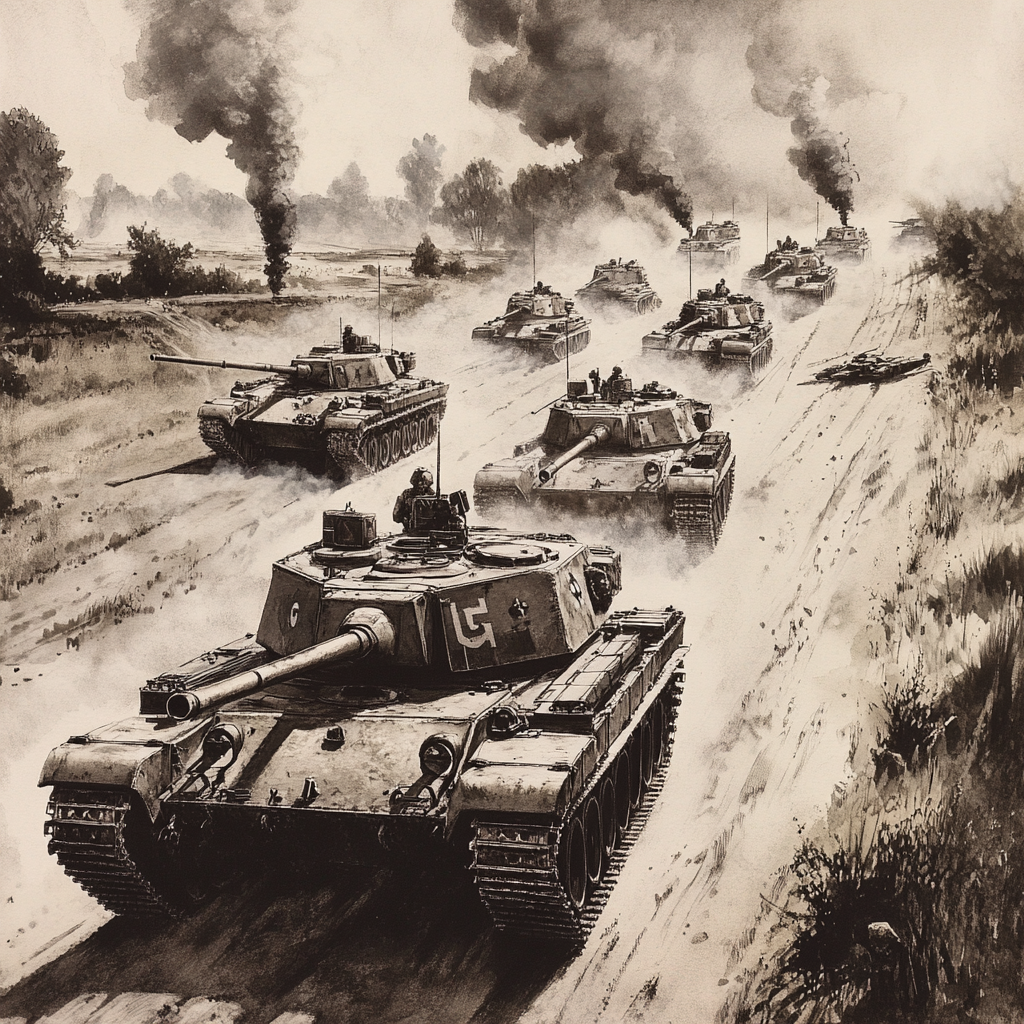
One of the most notable doctrinal innovations was Blitzkrieg, or “lightning war,” which emphasized speed, surprise, and coordinated attacks using tanks, aircraft, and infantry. This approach allowed Germany to achieve rapid victories despite numerical inferiority. Instead of engaging in protracted battles of attrition, German forces sought to disrupt enemy command structures, seize key objectives swiftly, and force capitulation before a full mobilization could occur. The effectiveness of Blitzkrieg in the early years of World War II showcased the superiority of a well-executed strategy over reliance on sheer force.
Germany’s organizational approach also played a crucial role in its military success. Unlike France, which emphasized static defenses, Germany invested in a highly educated General Staff. This was not simply a matter of training; it was an intellectual tradition of rigorous study, war gaming, and scenario planning. The German General Staff fostered a culture of initiative, adaptability, and decentralized decision-making, enabling commanders to react fluidly to changing battlefield conditions. This organizational structure provided a critical advantage, allowing for swift decision-making and operational flexibility—key components of métis.
German forces also pioneered combined arms tactics, integrating different military branches to create a cohesive and effective fighting force. Infantry, tanks, and airpower were coordinated to support each other in a way that maximized effectiveness. This tactical ingenuity allowed them to exploit enemy weaknesses and maintain the element of surprise, demonstrating that métis, when applied effectively, could overcome numerical and material disadvantages.
AI in Modern Military Decision-Making: The New Métis
Artificial Intelligence (AI) is poised to revolutionize military strategy, offering unprecedented capabilities for data analysis, predictive modeling, and autonomous operations. This technological advancement represents a modern embodiment of métis, enabling militaries to outthink rather than outfight their adversaries.
Strategic Level: AI-Driven War Games and Simulations
AI enables the simulation of countless scenarios, allowing military planners to anticipate potential conflicts and develop strategies accordingly. The Pentagon’s Global Information Dominance Experiments (GIDE) exemplify this approach by using AI to predict adversary actions days or even weeks in advance, providing decision-makers with strategic foresight.
The GIDE series represents a significant leap in integrating AI into strategic military planning. These experiments aim to harness vast amounts of data from various sources—satellites, sensors, and intelligence reports—to create predictive models of potential adversary behaviors.
By analyzing patterns and anomalies, AI systems can forecast movements or actions, enabling preemptive measures and informed decision-making. This proactive approach shifts the paradigm from reactive to anticipatory strategy, embodying métis by leveraging information superiority.
Operational Level: Joint All-Domain Command and Control (JADC2)
The U.S. military’s Joint All-Domain Command and Control (JADC2) initiative seeks to integrate data from all domains—land, air, sea, space, and cyber—into a unified AI-powered system. This integration facilitates real-time decision-making and enhances operational efficiency, embodying the principles of métis.
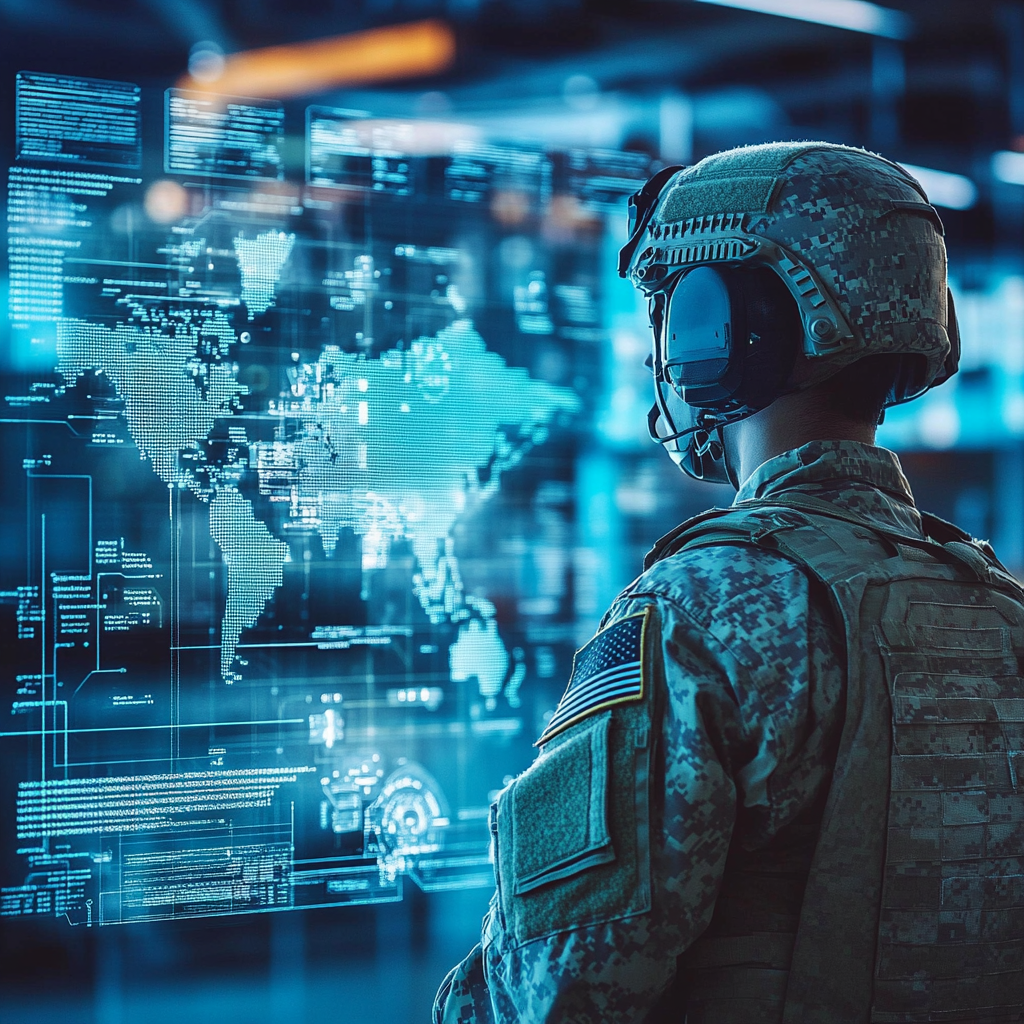
JADC2 is a defense initiative developed by the U.S. Department of Defense to connect sensors from all branches of the armed forces into a unified network powered by artificial intelligence. This system enables faster decision-making and more efficient operations across various military domains. The initiative emphasizes multi-domain operations, allowing forces to coordinate seamlessly in response to emerging threats. By leveraging AI-driven analytics, JADC2 enhances situational awareness and operational effectiveness, ensuring that military assets operate in a synchronized and adaptive manner.
Recent exercises have demonstrated the potential of JADC2 to revolutionize warfare. For example, during a 2019 simulation, an integrated system successfully identified and neutralized simulated cruise missile threats using real-time data. Such capabilities illustrate how AI-driven command and control structures enhance military agility and adaptability, reflecting the principles of métis in modern warfare.
Tactical Level: Autonomous Weapons and AI-Assisted Targeting
AI’s role at the tactical level is particularly evident in Ukraine, where AI-powered drone systems and autonomous targeting have transformed battlefield operations. The conflict has highlighted how AI-driven reconnaissance, target acquisition, and strike coordination can significantly alter tactical engagements. Ukrainian forces have employed AI-enhanced targeting systems to optimize artillery strikes, while Russia has deployed autonomous drone swarms to overwhelm enemy defenses. These developments indicate that AI is no longer a futuristic concept but a present-day force multiplier.
The electromagnetic spectrum also plays a crucial role in modern warfare. As AI-driven systems rely on real-time data transmission and sensor fusion, control over electronic warfare capabilities becomes a decisive factor. The ability to jam enemy communications, disrupt drone coordination, or spoof radar signatures can render AI-driven warfare ineffective. Thus, maintaining dominance over the electromagnetic spectrum is essential for any force seeking to leverage métis effectively in future conflicts.
Over-Reliance on AI and the Role of Human Learning
While AI offers significant advantages in strategy and efficiency (métis), it also introduces new challenges. One critical concern is over-reliance on AI-driven decision-making. If military personnel defer entirely to AI recommendations without maintaining their own strategic education, they risk losing the ability to function independently should AI systems fail or be compromised.
Humans must continue to cultivate critical thinking and adaptive learning. A successful military force will not merely rely on AI but will integrate it as a tool while retaining human oversight. Education in strategic thinking, history, and decision-making must remain central to military training to ensure that AI serves as an enabler rather than a crutch.
Conclusion: AI, Métis, and the Future of Victory
The integration of AI into military decision-making signifies a shift towards métis, where intelligence, adaptability, and strategic innovation take precedence over sheer force. Drawing lessons from historical examples like interwar Germany, modern militaries can harness AI to develop disruptive innovations that redefine warfare. However, this technological evolution must be managed thoughtfully, balancing AI’s capabilities with human judgment, ethical considerations, and control over the electromagnetic spectrum.
Victory in future conflicts will not simply belong to those with the most firepower but to those who best integrate AI-driven intelligence with strategic foresight and human adaptability. The future of warfare belongs to those who master both métis and bie in the AI age
 Mastermind Century Group