
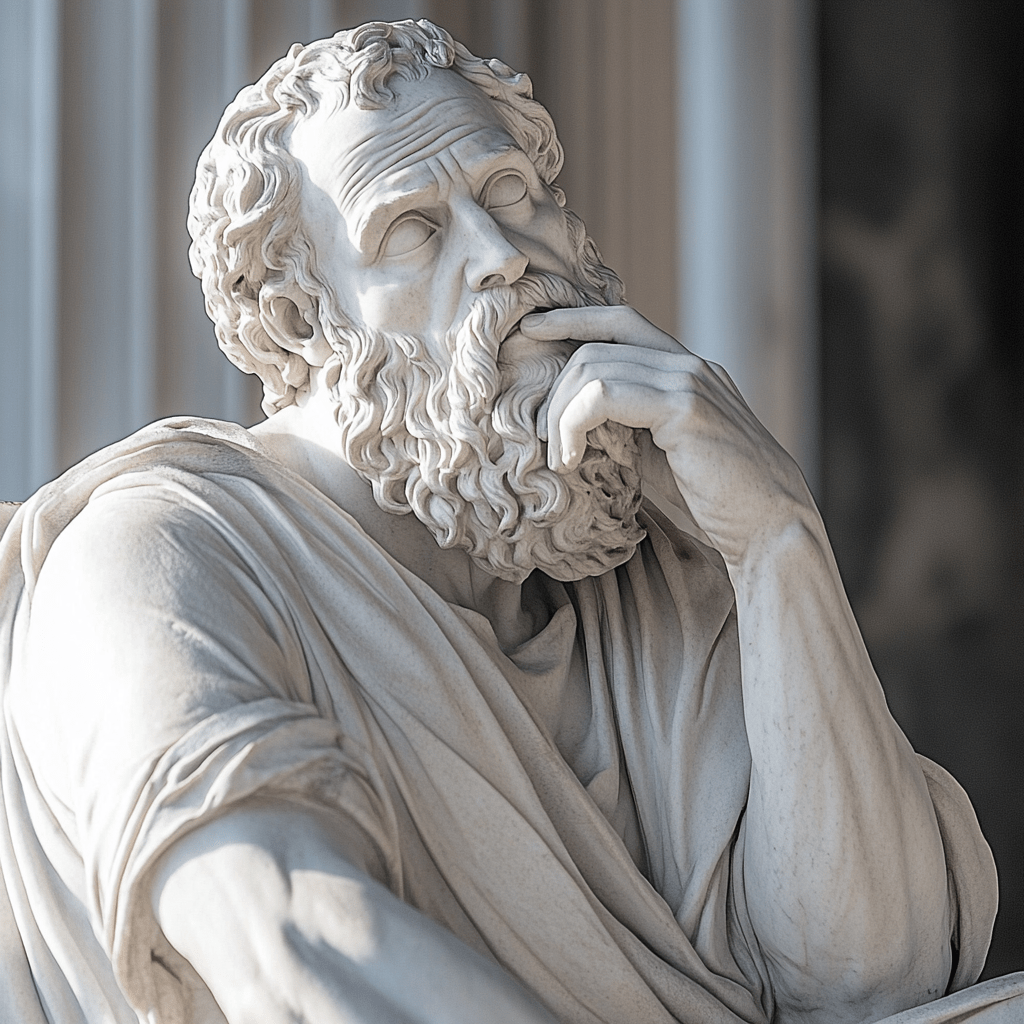
What am I trying NOT TO DO… this question dives into Socratic thought, focusing on what it means to find one’s “daimon” (or guiding spirit) and to confront the often-unasked questions that reveal our deepest fears or tendencies to avoid certain truths or actions.
Imagine you’re navigating a maze, like a character in a video game or a contestant on some reality show. The walls shift, the path isn’t always clear, and you’re constantly making choices about which way to go, sometimes without knowing exactly why. You’re driven by a mix of instincts, goals, and something deeper that nudges you when you’re off track. Occasionally, there’s even a voice—maybe the narrator’s, maybe your own—that hints, “That’s not the right way.” You pause, uncertain. Should you press on, take a different turn, or stop and ask yourself, What am I trying not to do?

This modern scenario, echoing themes from video games and psychological thrillers, actually mirrors an ancient approach to thinking, championed by none other than Socrates. For Socrates, self-inquiry wasn’t just about deciding the next move; it was about understanding the invisible forces that shape our choices—the beliefs, fears, and unspoken aspirations that guide or restrain us. He encouraged people to listen to their “daimon,” an inner guiding voice that, like the game’s narrator or inner dialogue, pushes us to confront not only what we want but also what we might be avoiding.
With this question—“What am I trying not to do?”—Socrates guides us toward a deeper kind of reflection, one that helps us peel back the layers of conditioning and fear to find our true voice and purpose. This approach, often uncomfortable, is key to what he saw as a “flourishing” life. In this light, self-discovery becomes a quest for authenticity and individualization—a journey toward our own unique voice, values, and virtues, much like that maze of choices. Here, the goal isn’t just to reach the end but to emerge with a clearer understanding of who we are and what guides us. To think like Socrates is to adopt a rigorous, questioning stance that delves into what lies beneath the surface of our beliefs and actions. This Socratic approach is not just about asking what we should do, but rather what we are trying not to do and why. Asking ourselves, “What am I trying not to do?” strips away external expectations and brings forward questions about internal motivations, fears, and avoidance.
This method is particularly aligned with Socratic daimonic thought, where the concept of the “daimon” is interpreted as an inner voice or guiding spirit—a part of us urging toward a truer self. In this sense, our “daimon” serves as both a guide and a reminder, urging us to engage with the often uncomfortable questions that provoke genuine self-reflection. Rather than avoiding the discomfort of truth, Socrates advocated for an engagement that leads to what Aristotle later calls “eudaimonia”—flourishing through alignment with one’s highest virtues and purpose. In other words, Socrates believed in pursuing a virtuous life not for external validation or pleasure, but for internal alignment and self-realization, aiming for what we now might term an authentic life.
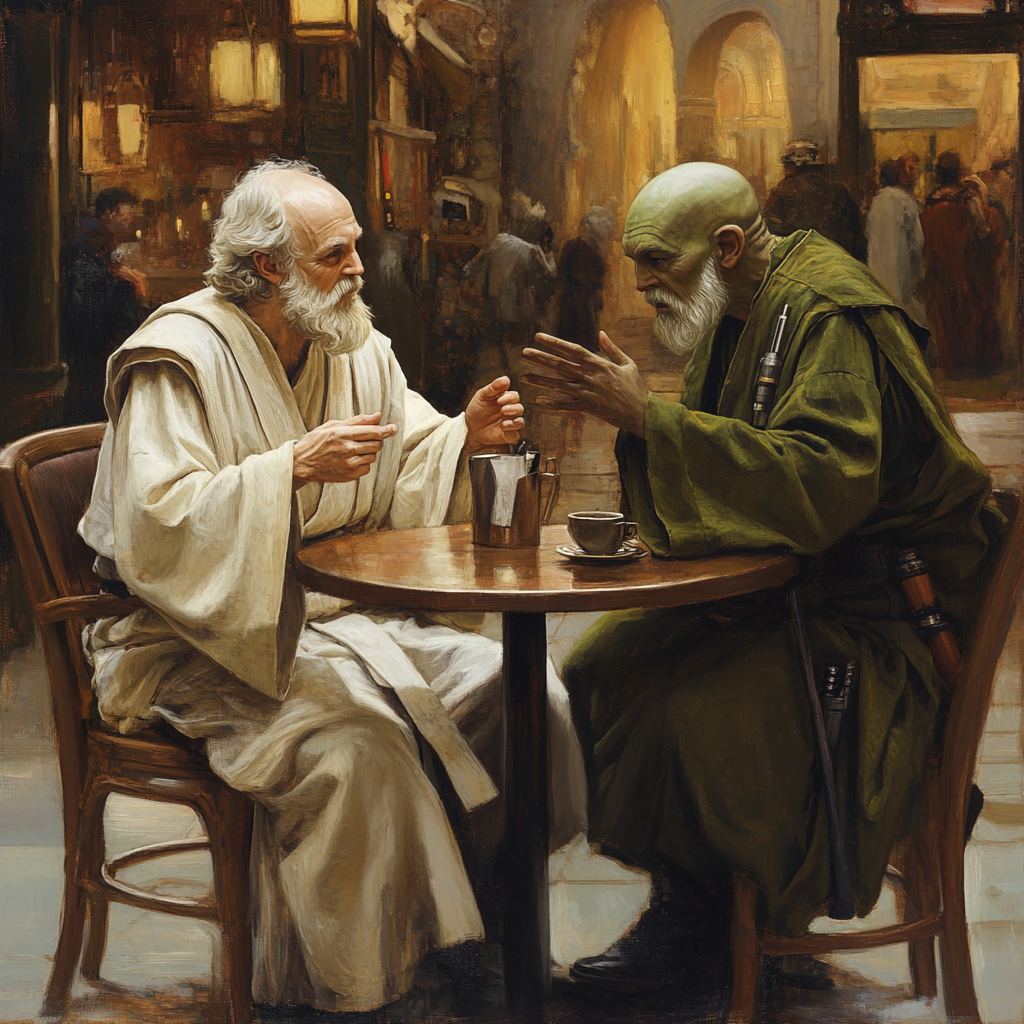
This leads naturally to the concept of finding one’s voice, which can be understood as the process of individualization and self-actualization. Each person’s “voice” represents a unique perspective, distinct beliefs, and contributions that they alone bring to the world. Yet, discovering that voice demands courage to ask probing questions about our fears, desires, and boundaries. For many, a lack of voice—or a perceived lack of it—comes not from an absence of thoughts but from a reluctance to confront and acknowledge one’s deepest truths, where fear or social conditioning often act as barriers.
Socrates exemplified how the pursuit of truth demands both courage and vulnerability: to question is to risk the comfort of certainty, but it’s also a necessary risk to achieve genuine fulfillment and, as he believed, to be in communion with one’s daimon. As we consider the wisdom from sources like The Daemon and Ancient Oracles, we might recognize that these guiding voices or daimons challenge us not only to act but to avoid certain actions, to restrain ourselves from the “path of least resistance” that neglects self-awareness and authentic action.
In a modern sense, this approach informs not just personal growth but strategic thinking, academic exploration, and leadership. When we apply these principles, especially in contexts like education, leadership, and personal wellness, we begin to see that to flourish means to consciously engage in a process of individuation and to resist the societal pull toward homogenization. Socrates might ask us to confront the question, “What am I trying not to do?” not as a form of self-reproach but as a revelation of our authentic self—one that exists beyond superficial conformity or external expectations.
By striving to answer this question honestly, we align closer with what Socrates would see as a life of virtue. This is not a life free of conflict or challenge, but one that seeks, even in discomfort, the deeper, often veiled truth. It’s a journey of daimonic flourishing, where happiness is not the end but a byproduct of a life lived in alignment with one’s highest values and virtues.
In a world filled with external pressures, noise, and competing demands, the Socratic quest for self-understanding and authenticity feels more urgent than ever. Navigating our own maze requires us to face not only the paths that lie before us but also the paths we instinctively shy away from. By asking, “What am I trying not to do?” we open doors to insights that reveal our truest motivations, fears, and values. This journey toward individualization—finding and following our unique daimon—demands a commitment to questioning and embracing the uncomfortable but necessary process of self-discovery.
The call to action is simple yet profound: adopt this Socratic mindset. Ask ourselves the questions that make us pause. Confront our choices with curiosity. In doing so, we may find that the voice within, that guiding daimon, grows stronger and clearer, leading us toward a life of genuine flourishing.
To explore these ideas further, consider reading “The Art of Living: The Classical Manual on Virtue, Happiness, and Effectiveness” by Epictetus, which provides insight into practical virtue and personal alignment, and “Care of the Soul: A Guide for Cultivating Depth and Sacredness in Everyday Life” by Thomas Moore, which delves into the idea of living with depth and soulfulness in a world of distractions. These works, like Socrates’ approach, invite readers to examine life not just for answers but for questions that lead to a more authentic and fulfilling existence.
 Mastermind Century Group