
Introduction
In leadership and management, whether in business, government, or military, having a well-structured long-term plan is essential for success. One popular model for this is the five-year plan, which provides a clear roadmap for achieving strategic goals over a set period. The concept originated with the Communist Soviet Union and is perhaps most famously associated with China’s own five-year plans. However, many businesses and government agencies worldwide also use versions of this framework, including in the U.S., even if not under the same name.
A classic quote from the 1999 Adam Sandler film Big Daddy refers to a character declaring, “He has a five-year plan,” which reflects the cultural recognition of the need for long-term thinking in personal or professional ambitions. So why do these plans work, and why are they still widely used today, especially in contrasting systems like China’s centrally planned economy and the U.S. free-market model?
Why Do We Have Five-Year Plans?
Strategic Focus and Vision
A five-year plan provides a clear vision for the future, ensuring that an organization knows where it’s heading. In business, it helps leaders chart courses for growth, innovation, or expansion into new markets. In military contexts, such as China’s five-year plans, it enables defense and modernization goals to be met systematically.
For organizations and individuals alike, a five-year horizon gives the opportunity to set ambitious, but realistic, goals, offering a balance between long-term ambitions and short-term flexibility.

Resource Allocation and Prioritization
Effective five-year plans ensure optimal resource allocation. By setting clear goals, leaders can align resources such as budget, personnel, and technology toward key priorities, reducing waste and focusing on areas that will have the greatest impact. In business, this might mean deciding which products or markets to focus on, while in the military, it could mean identifying key areas like cyber warfare or logistics for development.
Adaptability to Change
While long-term planning is crucial, so is adaptability. Five-year plans offer strategic flexibility by providing a structure that can adjust to changes in technology, market conditions, or geopolitical threats. For example, the U.S. military’s Quadrennial Defense Review serves as a flexible planning tool that can evolve to address emerging threats, much like how businesses might pivot their strategies based on new opportunities or risks.
Why Do Communists Have Five-Year Plans?
The use of five-year plans in communist regimes, particularly China, is rooted in centralized planning. These plans allow the government to direct economic development, set specific targets for industries, and control resource distribution across sectors. The five-year plan reflects the communist ideology of state control over production and the economy, ensuring that growth aligns with the political objectives of the ruling party .
Historically, China’s Five-Year Plans have shifted from heavy industrialization in the 1950s to more sophisticated goals in the 21st century, such as technological innovation and environmental sustainability . The 14th Five-Year Plan (2021–2025), for example, emphasizes innovation-driven growth in areas like semiconductors and biotechnology while also focusing on green development to reduce carbon emissions .
China’s Current Plan
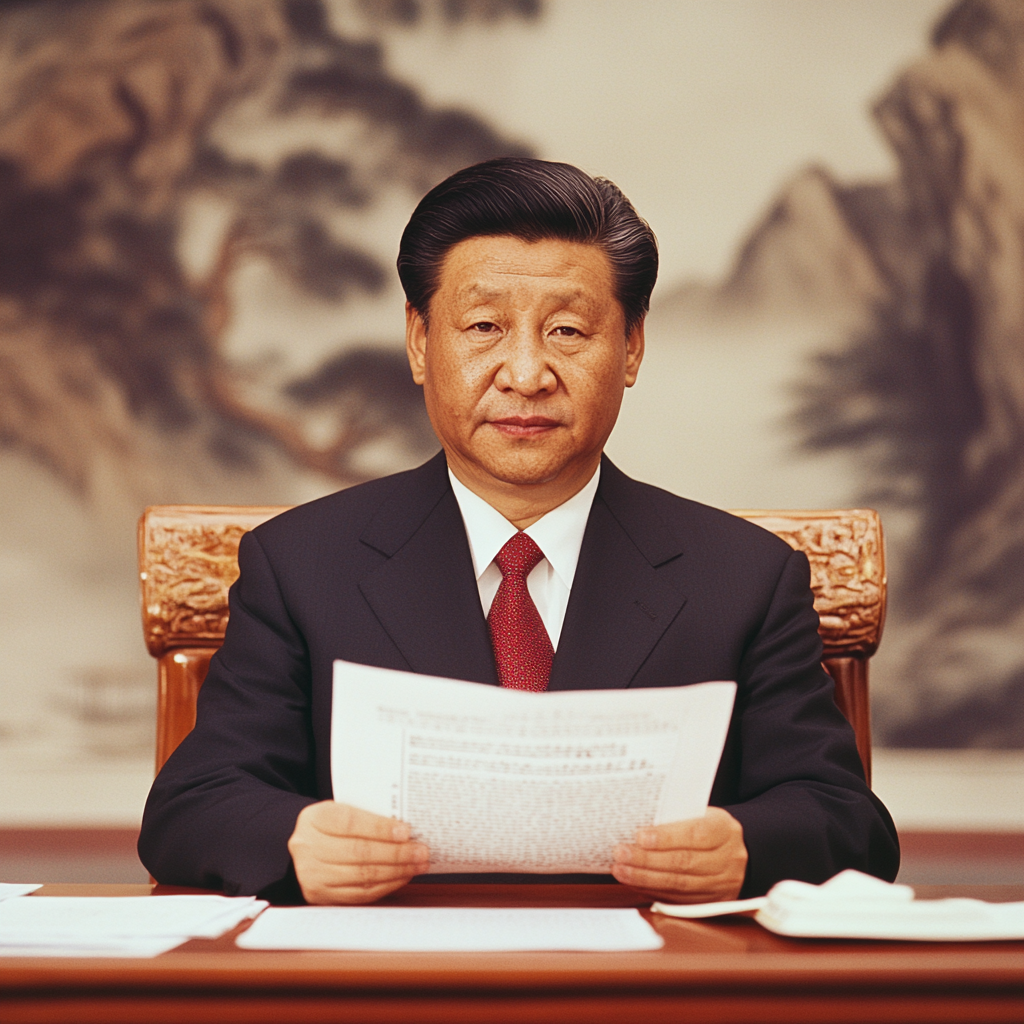
China’s 14th Five-Year Plan (2021–2025) outlines a broad strategy focused on economic, social, and environmental goals aimed at promoting high-quality development. Some key highlights include:
1. Innovation-Driven Growth: The plan emphasizes technological self-reliance, particularly in critical areas such as semiconductors, artificial intelligence, quantum computing, biotechnology, and space exploration. The government aims to boost R&D investment and build a strong domestic supply chain in these sectors .
2. Green Development: A major focus is on reducing carbon intensity and achieving peak carbon emissions by 2030. This includes investments in renewable energy, promoting low-carbon industries, and adopting sustainable urban planning practices .
3. Dual Circulation Strategy: This approach seeks to balance domestic consumption with export-led growth, enhancing China’s internal market while maintaining global trade relations. It also includes reforms aimed at improving market competition and integrating urban and rural development .
4. Urbanization and Social Inclusion: The plan sets a target to achieve a 65% urbanization rate by 2025 and relaxes restrictions on rural-to-urban migration, allowing migrants greater access to urban services. It also promotes the development of human-centric cities, with better public transportation and green infrastructure .
These objectives demonstrate China’s long-term focus on technological advancement, environmental sustainability, and economic reform.
Why Doesn’t the U.S. Have a National Five-Year Plan?
The U.S. operates within a decentralized and market-driven economy, where individual businesses and government agencies develop their own strategic plans. There is no overarching national five-year plan similar to China’s. However, the U.S. has equivalents at sectoral levels, such as the National Defense Strategy or the National Economic Strategy, both of which serve similar functions in setting long-term goals for specific sectors .

These U.S. plans allow for flexibility, with private and public sectors working together to develop strategies that reflect a mix of economic conditions, government priorities, and global market dynamics. This decentralized system can be more responsive to immediate changes but lacks the long-term, top-down direction found in communist-style plans.
Sun Tzu and Knowing the Enemy’s Strategy
Understanding an adversary’s strategy is critical in both business and military contexts, as noted by Sun Tzu in The Art of War. His principles emphasize the importance of knowing both your own strategy and that of your enemy. Applying this to the U.S.-China context, it is crucial for the U.S. to understand and respond to China’s Five-Year Plans. Sun Tzu’s advice on deception and adaptability highlights the need to stay flexible and keep the enemy guessing, much as China attempts to maintain technological superiority through its strategic initiatives.
Countering the Plan
To counter China’s Five-Year Plan, the U.S. could adopt a multi-pronged strategy that addresses China’s strengths and ambitions in areas such as technology, innovation, economic growth, and global influence. Here are several ways the U.S. might approach this:
1. Strengthening Technology and Innovation Leadership
China’s Five-Year Plan emphasizes becoming self-reliant in technologies like semiconductors, artificial intelligence, and quantum computing . The U.S. can counter this by significantly increasing funding for domestic research and development (R&D), particularly in these critical areas. Efforts like the CHIPS and Science Act, which aims to increase U.S. semiconductor manufacturing and technological capabilities, are steps in the right direction. The U.S. should also encourage collaboration between universities, private sector leaders, and government agencies to spur innovation at a pace that outmatches China.
2. Economic and Trade Policy Adjustments
China’s focus on a dual circulation strategy aims to reduce reliance on external markets while boosting domestic consumption . The U.S. can counter by deepening its economic alliances, particularly through free trade agreements and regional economic partnerships. Strengthening relationships with allies in Europe and the Indo-Pacific can help build supply chains independent of China. Additionally, leveraging multilateral organizations like the WTO to address issues such as intellectual property theft and market access can create more competitive international markets.
3. Strengthening Defense and Security Capabilities
Given China’s ambitions in the space, cyber, and military domains , the U.S. should bolster its National Defense Strategy by investing in next-generation technologies like hypersonic weapons, space security, and AI-driven warfare. Expanding NATO’s role in technology sharing and defense could also serve as a collective security mechanism, especially as China increases its military capabilities in areas like the South China Sea.
4. Collaborating on Climate Initiatives
China’s Five-Year Plan emphasizes carbon reduction and renewable energy growth . The U.S. could counter by positioning itself as a leader in green technology and climate action, not only by implementing domestic policies such as the Inflation Reduction Act but also by leading global efforts on clean energy transitions. This could involve increased investment in renewables and positioning U.S. companies as leaders in the global market for clean energy technology.
5. Investing in Human Capital and Education
To counter China’s advancements in technology and innovation, the U.S. must invest heavily in STEM education and talent development. By creating more scholarships, research grants, and programs that support AI, biotech, and quantum computing, the U.S. can cultivate a new generation of innovators and scientists who will compete with Chinese advancements.
6. Enhancing Global Diplomacy and Influence
China’s investments in the Belt and Road Initiative (BRI) and other diplomatic efforts increase its global influence, particularly in developing regions. The U.S. can counter by revitalizing its own foreign aid and infrastructure programs. Projects like the Blue Dot Network and increased engagement in international institutions can provide alternative financing options for countries in Africa, Asia, and Latin America, reducing their dependence on Chinese investments.
In summary, the U.S. could counter China’s Five-Year Plan by focusing on technological competitiveness, economic diplomacy, military readiness, climate leadership, and strategic alliances to maintain its global influence and economic security .
Conclusion
Five-year plans remain a vital tool for leadership, management, and strategic development, whether in business, government, or personal planning. They provide a clear framework for achieving long-term goals, enabling leaders to allocate resources, measure progress, and adapt to change. While the CCP uses five-year plans as part of its centralized control, the U.S. applies similar long-term strategies in a more decentralized way. Ultimately, understanding and countering the plans of competitors or adversaries, as Sun Tzu advises, remains crucial for success—whether in business or geopolitics.
 Mastermind Century Group