

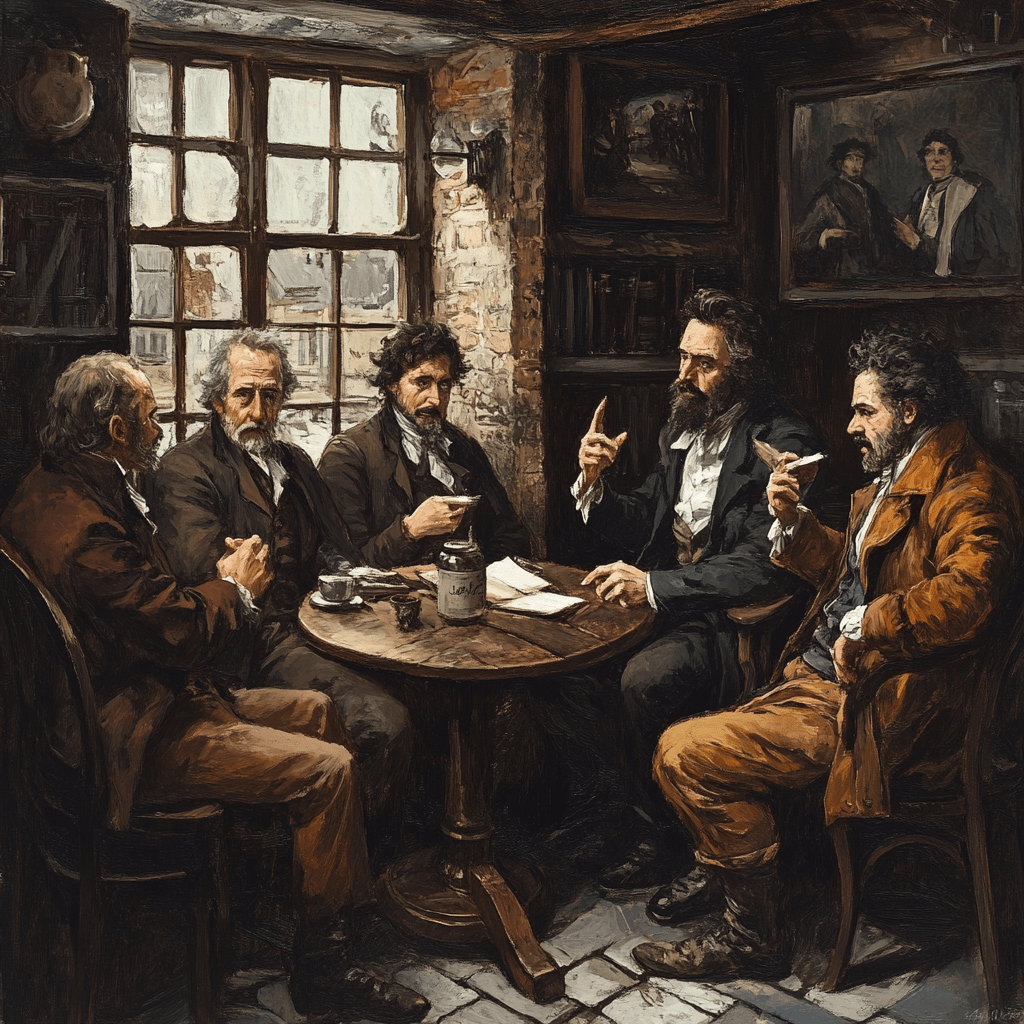
I’ve always been fascinated by the concept of authenticity—how do we truly know who we are? In a world filled with external pressures and expectations, the idea of living a life that is genuinely true to oneself is obviously intriguing and challenging—at least it is to me. This quest for authenticity—a life free from external constraints—has been a central concern for philosophers throughout history. From Aristotle’s reflections on virtue and flourishing to Nietzsche’s call for self-creation, the journey toward authenticity is intricately tied to ideas expressed in existentialism, fear, freedom, and the ongoing struggle to define and express one’s true self. Each philosopher offers unique insights into what it means to live authentically, navigating the complex tensions between individuality, societal expectations, and the existential anxieties that accompany the human condition.
Aristotle: Virtue and the True Self
Aristotle’s philosophy, rooted in the pursuit of eudaimonia (flourishing), centers on the idea that living authentically means expressing one’s true nature through the cultivation of virtues. For Aristotle, authenticity is not merely about self-expression but about the alignment of one’s actions with the virtues that define human excellence. In this sense, authenticity involves a disciplined commitment to living according to reason, which, for Aristotle, is the essence of what it means to be fully human.
St. Augustine: The Inner Self and God
St. Augustine’s reflections on authenticity take a theological turn, emphasizing the importance of the inner self in relation to God. In his Confessions, Augustine explores the tension between the worldly distractions that lead one away from God and the inward journey towards divine truth. For Augustine, authenticity involves a deep alignment with divine will, where the self finds its true expression in the pursuit of God’s truth. This inner journey is marked by the struggle to overcome the desires of the flesh and the pull of societal expectations, leading to a more authentic, spiritual existence.
Rousseau: The Natural State and Society
Jean-Jacques Rousseau, in his critique of modern society, argues that humans are born free and inherently good but are corrupted by societal influences. Authenticity, for Rousseau, is found in a return to the natural state, where individuals live in accordance with their true, uncorrupted nature. Rousseau’s notion of authenticity challenges the artificial constraints imposed by society, advocating for a life that is more in tune with the inherent goodness and simplicity of human nature. This view sets the stage for later existentialist critiques of society and the search for an authentic self.
Kierkegaard: Existential Angst and Faith
Søren Kierkegaard, often considered the father of existentialism, delves into the concept of angst—a deep, existential anxiety that arises from the awareness of one’s freedom and the burden of choice. For Kierkegaard, authenticity involves embracing this anxiety and making a “leap of faith” beyond the confines of rationality. This leap is not into the unknown, but into a relationship with God, where one finds true individuality. Kierkegaard’s focus on faith as a path to authenticity highlights the existential struggle of living a life true to oneself in a world that often pressures individuals to conform.
Kant: Autonomy and Moral Law
Immanuel Kant’s philosophy introduces the concept of autonomy, the capacity to govern oneself through reason. For Kant, authenticity is closely tied to the idea of acting according to moral laws that one has autonomously chosen. This is not merely a matter of following rules but involves a deep commitment to rational deliberation and ethical living. Authenticity, in Kantian terms, is the realization of one’s freedom through adherence to universal moral principles, which transcend individual desires and societal pressures.
Heidegger: Being and Authentic Existence
Martin Heidegger, in his seminal work Being and Time, explores the concept of Dasein (being-there) and the nature of authentic existence. Heidegger argues that authenticity involves a confrontation with the reality of one’s mortality, which he terms being-toward-death. This confrontation forces individuals to recognize the temporality of their existence and the importance of living a life true to their own potential. Authenticity, for Heidegger, is not about following societal norms but about living a life that is deeply rooted in one’s own unique experience of being.
Nietzsche: Will to Power and Self-Creation
Friedrich Nietzsche’s philosophy of the “will to power” emphasizes the importance of individual creativity and self-overcoming. For Nietzsche, authenticity involves the rejection of conventional morality and the creation of one’s own values. He challenges the notion of fixed identities, advocating instead for a life of constant self-creation, where individuals express their “inner genius” through acts of artistic and personal expression. Nietzsche’s vision of authenticity is one of passionate engagement with life, where discipline and creativity merge to produce a life that is both unique and true to oneself.
The Interplay of Fear, Freedom, and Authenticity
At the heart of existentialism lies the experience of fear—whether it is the fear of death, the fear of meaninglessness, or the fear of existential freedom. This fear, often termed angst, is not merely a negative emotion but a profound awareness of the weight of existence. It is through this confrontation with fear that individuals are compelled to make choices that define their lives.

Authenticity, in this context, is about facing these fears head-on and making deliberate choices that reflect one’s true self. It is about exercising autonomy, as Kant would argue, or embracing the freedom to create oneself, as Nietzsche suggests. This journey towards authenticity is marked by a constant tension between the individual and society, between freedom and constraint, and between the fear of the unknown and the drive for self-realization.
Conclusion: The Discipline of Authentic Living
The pursuit of authenticity is not a simple or easy path. It requires discipline, self-reflection, and often a confrontation with profound existential fears. Whether through Aristotle’s cultivation of virtues, Augustine’s inward turn towards God, Rousseau’s return to nature, Kierkegaard’s leap of faith, Kant’s moral autonomy, Heidegger’s confrontation with mortality, or Nietzsche’s self-creation, the journey towards authenticity is one that challenges individuals to live fully and truthfully in accordance with their deepest values and beliefs.
In the end, authenticity is not just about being true to oneself in a superficial sense but about engaging in a lifelong process of self-discovery, self-creation, and ethical living. It is a discipline that demands courage, as it often involves standing against societal norms and embracing the uncertainties and anxieties of existence. Yet, it is in this disciplined pursuit of authenticity that one finds the deepest expression of what it means to be human.
 Mastermind Century Group