


Throughout history, societies have oscillated between periods of intellectual flourishing and authoritarian control. The Enlightenment, characterized by an emphasis on reason, individual rights, and skepticism of traditional authority, marked a significant shift towards progressive thought and democratic governance. However, this progression has not been linear or irreversible. The rise and fall of various political regimes raise the question: is this a period of enlightenment or absolutism? Could a contemporary shift back towards the opposite be underway?
This thread explores the historical oscillations from absolutism to enlightenment and back, drawing on key philosophical insights from figures like Immanuel Kant. It examines the factors that led to the Renaissance and Enlightenment and considers whether current global trends suggest a reversal of these ideals. Importantly, this is not merely a political issue but one that encompasses societal and cultural dimensions.
Are we moving from absolutism to enlightenment or enlightenment to absolutism? The answer may not be clear-cut, as the dynamics at play are complex and multifaceted. By analyzing the cyclical nature of history and the potential risks of reverting to authoritarian governance, this examination aims to understand the complexities of the modern era and the importance of safeguarding the principles that underpin democratic societies.
Kant’s Definition of Enlightenment
Immanuel Kant, an 18th-century philosopher, famously defined enlightenment in his 1784 essay “What is Enlightenment?” He wrote:
“Enlightenment is man’s emergence from his self-imposed immaturity. Immaturity is the inability to use one’s understanding without guidance from another. This immaturity is self-imposed when its cause lies not in lack of understanding, but in lack of resolve and courage to use it without guidance from another. Sapere aude! Have courage to use your own understanding!”
Kant emphasizes the importance of intellectual independence, reason, and the courage to think for oneself as central to enlightenment. This period valued individual reasoning, scientific inquiry, and skepticism of traditional authority, which led to significant advancements in science, politics, and society.
The Renaissance and Its Leading Factors
The Renaissance, which spanned roughly from the 14th to the 17th century, was characterized by a revival of interest in the classical knowledge and values of ancient Greece and Rome. Key factors that led to the Renaissance include:
- Humanism: An intellectual movement that focused on human potential and achievements. Humanists studied classical texts and emphasized secular subjects rather than religious ones.
- Economic Prosperity: The growth of trade and commerce, especially in Italian city-states like Florence, Venice, and Milan, provided the wealth that funded artistic and intellectual pursuits.
- Political Changes: The rise of powerful city-states and the decline of feudalism allowed for more centralized and efficient governance, promoting stability and the flourishing of culture.
- Technological Advancements: The invention of the printing press by Johannes Gutenberg around 1440 facilitated the spread of knowledge and ideas across Europe.
- Exploration: The Age of Exploration expanded horizons geographically and intellectually, bringing new knowledge and perspectives to Europe.
Are We in a Similar Phase Today?
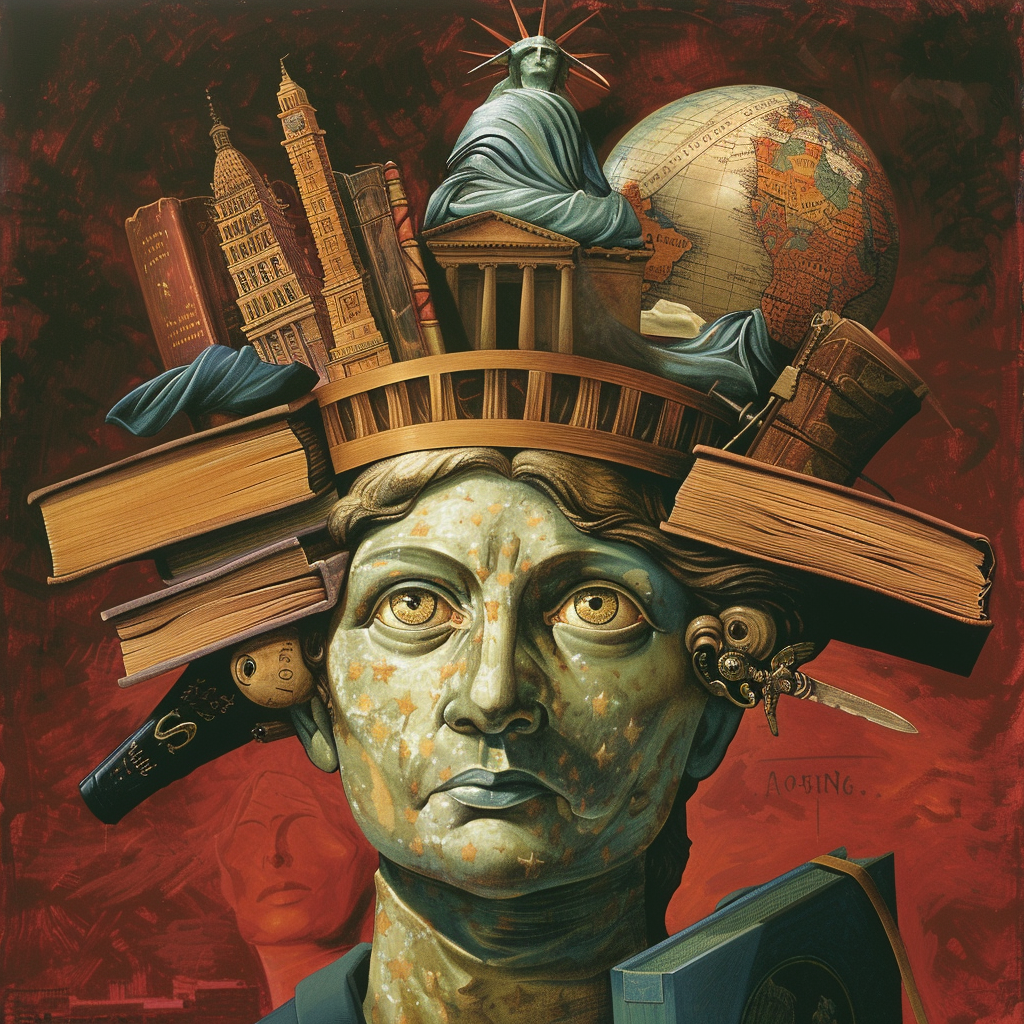
There are arguments to be made that we might be in a modern equivalent of the enlightenment, often referred to as the “Second Enlightenment” or “Digital Enlightenment,” characterized by:
- Information Accessibility: The internet and digital technologies have democratized access to information, enabling widespread education and intellectual engagement.
- Scientific Advancements: Rapid progress in fields like biotechnology, artificial intelligence, and space exploration mirrors the scientific fervor of the enlightenment.
- Challenges to Authority: There is a growing skepticism of traditional authorities and institutions, much like the questioning of religious and monarchical power during the enlightenment.
- Global Connectivity: Increased globalization and communication have created a more interconnected and aware global populace.
- Social Movements: Movements advocating for human rights, environmental protection, and social justice reflect a collective push towards rational and ethical improvement of society.
However, there are also significant differences, such as the scale and speed of change, the complexity of global challenges (e.g., climate change, digital privacy), and the potential for misinformation and social fragmentation facilitated by digital platforms.
Parallels
While there are parallels between the enlightenment and our current era, the context, challenges, and dynamics are unique. The core principle of using reason and courage to seek knowledge and improve society remains relevant, echoing Kant’s call for enlightenment. Understanding these historical progressions helps us navigate the complexities of our modern world with a more informed perspective.
Absolutism
Absolutism is a political doctrine and practice characterized by the concentration of all governmental power in the hands of a single ruler or a single governing authority. This ruler, often a monarch, holds absolute, unchecked power and authority over the state and its people. Absolutism is marked by the following key features:
- Centralized Power: All political, legal, and administrative authority is concentrated in the hands of the ruler. This centralization aims to create a unified and cohesive state.
- Lack of Checks and Balances: In an absolutist system, there are no independent institutions (such as parliaments, courts, or other bodies) to limit the ruler’s power. The ruler’s decisions are final and not subject to challenge or review.
- Divine Right of Kings: Many absolutist rulers justified their power by claiming they were appointed by God and were therefore accountable only to divine authority. This concept, known as the divine right of kings, was particularly prominent in early modern Europe.
- Control Over Society: Absolutist rulers often sought to control various aspects of society, including religion, economy, and culture. This control was intended to maintain order and prevent dissent.
Historical Examples
- Louis XIV of France (1643-1715): Known as the “Sun King,” Louis XIV is often cited as the quintessential absolute monarch. He centralized power in France, weakened the influence of the nobility, and built the opulent Palace of Versailles as a symbol of his absolute power.
- Peter the Great of Russia (1682-1725): Peter the Great modernized and expanded Russia, centralizing power and reducing the autonomy of the nobility and the church. He implemented extensive reforms to westernize Russian society and strengthen the state.
- Philip II of Spain (1556-1598): Philip II ruled Spain during its height as a global empire. He centralized administrative control and sought to enforce Catholic orthodoxy throughout his realms.
Characteristics and Consequences
- Bureaucracy: Absolutist states often developed extensive bureaucratic systems to administer the ruler’s policies and maintain control over large territories.
- Standing Armies: Absolutist rulers maintained professional standing armies to enforce their authority, defend their realms, and conduct wars of expansion.
- Economic Policies: Mercantilist economic policies were often pursued to increase the state’s wealth and power. This involved state control over trade and industry.
- Suppression of Dissent: Absolutist regimes frequently suppressed political dissent and religious nonconformity to maintain stability and control.
Transition from Absolutism
The Enlightenment, with its emphasis on reason, individual rights, and the separation of powers, challenged the principles of absolutism. Philosophers like John Locke and Montesquieu advocated for constitutional government and the rule of law. The French Revolution and other revolutionary movements in the late 18th and early 19th centuries further undermined absolutist regimes and led to the development of more democratic forms of governance.
Enlightenment to Absolutism OR Absolutism to Enlightenment?
The idea that societies might move cyclically between periods of enlightenment and absolutism is intriguing and has been a subject of historical and philosophical debate. While history does not necessarily follow a strict cyclical pattern, there are instances where societies have experienced shifts that might resemble such a cycle.
Historical Perspective
- Ancient Rome: The Roman Republic experienced a period of relative democratic governance, followed by the rise of the Roman Empire under Augustus, which marked a shift to a more autocratic system.
- Post-Reformation Europe: The Protestant Reformation and the subsequent wars of religion in Europe led to significant upheaval and questioning of authority, which in turn led to the rise of absolutist states in the 17th century, such as France under Louis XIV.
- 20th Century: The early 20th century saw democratic and progressive movements, followed by the rise of totalitarian regimes in the 1930s and 1940s, such as Nazi Germany and Stalinist Soviet Union. After World War II, there was a renewed emphasis on democracy and human rights, particularly in the Western world.
Contemporary Concerns
In the current global context, there are concerns that certain trends might indicate a shift towards more authoritarian governance, even in societies that have been historically democratic. Factors contributing to these concerns include:
- Political Polarization: Increased political polarization can lead to weakened democratic norms and institutions, making it easier for authoritarian leaders to gain and consolidate power.
- Populism: The rise of populist leaders who claim to represent “the people” against “the elites” can undermine democratic institutions and checks and balances.
- Erosion of Civil Liberties: In some regions, there is a growing tendency to curtail civil liberties and suppress dissent in the name of security or stability.
- Technological Control: Advances in technology, particularly surveillance technology and data analytics, provide governments with unprecedented means to monitor and control populations.
Enlightenment Principles at Risk
The principles of the Enlightenment—reason, individual rights, separation of powers, and skepticism of authority—are at risk if these trends continue. Some argue that the very forces unleashed by the Enlightenment, such as the emphasis on individualism and scientific progress, can also lead to destabilization and reactionary movements.
Cyclical Nature of History
While some historians and philosophers, like Oswald Spengler and Arnold Toynbee, have proposed cyclical theories of history, others argue that history is more complex and does not follow strict patterns. Each era has its unique context and dynamics.
Mitigating the Risk
To mitigate the risk of moving from enlightenment to a form of modern absolutism, it is crucial to:
- Strengthen Democratic Institutions: Ensure that institutions like the judiciary, free press, and independent legislatures remain robust and independent.
- Promote Civic Education: Educate citizens about their rights and the importance of democratic values and participation.
- Encourage Dialogue: Foster open and respectful dialogue across political and ideological divides to reduce polarization.
- Protect Civil Liberties: Vigilantly protect civil liberties and resist efforts to curtail freedoms in the name of security or stability.
Conclusion
While there are trends that might suggest a movement towards more authoritarian governance in some parts of the world, it is not inevitable. By understanding the dynamics at play and actively working to uphold the principles of the Enlightenment, societies can strive to avoid a regression to absolutism. The future is shaped by the choices made by individuals and communities in response to these challenges.

 Mastermind Century Group