


I am sure many remember the 2007 movie starring Tom Hanks, Charlie Wilson’s War. The film dramatizes a significant yet somewhat underappreciated episode from the Cold War era, focusing on the unconventional and charismatic U.S. Congressman Charlie Wilson. With the help of his sharp CIA operative ally, Gust Avrakotos, Wilson launched a covert operation that had profound consequences far beyond what anyone could have anticipated. The movie, directed by Mike Nichols and also starring Julia Roberts and Philip Seymour Hoffman, dives into the complex political maneuvers and moral dilemmas faced by Wilson as he navigated one of the most high-stakes covert operations in U.S. history. This operation led to the arming of Afghan Mujahideen during the Soviet-Afghan War in the 1980s, which ultimately had a lasting impact on global politics.

Basic Background
During the Cold War, the Soviet Union invaded Afghanistan in 1979 to support the Afghan communist government against rising insurgent groups. The United States, aiming to counter Soviet influence in the region, decided to covertly support the Afghan Mujahideen, who were fighting against Soviet forces.
Charlie Wilson
Charlie Wilson was a Democratic U.S. Congressman from Texas, known for his charismatic, flamboyant personality and unorthodox behavior. He was deeply moved by the plight of the Afghan people under Soviet aggression, and he played a pivotal role in steering U.S. support towards the Mujahideen. His actions were instrumental in increasing the funding and resources allocated to this covert operation.
The Operation
The operation, largely run by the CIA with significant input from Wilson, involved supplying the Mujahideen with a vast array of weapons and training. One of the most significant contributions was the introduction of Stinger missiles to the Afghan fighters, which proved to be a game-changer in the conflict, enabling the Mujahideen to shoot down Soviet helicopters and jets, thereby altering the course of the war.

Consequences
While the immediate goal of expelling the Soviets from Afghanistan was achieved in 1989, the long-term consequences were complex and far-reaching. The power vacuum left by the withdrawal of Soviet forces led to civil war, and eventually, the rise of the Taliban, who provided a safe haven for extremist groups, including Al-Qaeda.
Impact and Reflection
“Charlie Wilson’s War” is often cited as an example of the unintended consequences of foreign intervention. While it succeeded in its immediate objective, the lack of a long-term strategy for peace and governance in Afghanistan led to instability and new security threats. Charlie Wilson himself later reflected on the importance of follow-up support for rebuilding Afghanistan post-conflict, something that was largely neglected once the Soviet forces were driven out.
Could it be Done Better Today? A 2.0…if you will….
Ponder for a moment a modern equivalent, “Charlie Wilson’s War 2.0,” if focused on the cyber domain, would likely look quite different given the changes in global politics, technology, and warfare strategies.
I recently completed Jacob Helberg’s book, The Wires of War: Technology and the Global Struggle for Power. In it, Helberg introduces the concept of a “Charlie Wilson’s War 2.0.” The more I reflected on this idea, the more it appeared to be a viable strategy.
- Cyber Warfare Over Conventional Arms: Instead of supplying arms and funds, a modern scenario might involve the provision of cyber tools and capabilities. These could include advanced hacking tools, resources for cyber espionage, or defensive technologies to protect against cyber attacks.
- Focus on State and Non-State Actors: The target or beneficiary of such covert actions could be state or non-state actors. This might involve supporting dissidents within a repressive regime with tools to bypass censorship and surveillance, or providing a government with capabilities to defend against cyber attacks from rival nations.
- Global Impact and Complex Alliances: Cyber actions have a potentially global impact due to the interconnected nature of the internet. Hence, the actions and consequences would be more far-reaching, possibly affecting nations not directly involved in the conflict. Alliances and partnerships could also be more complex, involving multiple countries and non-state entities.
- Legal and Ethical Implications: Cyber warfare raises significant legal and ethical questions. Actions in the cyber domain can range from spreading misinformation to disabling critical infrastructure, each carrying different humanitarian and legal implications.
- Public and Covert Operations: While some operations may remain covert, others could be conducted openly to signal capability and intent to adversaries. The blend of overt and covert actions would be strategically managed based on the desired political outcomes.
- Technological Innovation and Strategy: The scenario would also involve significant innovation in cybersecurity technologies. The strategy might focus on developing new tools that can breach the evolving defenses of adversaries or enhance one’s own cybersecurity defenses.
In essence, a “Charlie Wilson’s War 2.0” in the cyber domain would involve strategic, technological, and operational shifts designed to exert influence or control through digital means, reflecting the complexities and challenges of modern geopolitical and cyber conflicts.
What About The Adversary: Volt Typhoon
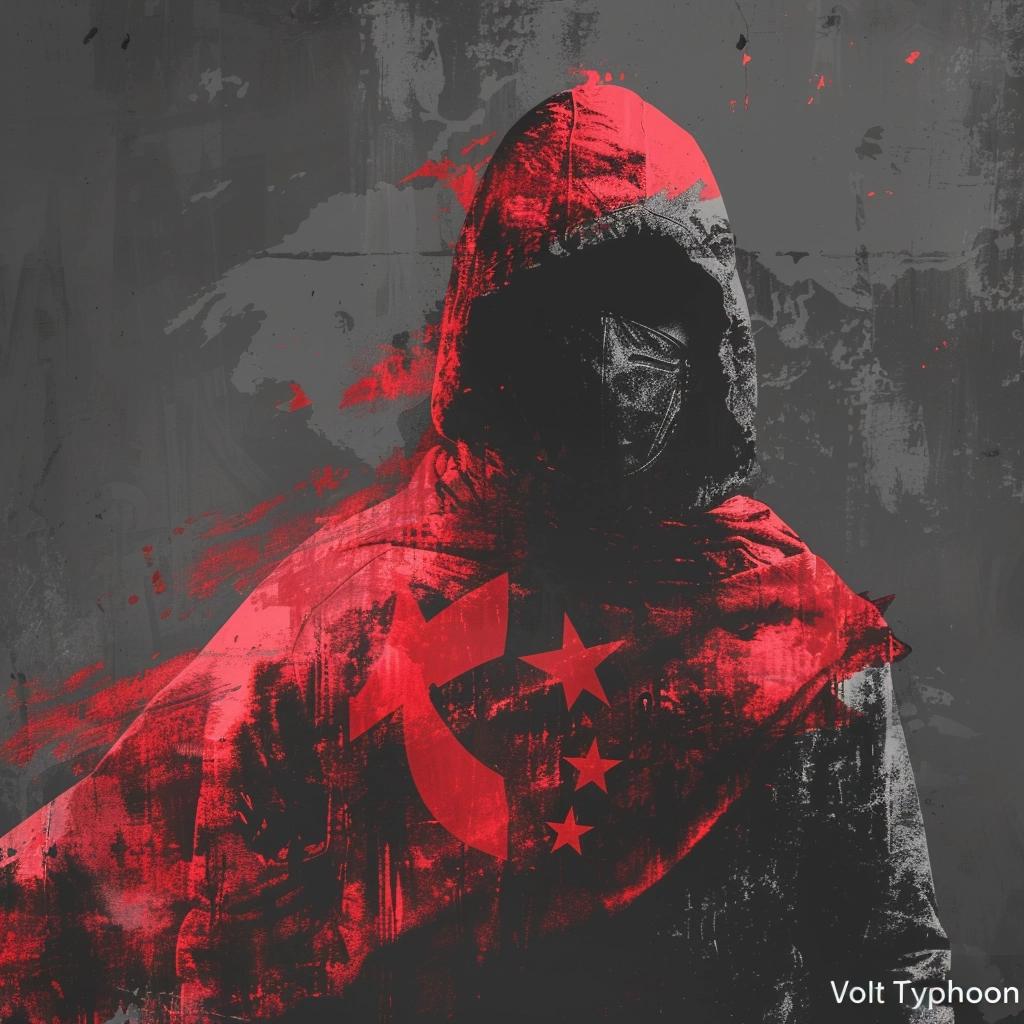
It’s well known China is all in the West’s Infrastructure. The Chinese cyber espionage group known as “Volt Typhoon” is associated with state-sponsored activities, primarily targeting government, military, and strategic industries in countries perceived as geopolitical competitors to China. The group’s activities are part of a broader pattern of cyber operations conducted by various groups believed to be operating under the auspices of the Chinese government.
Objectives and Targets
Volt Typhoon’s activities typically align with China’s strategic interests. The group focuses on:
- Espionage: Collecting sensitive information that could benefit China’s military and economic interests. This includes intellectual property, military plans, and political strategies.
- Surveillance: Monitoring key political figures, military personnel, and influencers across different sectors to gather actionable intelligence.
- Disruption: In some cases, such operations might aim to disrupt or sabotage projects that are critical to national security or economic stability of rival nations.
Tactics, Techniques, and Procedures (TTPs)
Volt Typhoon is known for using a variety of sophisticated techniques, which include:
- Phishing: Deploying spear-phishing campaigns to trick victims into revealing their credentials or installing malware.
- Malware: Creating and using advanced malware tools designed to infiltrate systems, remain undetected, and exfiltrate data.
- Zero-Day Exploits: Utilizing vulnerabilities in software that are unknown to the software maker and hence have no patches available, allowing them to gain access to systems.
Implications
The activities of groups like Volt Typhoon have several implications:
- National Security Threats: The theft of classified information and intellectual property can significantly undermine a nation’s security and competitive advantage in global markets.
- Diplomatic Strains: Discovery of such espionage activities can lead to diplomatic tensions between China and affected countries.
- Cyber Defense: Nations targeted by Volt Typhoon are often forced to enhance their cybersecurity measures, which involves significant financial and human resource investments.
Responses
In response to the threats posed by groups like Volt Typhoon, nations typically take several steps:
- Strengthening Cyber Defenses: This includes updating and patching systems, improving threat intelligence and response capabilities, and training personnel in cybersecurity practices.
- International Cooperation: Countries often work together to share intelligence about threats and coordinate responses to cyber incidents.
- Policy and Legal Measures: There might be increased efforts to create or update policies and laws to better address the challenges posed by cyber espionage.
Understanding the operations of groups like Volt Typhoon is crucial for preparing effective cybersecurity strategies and policies, especially for nations that find themselves frequent targets of state-sponsored cyber espionage.
Strategy: Active Digital Disruption
If the principles of “Charlie Wilson’s War” were applied to a strategy of active digital disruption—leveraging modern cyber capabilities to influence geopolitical situations—there are several key elements that would likely be emphasized. This approach would involve sophisticated cyber operations aimed at disrupting adversarial state activities, supporting dissident movements, or influencing political outcomes, often under the radar. Here’s how such a strategy might play out:

1. Target Selection
The first step would involve identifying critical digital infrastructure and systems used by the adversary for political, economic, and military functions. This could include government networks, financial systems, communications infrastructure, and critical industry controls.
2. Tool Development
Developing or acquiring a suite of cyber tools designed for espionage, sabotage, and influence operations. This could range from malware that can spy on or disrupt specific targets to software that manipulates information or spreads disinformation. For instance, the equivalent of supplying Stinger missiles in the digital realm could be providing advanced cyber tools that enable crippling cyber attacks or deep surveillance capabilities.
3. Covert Operations
Much like the covert arms supplies in Charlie Wilson’s campaign, digital tools could be clandestinely supplied to dissident groups or used directly by state-sponsored hackers. Operations could aim to undermine an adversarial government’s credibility, expose corruption or human rights abuses, or sabotage military and strategic capabilities.
4. Information Warfare
The strategy would likely include a strong component of information warfare aimed at shaping public opinion both within the adversary’s territory and globally. This could involve leaking sensitive information, creating and spreading disinformation, or amplifying existing dissent to destabilize the adversarial regime.
5. Alliance Building
Just as Wilson’s efforts involved coordination with other countries and various groups, a digital disruption strategy would require building alliances with other nations, non-state actors, and possibly private sector entities that share similar interests. This network could help amplify the efforts and provide a multilateral front, making the operations more robust and less traceable to any single country.
6. Contingency Planning
This approach would also necessitate advanced planning for contingencies, given the high potential for cyber retaliation by the target state or its allies. Robust defenses would need to be in place to protect critical infrastructure and to respond to counterattacks swiftly.
7. Ethical and Legal Considerations
Operating in the cyber domain brings complex ethical and legal challenges, particularly around sovereignty and the norms of international engagement in cyberspace. A strategy of active digital disruption would have to navigate these issues carefully to avoid significant diplomatic fallout and potential escalations into wider conflicts.
8. Long-term Engagement
Following the lessons from the aftermath of the Soviet withdrawal from Afghanistan, a modern “Charlie Wilson’s War” strategy would need to consider the long-term impacts of digital disruption, planning for post-conflict support and reconstruction, or measures to stabilize the situation once objectives are achieved.
Overall, applying the concepts of “Charlie Wilson’s War” to modern cyber strategies requires a sophisticated understanding of technology, geopolitics, and the specific context of the target region. It would involve significant risks, but if executed strategically, it could potentially yield substantial influence over global political landscapes.

Scenarios:
A “Charlie Wilson’s War 2.0” scenario, if applied to the contexts of the Uyghurs, Tibet, Hong Kong, and Taiwan, would likely focus on leveraging cyber capabilities and covert operations to influence policies, protect human rights, and assert or maintain autonomy in the face of Chinese political and military pressure. Here’s how such an initiative might manifest in each context:
Uyghurs

- Cyber Support: Provision of cyber tools to bypass Chinese surveillance systems, allowing Uyghurs to communicate securely and access uncensored information.
- Information Campaigns: Support for global information campaigns that highlight human rights abuses and generate international pressure on China to change its policies in Xinjiang.
- Evidence Gathering: Covert operations could focus on gathering incontrovertible evidence of human rights abuses, which could be used to support international legal actions or sanctions.
Tibet

- Cultural Preservation: Cyber initiatives might include efforts to digitally preserve Tibetan culture and history, which are at risk due to Chinese policies.
- Surveillance Countermeasures: Providing technologies to protect against surveillance and to maintain the privacy and security of communications among Tibetan activists and leaders.
- International Advocacy: Facilitating international advocacy efforts by providing platforms that amplify the voices of Tibetan exiles and activists.
Hong Kong

- Defense Against Propaganda: Efforts could be directed towards countering disinformation campaigns and ensuring the flow of accurate information both within and outside of Hong Kong.
- Secure Communication Channels: Provision of secure communication tools to activists to prevent interception and retribution by Chinese authorities.
- Legal and Tactical Support: Providing strategic support to Hong Kong’s pro-democracy movements, including legal advice and tactical planning for non-violent protests.
Taiwan

- Cyber Defense: Strengthening Taiwan’s cybersecurity defenses to protect against Chinese cyber attacks and espionage activities.
- Diplomatic Support: Covert operations could also involve facilitating unofficial diplomatic support from other nations, strengthening Taiwan’s international standing and its ability to negotiate its status with China.
- Military Intelligence: Sharing intelligence that could help Taiwan better prepare for and deter potential military actions from China.
General Strategies
- Technological Innovation: Developing new technologies that can provide strategic advantages in information warfare, cyber defense, and surveillance countermeasures.
- Alliance Building: Establishing and maintaining alliances with other nations to create a broader base of support for these regions, potentially including economic incentives, security guarantees, and humanitarian assistance.
In essence, a Charlie Wilson’s War 2.0 tailored to these regions would involve a mix of cyber warfare, strategic communications, diplomatic maneuvers, and direct support to local movements and governments. These efforts would aim to protect human rights, support self-determination, and maintain regional stability against overreach by a dominant power.
 Mastermind Century Group