

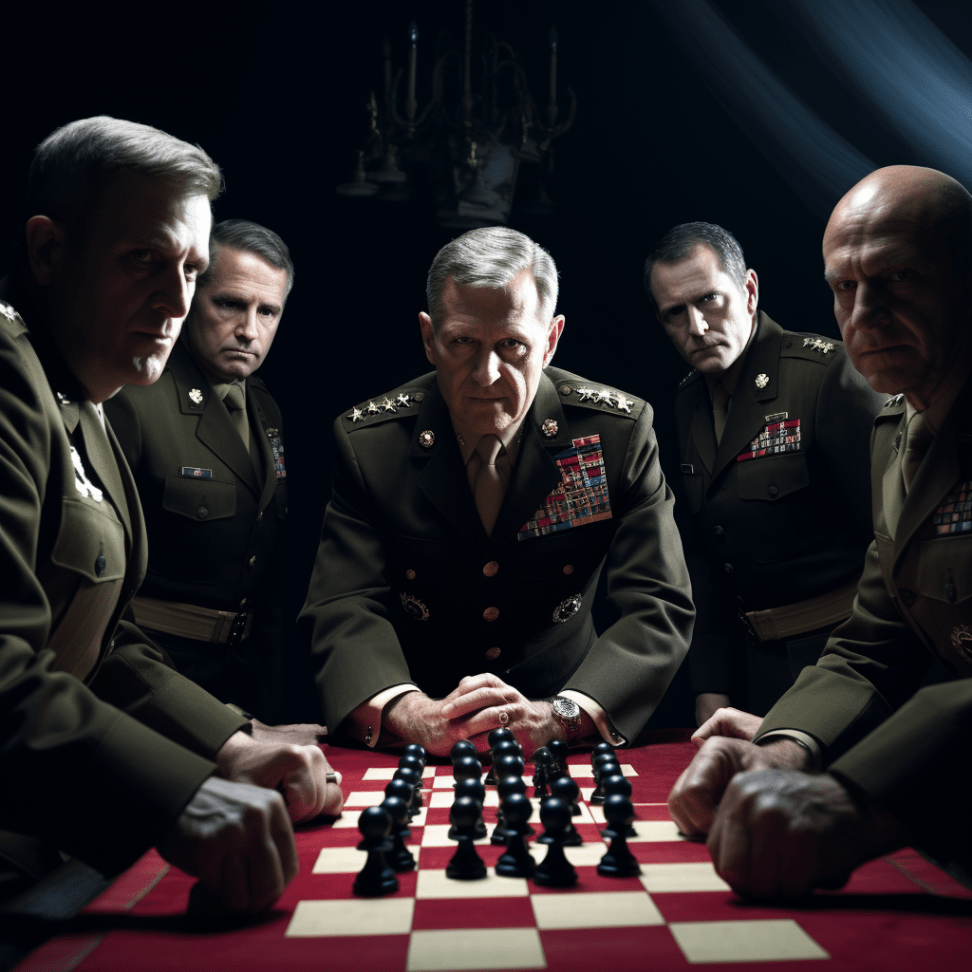
A thought-provoking article by Gary Anderson caught my attention last week, titled “Why Our Generals Don’t Win.” The piece ignited a fascinating discussion when I shared it on LinkedIn. Anderson’s central argument is that the inability of our generals to secure victories can be traced back to the influence of the Goldwater-Nichols Act and the Skelton Panel reforms on military structure and education.
Anderson raises a compelling point, but as with most complex issues, the reality likely has more layers than initially presented. While he focuses on the organizational impact of the Goldwater-Nichols Act and the Skelton Panel reforms, there’s also a crucial personal and leadership dimension to consider. Is it fair to say our leaders are merely products—or even victims—of the system they operate within? Moreover, should these leaders be actively working to reform the system itself?

I am sure most know Goldwater-Nicole Act, but what about Skelton: The Goldwater-Nichols Department of Defense Reorganization Act of 1986 and the Skelton Panel, formally known as the Panel on Military Education of the One Hundredth Congress, were landmark initiatives aimed at reforming the military’s structure and educational system. Both were designed to address perceived weaknesses and inefficiencies in the American military apparatus, particularly in light of lessons learned from earlier conflicts like the Vietnam War and the failed Iranian hostage rescue mission in 1980.
Goldwater-Nichols Act
The Goldwater-Nichols Act primarily focused on restructuring the chain of command and fostering joint operations among the U.S. military services—Army, Navy, Air Force, and Marine Corps. The main goals were:
- Chain of Command: The act clarified the operational chain of command, streamlining it so that the combatant commanders would report directly to the Secretary of Defense, bypassing the service chiefs. This aimed to remove inter-service rivalries that hindered effective operations.
- Joint Staff: The act expanded the role of the Chairman of the Joint Chiefs of Staff and established a Joint Staff drawn from all the services, replacing the system where each service had its own staff working in relative isolation.
- Joint Duty Requirements: One of the most significant educational reforms was the requirement for officers to serve in “joint” assignments, outside their parent service, as a prerequisite for promotion to general or flag officer ranks.
- Joint Professional Military Education (JPME): The act also enhanced the focus on joint professional military education, aiming to prepare officers for the challenges of joint and combined (i.e., international) operations.
Skelton Panel
The Skelton Panel, formed two years after the passage of Goldwater-Nichols, sought to further examine military education, especially at the senior and intermediate service schools like the war colleges. Recommendations included.
- Curriculum: The panel advised a more rigorous, academically challenging curriculum focused on strategy, policy, and joint and combined warfare, thereby better preparing officers for high-level command and staff roles.
- Faculty: The panel called for improving the quality of the faculty at military educational institutions, including bringing in more civilians with high-level academic qualifications.
- Research: The Skelton Panel encouraged more scholarly research and intellectual rigor, aiming to create an environment that fostered critical thinking and the ability to question assumptions.
As mentioned in the LinkedIn comments both the Goldwater-Nichols Act and the recommendations of the Skelton Panel have been subjects of extensive study and analysis. They present a framework for understanding how large, bureaucratic organizations can adapt—or fail to adapt—to new strategic realities. They also offer insights into how educational and structural reforms can shape an organization’s culture, strategic effectiveness, and innovation. AND, as Anderson draws on these reforms highlight the ongoing tension between specialization within individual services and the need for a more integrated, joint approach to modern military challenges, a theme relevant to broader organizational and leadership studies.
Anderson mentions a book “A Genius for War” by Army Col. Trevor Dupuy, which argued the German General Staff system provided a model for institutionalizing military excellence that our American services had lacked when dealing with the Vietnamese and Iranians. It seems there might be some truth there.
The book delves into the history of the German General Staff from its formation in the early 19th century through to the end of World War II. It explores the unique culture, training, and organizational features that contributed to the German military’s effectiveness in battle.
THE STAFF
Dupuy argues that the German General Staff was a singular institution in military history, owing its distinctiveness to both systemic factors like its rigorous selection and training processes, and cultural elements such as a focus on initiative and decentralized command. The book looks at key figures like Helmuth von Moltke the Elder, who played a pivotal role in the Franco-Prussian War, and his successors who adapted these principles to fit evolving needs and circumstances. I am not sure we could say the US Joint Staffs have a truly rigorous selection and training processes, and cultural elements such as a focus on initiative and decentralized command.

The German General Staff, according to Dupuy, wasn’t merely a set of skilled individuals but rather a highly effective system that could consistently produce superior military thinking and operational planning. Perhaps we have an issue with our system—not the Joint Staff itself?
Moreover, the book may offer insights into innovation within a military context. The German General Staff was often at the forefront of incorporating technological advancements and new tactics, striving for a sort of military “innovation” that kept it ahead of its adversaries. Here, we have to ask if our staffs are doing the same.
Yet, Dupuy also delves into the moral and ethical complexities and failures of the institution, particularly during World War II, raising questions about the role and responsibilities of military leadership in democratic societies.
Anderson addresses Erwin Rommel’s Panzer army that overran most of North Africa with a tiny fraction of the size of the staffs that infest major U.S. military commands, like those in Tampa and Honolulu today. There is an acknowledgment that the staff is required, yet the size is in question. One only has to look at the size of Rommel’s Panzer Army Africa.
Rommel’s Afrika Korps, varied in size and composition over the course of its existence during World War II. Initially, when Rommel arrived in North Africa in early 1941, he commanded a relatively small force consisting of the 5th Light Division, which was later re-designated the 21st Panzer Division, and the 15th Panzer Division. This was supplemented by Italian infantry, mechanized, and armored units.

At its peak, Rommel’s Panzer Army Africa had several German and Italian divisions under its command, including but not limited to:
- 15th Panzer Division
- 21st Panzer Division
- Italian Ariete Armored Division
- Italian Trieste Motorized Division
The numbers of troops fluctuated, and there were additional units that were rotated in and out of North Africa, but a rough estimate would put Rommel’s force at its peak at around 100,000 troops, including both German and Italian units. These units were supported by tanks, artillery, and aircraft.
A 2021 look at USINDOPACOM generally oversees more than 375,000 military and civilian personnel. Its geographic area of responsibility covers more than 100 million square miles, stretching from the west coast of the United States to the western border of India, and from Antarctica to the Arctic. The region includes 36 countries and more than 50% of the world’s population.
The shear size and complexity of USINDOPACOM make it a focal point for a multitude of strategic interests, ranging from traditional military concerns to broader issues like humanitarian assistance and disaster relief, maritime security, and the geopolitical challenges associated with the rise of China as a major power.
THE PERSON
The article address Rommel himself was not a product of the German General Staff system. Rather, he was one of those largely self-taught savants that frequently pop up in military history.
Indeed, Erwin Rommel, one of Germany’s most famous military commanders, was not a product of the traditional German General Staff system. His career was more unorthodox in that sense. Rommel gained fame initially as a junior officer during World War I for his bold and innovative tactics. He captured these early experiences in his book “Infanterie greift an” (Infantry Attacks), which became a classic study on small-unit tactics.
To Anderson’s point, Rommel’s career serves as an interesting counterpoint to Trevor Dupuy’s “A Genius for War,” which emphasizes the systemic strength of the German General Staff. Rommel’s case suggests that individual initiative, flair for improvisation, and intuitive tactical genius can also play significant roles in military effectiveness. This opens up broader questions about the balance between formal systems and individual leadership within any organization, not just military ones.
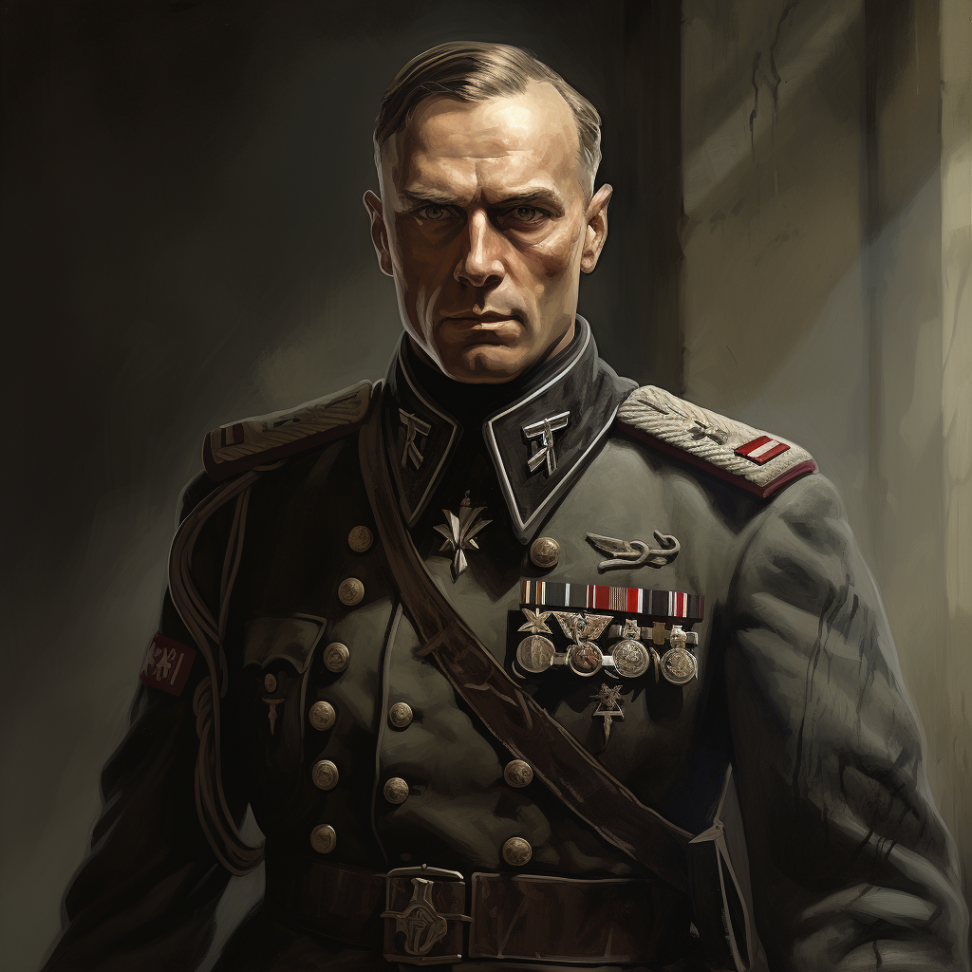
Rommel’s “self-taught” approach may relate to what modern scholarship often terms “tacit knowledge,” the kind of knowledge that is difficult to transfer by writing down or verbalizing but can be highly effective in decision-making situations. His experience and intuition often allowed him to see opportunities that others, perhaps more traditionally trained, did not. It does not seem that any system or bureaucratic check list can “build” a Rommel—this is done through desire, motivation, and at times despite the bureaucracies best efforts.
From a leadership perspective, Rommel’s career challenges traditional notions of hierarchy and authority, raising questions about how organizations can best identify, cultivate, and utilize maverick talents who may not fit into established structures. It also presents a nuanced picture of how innovation occurs. Innovation can be a product of a system designed to produce it, as in the case of the German General Staff, or it can emerge more organically from individuals operating somewhat outside or even in contradiction to the system.
It’s important to note that Rommel’s record is also marred by moral and ethical issues, including his involvement in a war of aggression and his failure to prevent war crimes under his command in North Africa. These aspects add another layer of complexity to any discussion of his leadership and strategy, and they raise ethical considerations relevant to the study and practice of military leadership and organizational behavior.
Further, I am not sure if Anderson is implying Rommel is a great strategist or a great tactical or both—but there is plenty of debate here as well. His skills and tactics have been the subject of numerous analyses, but his overall effectiveness as a strategist remains a topic of contention. The Desert Fox excelled in:

- Operational Innovation: Rommel was known for his innovative use of armor and mobile warfare. He maximized the potential of tanks, artillery, and infantry working in unison, contributing to the modern understanding of combined arms warfare.
- Speed and Initiative: Rommel believed in taking swift action, maintaining momentum, and keeping the enemy off balance. He rarely waited for orders if he saw an opportunity, often bypassing traditional command hierarchies to act decisively.
- Adaptability: Operating in North Africa required adaptability to challenging conditions, such as logistics and harsh terrain. Rommel demonstrated this quality to some extent, making the best of the resources available to him.
- Psychological Warfare: Rommel understood the value of psychological tactics, such as surprise and deception. His unpredictability became an asset, leading the enemy to second-guess his actions.
Rommel struggled as a strategist in:
- Logistical Oversight: Rommel often disregarded logistics, pushing his troops to the point where they were stretched too thinly and inadequately supplied. His strategic planning did not fully account for the extended supply lines his rapid advances required.
- Resource Management: Rommel’s aggressive tactics often led to the depletion of men and materiel, which proved unsustainable in the long run. The attritional aspect of warfare was not always fully integrated into his planning.
- Political Naivety: While not directly related to military strategy, Rommel’s understanding of political dimensions, both within the Nazi regime and internationally, was limited. His focus was almost exclusively on the military aspect of the war.
- Ethical Considerations: The Afrika Korps was generally seen as more “professional” than other German Army groups, particularly on the Eastern Front, in terms of adherence to international law. However, Rommel has been criticized for not taking a stronger stand against war crimes, which is a subject of academic and ethical debate.
- Strategic End-State: Rommel excelled at operational art but lacked a comprehensive strategic vision that aligned with overall objectives. His actions in North Africa were never synchronized with a broader strategy that could lead to decisive, sustainable success against the Allies.
Rommel serves as a complex case study in the difference between operational brilliance and strategic wisdom. His legacy provides valuable insights into the interplay between leadership qualities, tactical innovation, and strategic planning. Probably not the case study for this argument. Is the argument—release the Joint requirement and the DoD will produce more Rommels? Rommel was unique on several levels, some good, some bad, but the bureaucracy had little to do with creating such an officer, nor could it.
MILE-WIDE/INCH DEEP?
Anderson notes we have a “generation of officers who are a mile wide and an inch deep in the experience of their craft.” Of course this is a topic of debate within both academic and military circles. The phrase suggests that while the reforms may have produced officers with a broad understanding of joint operations and inter-service cooperation, it might have come at the expense of deep, specialized expertise in their respective fields or services.

Arguments in Favor of the Critique:
- Loss of Specialization: Critics argue that the emphasis on joint duty assignments and broad educational experiences might dilute an officer’s specialized skill set, be it in infantry tactics, aviation, naval warfare, or other areas.
- Administrative Burden: The requirements for joint assignments and education could also be seen as adding another layer of bureaucracy and checkboxes that officers must navigate, potentially distracting them from core warfighting skills.
- Generalist Over Specialist: The system might prioritize the development of generalists who can navigate the corridors of the Pentagon but may lack the depth of knowledge required for specific combat roles or for advising policymakers on specialized topics.
Arguments Against the Critique:
- Increased Interoperability: Proponents of the Goldwater-Nichols reforms argue that the increased focus on joint operations has resulted in a more cohesive and effective military, as evidenced by successful joint operations in conflicts since the late 1980s.
- Strategic Depth: The broader educational experience and exposure to joint operations might provide officers with a better strategic perspective, making them more effective leaders at higher echelons where a broad view is essential.
- Flexibility: The rapidly changing nature of modern warfare—with the growing importance of domains like cyber, space, and asymmetric warfare—may actually necessitate a more varied skill set.
This subject also ties into broader discussions in the fields of organizational behavior, leadership development, and strategic studies. The trade-off between breadth and depth of experience is not unique to the military; it’s a challenge faced by organizations and educational institutions in many domains. Perhaps an argument can be made for both—a percentage of officers groomed for Joint work and some developed for deeper service/operational work. It would be difficult to create a case that the character of war today does not require education in interoperability of forces.
JOINT SERVICE AND THE CHARACTER OF WAR
The question of whether a military professional can afford to be a master of one trade at the expense of cross-functional understanding is highly relevant, especially in an era marked by rapidly evolving technologies, new domains of warfare, and complex geopolitics. Anderson’s examples—Ulysses S. Grant, John J. Pershing, Dwight D. Eisenhower, and Chester W. Nimitz—highlight leaders who achieved significant military successes without having served in formal joint roles prior to their highest commands. This presents a rich academic subject, tying into organizational behavior, strategic studies, and leadership theories.

Advantages of Specialization:
- Deep Expertise: Specialization allows for deep, nuanced understanding of a specific aspect of warfare, whether that be ground combat, naval warfare, air operations, or newer domains like cyber.
- Tactical Excellence: Specialized skills can lead to tactical successes that, when leveraged correctly, can have strategic implications. Mastery in a specific domain might also enable a leader to see opportunities and risks that a more generalized peer might miss.
- Credibility: A leader who has specialized is often deeply respected within his or her branch, which can be crucial for morale and unit cohesion.
Challenges of Specialization:
- Tunnel Vision: Too much focus on a single domain can limit an officer’s ability to understand the broader strategic picture or to effectively collaborate with other branches of service.
- Limited Career Progression: The institutional structures of modern militaries do require some level of joint or cross-functional experience for high-level promotions.
- Inflexibility: Specialization might lead to rigidity, limiting a leader’s ability to adapt to new forms of warfare or different strategic environments.
The Changing Character of Warfare:
Today’s multidomain operations often require a level of integration and interoperability that is fundamentally different from the warfare of even a few decades ago. This means that cross-functional understanding is increasingly essential for high-level command roles. For instance, cyber capabilities might be integral to a ground operation, or air power might be closely coordinated with naval forces for maximum effect.
However, the core principles of leadership, strategic acumen, and tactical skill remain constant. The examples cited suggest that specialized expertise can be complemented by other forms of proficiency, such as coalition-building, logistics, or strategic vision, to produce effective military leaders. In a complex and rapidly changing environment, the question becomes not so much whether specialization or generalization is “better,” but how to best integrate these different forms of expertise in a complementary way.
JOINT WORK CAUSED THE FAILURES IN AFGHANISTAN AND IRAQ
The questions surrounding the “winnability” of the wars in Afghanistan and Iraq, as well as the strategies employed, have been the subject of extensive debate among military professionals, policymakers, academics, and analysts. These debates intersect with multiple academic disciplines including political science, strategic studies, military history, and organizational behavior.

Winnability:
- Definitions of Victory: One of the fundamental issues is defining what “winning” means. The U.S. and coalition objectives evolved over time, from initial goals such as removing hostile regimes and eliminating terrorist sanctuaries to more ambitious state-building endeavors.
- Resource Commitment: Some argue that with a more significant commitment of resources and a longer time horizon, the wars might have had different outcomes. However, this assumes an unlimited supply of resources and public patience, neither of which is realistic.
- Local Factors: The complexities of local politics, tribal dynamics, and religious issues were often underestimated. These factors complicated efforts to achieve a stable governance structure and contributed to ongoing resistance and insurgency.
Strategy:
- Initial Phases: The U.S. had a clear strategy for the initial phases of both conflicts—toppling the Taliban in Afghanistan and Saddam Hussein in Iraq—which were executed with tactical success.
- Post-Conflict Phase: The real challenge emerged in the post-conflict phases. Here, the strategies seemed to be less coherent and evolved in response to the unfolding situations on the ground. Issues included poorly planned and executed nation-building efforts, as well as ineffective counter-insurgency strategies.
- Revision and Adaptation: In both conflicts, the U.S. did revise its strategies over time, such as the “Surge” in Iraq in 2007 and the revised counter-insurgency strategy in Afghanistan. These adaptations had varying degrees of success but did not conclusively resolve the conflicts.
- Multi-Dimensional Considerations: In both wars, the U.S. military was just one tool in a larger strategic framework that also included diplomatic, economic, and informational elements. Assessing the effectiveness of strategy, therefore, involves analyzing multiple dimensions, not just the military aspect.
The questions being: Could Generals lacking Joint assignments and education have made different decisions? Is the military ultimate responsible for making such decisions or are they simply offering advice to political leaders? Where does military advice end and political decisions begin?
Many academics and strategists argue that a comprehensive strategy that effectively integrates military objectives with political goals and local dynamics is essential for “winning” such wars, but achieving such integration in practice is exceptionally challenging.
IN THE END
The topics explored Anderson’s article—ranging from the intricacies of military strategy and leadership to the winnability of modern conflicts—and laying these issues at the feet of the Goldwater Nicoles act are not really satisfying. They really constitute a rich tapestry of issues that are highly relevant for academics, strategists, and military professionals. Central to these topics are questions about the nature of effective leadership, the development of coherent and sustainable strategies, and the complex factors that contribute to the outcome of military engagements.

Erwin Rommel serves as a compelling case study in operational brilliance, but also in the limitations of such brilliance when not complemented by a broader strategic vision or adequate logistical planning. His example leads us to question the balance between specialization and cross-functional understanding in military leadership, a question that also echoes in the discussion about U.S. military reforms like the Goldwater-Nichols Act.
The wars in Afghanistan and Iraq further illustrate the challenges inherent in translating tactical successes into strategic victories. These conflicts underscore the essential need for a multi-dimensional, nuanced understanding of the military, political, and social terrains. The questions raised about the role of NATO commanders in Afghanistan highlight the perennial issues surrounding military leadership: what qualities are most crucial for success, and how can leaders adapt to a rapidly changing conflict environment?
I fully understand this synthesis serves not as a final word, but as an invitation for deeper exploration and critical thought, ideally leading to greater understanding and, eventually, more effective strategies and leadership in future military endeavors. There are no simple answers.
 Mastermind Century Group