


Do what they say
Say what you mean
…one thing leads to another
You told me something wrong
I know I listen too long
But then one thing leads to another. —The Fixx, One Thing Leads to Another
BIDING TIME AND HIDING CAPABILITIES
The “biding time and hiding capabilities” strategy is a phrase attributed to Deng Xiaoping, the paramount leader of China from 1978 to 1992. This strategy is also known as the “24 Character Strategy” and has been influential in shaping China’s foreign policy and military strategy.
Deng Xiaoping’s 24-character strategy is as follows: “Observe calmly; secure our position; cope with affairs calmly; hide our capacities and bide our time; be good at maintaining a low profile; and never claim leadership.”
This strategy was developed during a period when China was focused on internal development and sought to avoid attracting attention or provoking confrontation, particularly with the more powerful nations of the world. The aim was to allow China to develop its capabilities quietly, without attracting too much international scrutiny or pressure.
It’s important to note that this strategy is not an official policy that is strictly adhered to, and there is ongoing debate within China regarding how applicable it still is given China’s rise as a global power. Some believe that as China’s power and influence have grown, it should take a more active role on the global stage, while others argue for continuing the policy of strategic patience and low profile.
Since the 2000s, under the leadership of Hu Jintao and later Xi Jinping, China’s approach has evolved to a more assertive stance in some areas, particularly in its regional sphere of influence. However, elements of the “biding time and hiding capabilities” strategy can still be seen in some aspects of China’s foreign policy, such as its approach to building its military capabilities and its strategy in areas like the South China Sea.

For instance, China has been steadily building its military capabilities, including its naval power and missile technology, often preferring to reveal these advancements gradually or after they have been discovered by foreign analysts. This can be seen as an extension of the “hiding capabilities” aspect of the strategy.
Similarly, in the South China Sea, China has been gradually increasing its control and presence, often using non-military means such as coast guard vessels and maritime militias, as well as creating artificial islands to establish military bases. This approach of incremental escalation can be seen as a form of “biding time”.
However, it should be noted that interpretations of this strategy can vary, and it doesn’t encapsulate all aspects of China’s foreign policy or military strategy.
ONE THING LEADS TO ANOTHER
The strategy of “biding time and hiding capabilities” nests into the “assassin’s mace” concept. The essence of “assassin’s mace” is to develop an asymmetric warfare capability that can counter a technologically superior force. A part of achieving this is developing technologies and strategies in a covert manner, hence “hiding capabilities”. Keeping these developments under wraps until they are fully ready for deployment can potentially catch adversaries off guard, much like an assassin striking at an opportune moment.
The “biding time” aspect of the strategy relates to the development of these “assassin’s mace” capabilities. Developing advanced military technology can be a slow and resource-intensive process. By biding their time, the Chinese military can ensure they fully develop, test, and refine their “assassin’s mace” capabilities before revealing them to the world. This way, when these capabilities are finally deployed, they are more likely to be effective and reliable.
Moreover, the strategy of “biding time and hiding capabilities” can also be seen as a way to manage international relations. By not openly displaying every development or progress in its military capabilities, China can avoid provoking its potential adversaries or causing unnecessary tensions. This strategy allows China to continue strengthening its military capabilities while maintaining a relatively peaceful international environment, which is conducive to its overall national development goals.
The strategy of “bidding time and hiding capabilities” is a part of the broader “assassin’s mace” concept and serves to enhance its effectiveness, while also managing the country’s international relations and national development goals.
ASSASSIN’S MACE
The term “Assassin’s Mace” (“杀手锏” (shāshǒu jiǎn)) historically referred to a physical weapon rather than a military strategy. The Assassin’s Mace was a type of blunt weapon used in combat. It typically consisted of a heavy spiked or flanged metal head attached to a handle.
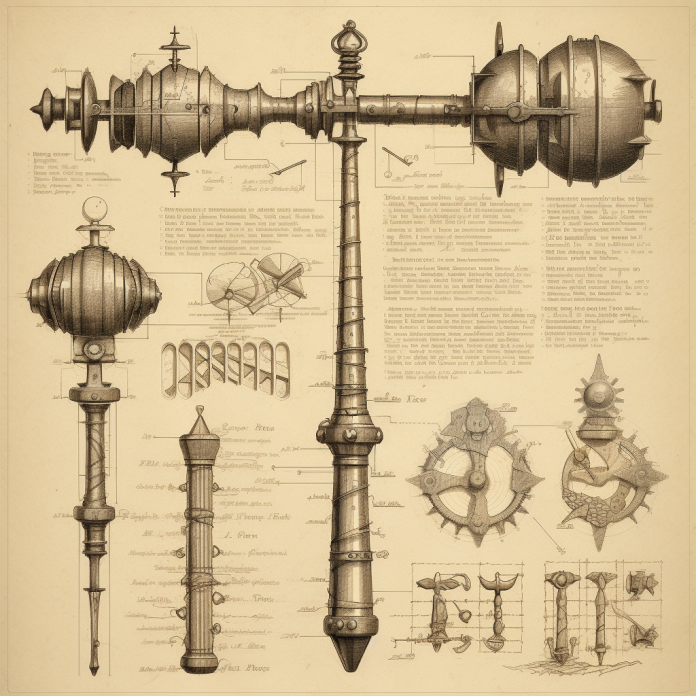
The Assassin’s Mace was employed in close combat situations, particularly during the medieval period. It was favored for its ability to deliver powerful and devastating strikes against armored opponents. The spiked or flanged head could penetrate or dent armor, incapacitating or killing the enemy.
The weapon’s effectiveness relied on the element of surprise and the skill of the user. It was often employed in ambushes or during nighttime raids, where the attacker could strike a decisive blow against an unsuspecting opponent. The Assassin’s Mace allowed a smaller or weaker combatant to neutralize the advantage of a heavily armored and more powerful opponent.
Of course the term “Assassin’s Mace” has evolved over time and is now commonly used in a metaphorical sense to refer to military or strategic concepts that enable a weaker force to overcome a stronger one, as was the case when China first began employing the term.
The Chinese use Assassin’s Mace as a military concept allowing a weaker force to defeat a stronger one. It is similar to the concept of an “ace in the hole” or a “secret weapon” in Western military strategy. Examples of an Assassin’s Mace could include a surprise attack, a new technology, or a hidden weakness in the enemy’s defenses. The idea behind the concept is to exploit an enemy’s vulnerabilities and to use unconventional means to defeat them, rather than relying on brute force.
The concept of the Assassin’s Mace is believed to have originated in ancient China. It is thought to have been a key element of Chinese military strategy dating back to the Warring States period (475-221 BCE), when various Chinese states were constantly at war with one another. The concept of the Assassin’s Mace was likely developed as a way to counter the superior military strength of larger and more powerful states, allowing smaller and weaker states to defeat them through the use of cunning and strategy.
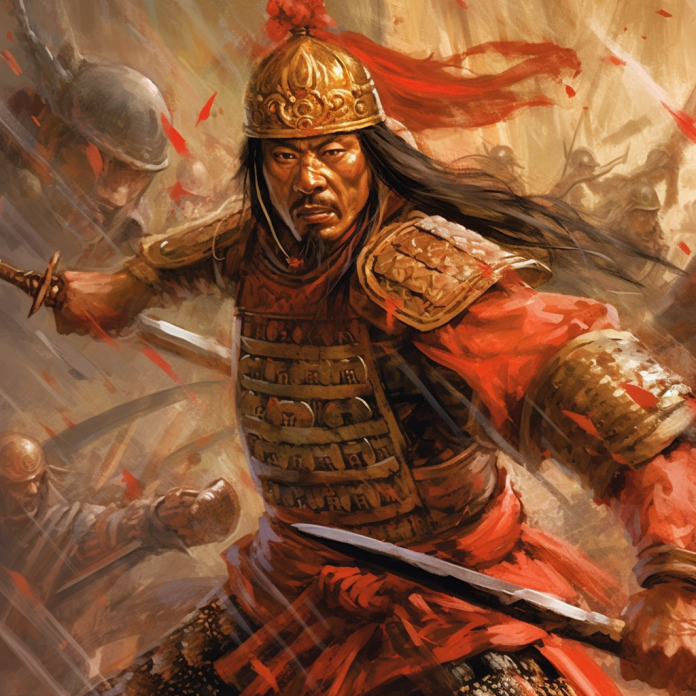
The Chinese strategist Sun Tzu (if he was indeed a person), who reportedly lived in the 5th century BCE, wrote extensively on the concept of the Assassin’s Mace in his famous book “The Art of War”. He emphasized the importance of using strategy and tactics to exploit an enemy’s weaknesses, rather than relying on brute force. The concept of the Assassin’s Mace is one of many traditional Chinese military concepts that are still studied and applied today.
HISTORICAL EXAMPLES
A few historical examples of how the concept of the Assassin’s Mace has been applied:
- The surprise attack on Pearl Harbor by Japan in 1941 is often cited as an example of the Assassin’s Mace. The Japanese were able to launch a devastating surprise attack on the US Pacific fleet, which was considered to be one of the most powerful naval forces in the world at the time.
- The development of the atomic bomb by the United States during World War II is another example of the Assassin’s Mace. The atomic bomb was a new and powerful technology that allowed the US to defeat Japan in a way that would have been impossible with conventional weapons.
- In the Vietnam War, the North Vietnamese employed a strategy of using guerrilla warfare tactics, which is another example of the Assassin’s Mace. They were able to use their knowledge of the terrain and population to evade and attack the superior US military forces, making it difficult for them to win the war.
- The use of Cyber warfare and the ability to disrupt critical infrastructure is also an example of the Assassin’s Mace. It allows a weaker force to disable or significantly damage a stronger force by targeting its technological backbone.
- The use of biological weapons is also an example of the Assassin’s Mace. It allows a weaker force to target the enemy’s population with a deadly virus and thereby weakening the enemy’s military strength.
These are just a few examples of how the concept of the Assassin’s Mace has been used throughout history. It is important to note that the concept is not limited to military contexts and can be applied to other areas such as business and politics as well.
ASSASSIN’S MACE TODAY
One modern-day example of the Assassin’s Mace concept in China is the country’s use of “unrestricted warfare” tactics. This is a strategy that China has developed to counter the military superiority of other countries by using unconventional means to achieve its goals. The Chinese military doctrine of unrestricted warfare advocates the use of various tactics such as cyber warfare, economic warfare, and psychological warfare to disrupt and weaken an enemy’s military and political systems.
For example, In the South China Sea dispute, China’s use of artificial islands, military installations, and other territorial claims can be seen as an example of the Assassin’s Mace concept. China has been able to use its economic and territorial claims to gain control over strategically important waters, despite military and political opposition from other countries in the region.
Another example is the Belt and Road Initiative (BRI) which is an ambitious infrastructure and investment program that China has launched to connect Asia, Europe, and Africa through a network of roads, railways, ports, and other infrastructure projects. The BRI can be seen as an example of the Assassin’s Mace concept because it allows China to gain economic and political influence in other countries through investment and infrastructure development.
The “assassin’s mace” is a term that has been used to describe a group of technologies or strategies developed by China that are specifically designed to counter and potentially displace the United States as a world power1. This concept emerged after the United States demonstrated its conventional superiority during the Gulf War, leading to a realization within the Chinese military that the PRC needed to develop strategies to counteract this superiority. This has led to the development of weapons and strategies that focus on asymmetrical warfare and anti-access/area denial tactics2. The concept of “assassin’s mace” is reportedly focused on asymmetric warfare and anti-access/area denial tactics. Here are some examples:

- Submarines: Different analysts have different views on how submarines fit into the “assassin’s mace” paradigm. Scholar Rush Doshi suggests that China uses a mix of diesel-electric and nuclear submarines to attack American carrier battle groups using anti-ship missiles and sea mines3. Jason Bruzdzinski, a director at the Mitre Corporation, sees nuclear ballistic missile submarines as the “assassin’s mace” of the Chinese navy. He believes such submarines would be stealthy and have a large range, making them resistant against preemptive strikes and serving as a nuclear deterrent4.
- Sea Mines: American analysts consider sea mines as being a core part of “assassin’s mace”. They are cost-effective means of denying access to an area. Chinese military strategists have reportedly invested significant resources into developing sea mines1.
- Anti-Ship Ballistic Missiles (ASBMs): ASBMs are another major “assassin’s mace” weapon according to Doshi and Chinese government sources. ASBMs should be used as “assassin’s mace” weapons for “deterring and blocking enemy carrier groups5.
With respect to “biding time and hiding capabilities,” it appears that China is integrating artificial intelligence (AI) into its military strategy as part of this “assassin’s mace” approach. China’s supreme leader, Xi Jinping, has emphasized the importance of advancing AI in the military, and China has embarked on efforts to integrate AI into various facets of its military, including tanks, naval forces, aircraft, and advanced weapons. Some of these applications include unmanned combat aircraft and deep-sea unmanned underwater combat vehicles. For the Chinese military’s large and varied missile arsenal, AI has a future as well, with future cruise missiles expected to have a very high level of AI and automation. These efforts are part of China’s asymmetric or “assassin’s mace” warfare strategy, which is aimed at enabling China’s forces to defeat a more powerful military such as the United States’ in any potential conflict6.
ARTIFICIAL INTELLIGENCE
In recent years, there are also discussions about China’s efforts to integrate Artificial Intelligence (AI) into its military capabilities, which is also part of the “assassin’s mace” strategy.
- AI in Tanks, Naval Forces, and Aircraft: The Chinese military is working on integrating AI into these areas as part of their asymmetric or “assassin’s mace” warfare strategy2.
- AI in Unmanned Combat Aircraft (UCAV): China’s breakthroughs in AI could enable future UCAVs that are more responsive than human-controlled aircraft and better able to counter large formations of enemy UCAVs7.
- AI in Deep Sea Unmanned Underwater Combat Vehicles (UUCVs): China can also be expected to use AI to enable very deep sea UUCVs able to contest control over the ocean floor8.
- AI in Missiles: For China’s large and varied missile arsenal, AI has a future as well. Future cruise missiles are expected to have a very high level of AI and automation9.
- AI in Cyber Warfare: China’s application of AI to its growing cyber warfare capabilities also will increase the danger posed by cyber attacks and espionage10.
Obviously there is limited public information about the specifics of these technologies due to their sensitive nature. Information from Chinese writings should also be taken with a grain of caution, as China is known to use such public writings, especially on military affairs, to potentially mislead foreign nations 11.
FUTURE
Given the trends in AI and military technology, it is likely that China will continue to advance in these areas as part of their “assassin’s mace” strategy. It’s also worth noting that these developments will be influenced by various factors, including geopolitical tensions, technological advancements, and international regulations around warfare and AI.
China’s position in global AI development is substantial, with the country making significant strides in integrating artificial intelligence into various sectors, including its military. However, it’s important to note that while China is a major player in AI development, it’s not alone at the forefront of this technological field. The United States and other nations are also invest heavily in AI research and development.
In terms of military applications, the use of AI is expected to enable very deep sea unmanned underwater combat vehicles and enhance China’s growing cyber warfare capabilities. This comes along with the development of AI-powered autonomous tanks, land vehicles, submarines, surface warships, as well as bombers, fighters, and drone aircraft.
Regarding non-military applications, China is considered a global leader in AI development alongside the United States. It has made considerable investments in AI research and development, and it’s widely recognized for its strengths in areas such as AI implementation, data collection, and AI commercialization.
Of course the landscape of AI development is dynamic and rapidly changing. For the most accurate and up-to-date assessment of China’s global position in AI development, it is important for any strategist to consult the latest reports and studies from trusted sources in the field of AI research. It is pretty clear—the assassins mace will soon posses artificial intelligence, the mace and AI are simply not going away.
 Mastermind Century Group
One Reply to “”